
Electric clipping,
does it really help with Reduced surgical-site infection versus razor shaving?
research showsThe grade is B. When hair removal is necessary, electric clipping rather than razor shaving reduces surgical-site infection. In the 1,013-participant trial, the same-day comparison was 7/216 versus 26/260, and a seven-trial Cochrane analysis also favored clipping. Funding and source data for fully independent replication were not established, giving B with 72 points.
ads claimThe finding does not mean everyone should be shaved or clipped. Avoiding unnecessary removal and selecting a non-razor method when removal is needed are separate decisions.
Useful facts when choosing a product
- Alexander included elective vascular, thoracic, abdominal, gynecologic, and neurosurgical procedures.
- The 30-day infection outcome was defined as discharge of pus.
- No duplicate verdict using this intervention-outcome pair and pivotal PMID was identified.
Chamgap Semantic Classification Code
Candidate index · review held
P.electric-clipping-on-the-day-of-surgery.procedural.surgical-site-infection.reduce.UNKProcedures, devices and tests > Electric clipping on the day of surgery > Procedural > surgical-site infection > Reduction claim > Unknown
An automated migration candidate, not an issued permanent code; exact claim scope remains under review. This machine-generated migration candidate helps retrieval but is not a permanent assignment. The original verdict ID and URL remain authoritative.
What the research actually shows
Same-day infection in Alexander was 7/216 (3.2%) with clipping versus 26/260 (10.0%) with shaving, recalculated RR 0.32 (95% CI about 0.14-0.74). Day-before rates were 18/241 (7.5%) and 23/260 (8.8%). The 2021 Cochrane review pooled seven RCTs and 3,723 participants: shaving versus clipping RR 1.64 (1.16-2.33). One large study was quasi-randomized, and funding independence across individual trials was not fully established.
Why this is classified as B (72)
A large randomized trial and the seven-trial pooled estimate favor clipping on a clinical infection event. Fully documented independent replication and complete methods reporting were unavailable, giving B with 72 points.
Counterpoint. Modern baseline infection rates may be lower than in 1983, reducing absolute benefit, although the pooled direction favoring clipping remains.
Rejudgment record. Cross-check applied — We assessed clinical infection events in the same-day clipper-versus-razor comparison, the Cochrane pooled estimate, and trial methods and funding.
| Endpoint | H | Hard endpoint - actual events such as death |
| Replication | R1 | Single confirmatory trial |
| Independence | I1 | Mixed funding sources |
| Effect size | E+ | Meets the clinically important threshold |
Stored derived and displayed grades match; this is not a current recalculation or validity check (B).
Sub-claim grades by effect
This ingredient is marketed for several effects. A single overall grade blends strong and weak claims together, so each effect is graded separately here. The overall grade reflects the strongest disconfirming or core claim.
| Effect (sub-claim) | Grade | Basis |
|---|---|---|
| When removal is necessary, same-day electric clipping reduces infection versus same-day razor shaving. | B | A large direct trial and pooled estimate point in the same direction. |
| Clipping reduces infection compared with no hair removal. | D | Cochrane RR 0.95 (0.65-1.39) did not establish a difference. |
Cross-check — AI research and Codex final gate
Evidence Table
| Study | Design | Sample | Funding | Endpoint | Result | Weight |
|---|---|---|---|---|---|---|
| Alexander et al., Archives of Surgery 1983 | Single-center four-arm prospective randomized trial | 1,013 participants; 977 in timing analyses | No funding source reported in the paper or Cochrane characteristics table | Wound infection defined by pus discharge at discharge and 30 days later | Same-day clipping 7/216 versus same-day shaving 26/260; day-before clipping 18/241 versus day-before shaving 23/260 | Pivotal large direct trial |
| Tanner and Melen, Cochrane 2021 | Systematic review of randomized and quasi-randomized trials | 25 studies and 8,919 participants overall; seven RCTs and 3,723 participants for razor versus clipping | NIHR infrastructure support to Cochrane Wounds | Surgical-site infection | Razor shaving versus clipping RR 1.64 (95% CI 1.16-2.33) | Confirmation of pooled direction and certainty |
Receipt — 2 References
All 2 cited sources were verified for existence at the original page (as of 2026-08-14).
Final verification and publication gate: Codex · Evidence date: 2026-08-14 · Corrections: none
Cite this verdict
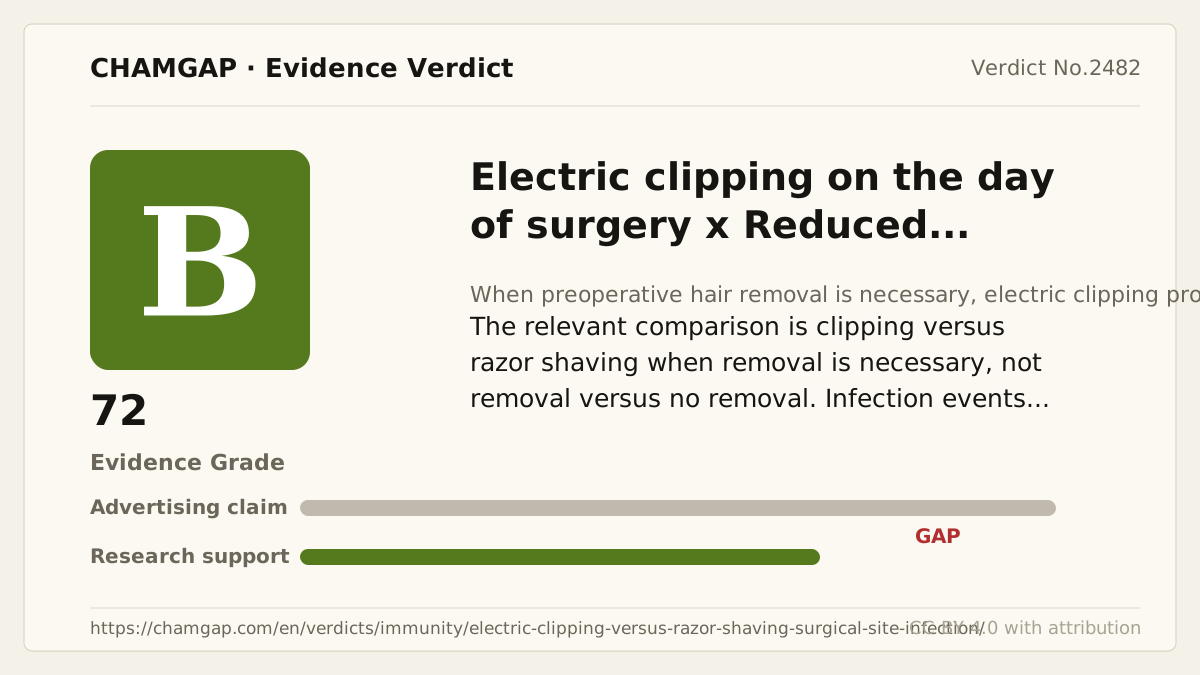
[Chamgap] Electric clipping x prevention of surgical-site infection versus razor shaving — Evidence Grade B·72. 2 cited sources checked. Source: https://chamgap.com/en/verdicts/immunity/electric-clipping-versus-razor-shaving-surgical-site-infection/ · CC BY 4.0CC BY 4.0 — free to use with attribution; do not distort grades, numbers, or verdict meaning.
What this document does and does not do
Chamgap is an information source. It reports what research has and has not confirmed; it does not tell readers what to take or buy. That decision belongs to readers and, when needed, medical or legal professionals. This verdict reflects literature available up to the search date and may change as new research appears. Nothing here is medical advice.