
Doxycycline,
does it really help with Microbiologic cure of confirmed rectal Chlamydia trachomatis infection?
research showsThe grade is B. Lau randomized 625 participants, 314 versus 311, and the modified analysis of 587, 290 versus 297, found four-week microbiologic cure in 281/290 (96.9%) versus 227/297 (76.4%). An independent U.S. trial replicated the result, giving B with 72 points.
ads claimThe 96.9% number is four-week test negativity for confirmed rectal infection, not cure at every anatomical site or protection from reinfection. Seven-day adherence, partner treatment, and re-exposure management matter.
Useful facts when choosing a product
- Doxycycline is a prescription tetracycline antibiotic that inhibits bacterial protein synthesis.
- Verdict 1323 is B with 68 points and concerns post-exposure prevention; this verdict treats an already confirmed rectal infection.
- Cure was defined as a negative rectal nucleic-acid amplification test four weeks after treatment.
Chamgap Semantic Classification Code
Candidate index · review held
M.doxycycline-twice.rectal.microbiologic-cure-of-confirmed-rectal-chlamydia-trachomatis-infection.assess.activeMedicinal interventions > Doxycycline twice > Rectal > Microbiologic cure of confirmed rectal Chlamydia trachomatis infection > Association or change assessment > Active comparator
An automated migration candidate, not an issued permanent code; exact claim scope remains under review. This machine-generated migration candidate helps retrieval but is not a permanent assignment. The original verdict ID and URL remain authoritative.
What the research actually shows
Lau 2021 double-blind randomized 625 participants to seven days of doxycycline or single-dose azithromycin 1 g and analyzed 587 in a modified population. Dombrowski 2021 randomized 177 in the United States using the same active comparator. Separate investigator teams and Australian NHMRC versus U.S. NIH/NIAID funding establish independent replication.
Why this is classified as B (72)
Separate investigators and public funders replicated four-week microbiologic cure, but both decisive trials used active azithromycin without placebo, giving B with 72 points.
Counterpoint. A negative four-week cure test does not establish prevention of later reinfection after new exposure.
Rejudgment record. Cross-check applied — Separate investigators and public funders replicated four-week microbiologic cure, but both trials used active azithromycin without placebo
| Endpoint | P | Symptom or function itself is the target - including patient reports and performance tests |
| Replication | R2 | Independently replicated across trials |
| Independence | I2 | Decisive evidence is publicly or non-profit funded |
| Effect size | E+ | Meets the clinically important threshold |
Stored derived and displayed grades match; this is not a current recalculation or validity check (B).
Sub-claim grades by effect
This ingredient is marketed for several effects. A single overall grade blends strong and weak claims together, so each effect is graded separately here. The overall grade reflects the strongest disconfirming or core claim.
| Effect (sub-claim) | Grade | Basis |
|---|---|---|
| Microbiologic cure at four weeks | B | Two independent trials replicated an advantage of at least about 20 points. |
| Higher cure than single-dose azithromycin | B | Both trials used the same active comparator. |
Cross-check — AI research and Codex final gate
Evidence Table
| Study | Design | Sample | Funding | Endpoint | Result | Weight |
|---|---|---|---|---|---|---|
| Lau A et al. 2021 | Multicenter double-blind randomized active-control superiority trial | 625 randomized, 314 versus 311; 587 in the modified intention-to-treat primary analysis, 290 versus 297 | Public funding from the Australian National Health and Medical Research Council | Primary endpoint: negative rectal NAAT four weeks after treatment | 281/290 (96.9%) versus 227/297 (76.4%), adjusted risk difference 19.9 points (95% CI 14.6 to 25.3), P<0.001. | Pivotal publicly funded randomized trial |
| Dombrowski JC et al. 2021 | Double-blind randomized active-control trial | 177 randomized, 88 versus 89; 135 complete cases, 70 versus 65; all 177 in intention-to-treat | Public funding from the U.S. NIH and NIAID | Primary endpoint: microbiologic cure at four weeks | Complete-case cure 100% versus 74%, difference 26 points (95% CI 16 to 36); intention-to-treat 91% versus 71%, difference 20 points (9 to 31). | Independent replication trial |
Receipt — 2 References
All 2 cited sources were verified for existence at the original page (as of 2026-08-01).
Final verification and publication gate: Codex · Evidence date: 2026-08-01 · Corrections: none
Cite this verdict
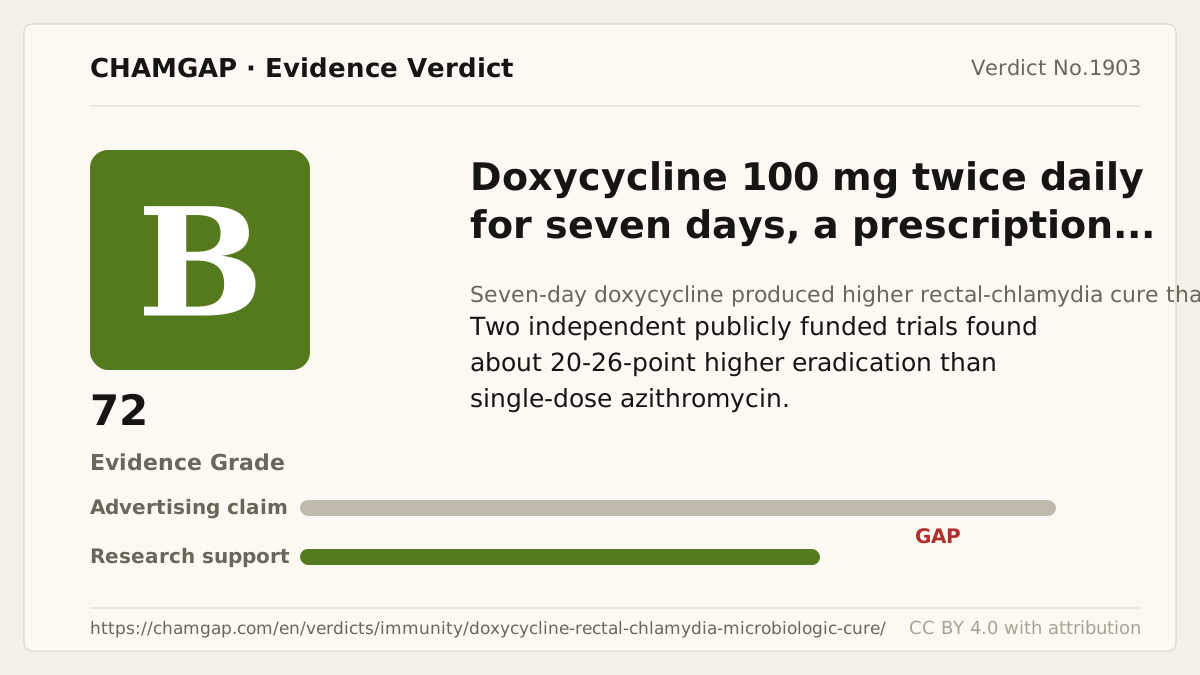
[Chamgap] Doxycycline x four-week microbiologic cure of rectal chlamydia — Evidence Grade B·72. 2 cited sources checked. Source: https://chamgap.com/en/verdicts/immunity/doxycycline-rectal-chlamydia-microbiologic-cure/ · CC BY 4.0CC BY 4.0 — free to use with attribution; do not distort grades, numbers, or verdict meaning.
What this document does and does not do
Chamgap is an information source. It reports what research has and has not confirmed; it does not tell readers what to take or buy. That decision belongs to readers and, when needed, medical or legal professionals. This verdict reflects literature available up to the search date and may change as new research appears. Nothing here is medical advice.