
Doxycycline postexposure prophylaxis,
does it really help with Prevention of gonorrhea, chlamydia, and syphilis by taking 200 mg after sex in MSM and transgender women with a bacterial STI history?
research showsDoxycycline 200 mg within 72 hours after sex is rated B because doxy-PEP reduced the combined incidence of gonorrhea, chlamydia, and syphilis by about two thirds among MSM and transgender women with a recent bacterial STI. In the 501-participant DoxyPEP trial, quarterly STI risk ratios were 0.34 in the HIV-PrEP cohort and 0.38 among people living with HIV. Population restriction, open-label design, smaller gonorrhea effects, antimicrobial-resistance concerns, and a null cisgender-women trial yield B with 68 points.
ads claimPromotion can turn one post-sex dose into protection against every STI for everyone. Doxy-PEP does not prevent HIV or viral STIs and still requires testing, vaccination, condoms, and clinical eligibility assessment.
Useful facts when choosing a product
- Doxy-PEP is a prescription strategy in which eligible people take doxycycline 200 mg as soon as possible and no later than 72 hours after sex.
- The total should not exceed 200 mg in 24 hours; taking it with water and remaining upright for at least 30 minutes can reduce esophageal irritation.
- Photosensitivity, nausea, diarrhea, and esophagitis can occur, while antacids and iron, calcium, or magnesium can impair absorption.
- Potential tetracycline resistance and microbiome effects require reassessment of need and STI testing every three to six months.
Chamgap Semantic Classification Code
Candidate index · review held
M.doxycycline.UNK.gonorrhea-chlamydia-and-syphilis-by-taking-after-sex-in-msm-and-transgender-women-with-a-bacterial-sti-history.prevent.usual-careMedicinal interventions > Doxycycline > Unknown > gonorrhea, chlamydia, and syphilis by taking after sex in MSM and transgender women with a bacterial STI history > Occurrence-prevention claim > Usual care
An automated migration candidate, not an issued permanent code; exact claim scope remains under review. This machine-generated migration candidate helps retrieval but is not a permanent assignment. The original verdict ID and URL remain authoritative.
What the research actually shows
Luetkemeyer and colleagues randomized 501 MSM and transgender women with a bacterial STI in the previous year in a 2:1 ratio to doxycycline 200 mg within 72 hours after condomless sex or standard care. Quarterly combined STI incidence was 10.7% versus 31.9% in the HIV-PrEP cohort, RR 0.34, and 11.8% versus 30.5% among people living with HIV, RR 0.38. Chlamydia and syphilis reductions were particularly large; gonorrhea also fell, although resistant isolates occurred. A separate trial in 449 Kenyan cisgender women was not significant, RR 0.88, and hair testing indicated low adherence.
Why this is classified as B (68)
DoxyPEP produced combined-STI risk ratios of 0.34 to 0.38, but an open design, restricted population, a null cisgender-women trial, and resistance uncertainty support B with 68 points.
Counterpoint. The evidence best fits MSM and transgender women with a recent bacterial STI and requires prescribing and follow-up.
Rejudgment record. Cross-check applied — Accepted the large combined-STI reduction in a randomized trial of MSM and transgender women with a recent bacterial STI, while reflecting open-label design, population restriction, gonococcal resistance, and a null cisgender-women trial
Sub-claim grades by effect
This ingredient is marketed for several effects. A single overall grade blends strong and weak claims together, so each effect is graded separately here. The overall grade reflects the strongest disconfirming or core claim.
| Effect (sub-claim) | Grade | Basis |
|---|---|---|
| Prevention of gonorrhea | B | DoxyPEP showed a reduction, but the effect was smaller than for chlamydia or syphilis and is sensitive to local resistance. |
| Prevention of chlamydia | B | Large reductions were observed in both DoxyPEP cohorts. |
| Prevention of syphilis | B | Event counts were small, but direction and magnitude were consistent with the combined result. |
Cross-check — AI research and Codex final gate
Evidence Table
| Study | Design | Sample | Funding | Endpoint | Result | Weight |
|---|---|---|---|---|---|---|
| Luetkemeyer AF et al.; DoxyPEP Study Team. 2023 | Open-label randomized standard-care-controlled trial | 501 MSM and transgender women | Public support from the United States NIH | At least one quarterly diagnosis of gonorrhea, chlamydia, or syphilis | RR 0.34 (95% CI 0.24 to 0.46) in the PrEP cohort and 0.38 (95% CI 0.24 to 0.60) among people living with HIV. | Pivotal direct randomized trial in the target group |
| Stewart J et al.; dPEP Kenya Study Team. 2023 | Open-label randomized standard-care-controlled trial | 449 cisgender women using HIV PrEP | Supported by NIH and the University of Washington | Combined incidence of gonorrhea, chlamydia, or syphilis | 109.7 versus 127.6 per 100 person-years, RR 0.88 (95% CI 0.60 to 1.29), not significant. | Key null trial limiting generalizability |
Receipt — 2 References
All 2 cited sources were verified for existence at the original page (as of 2026-07-23).
Final verification and publication gate: Codex · Evidence date: 2026-07-23 · Corrections: none
Cite this verdict
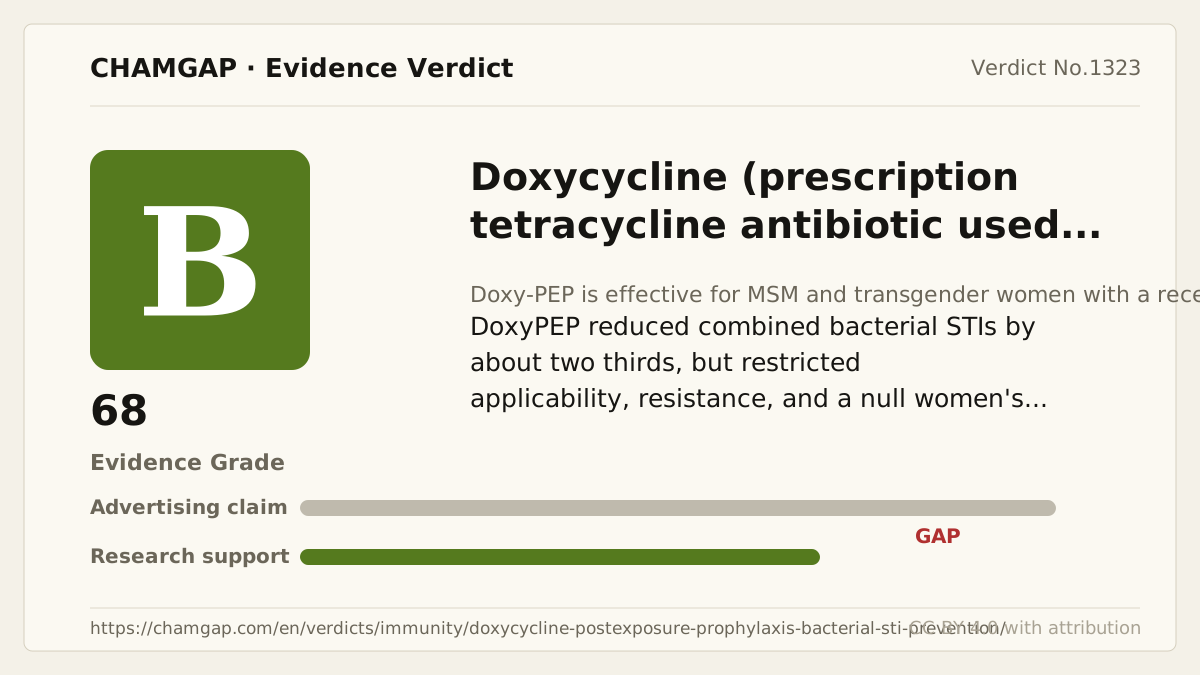
[Chamgap] Doxycycline postexposure prophylaxis x prevention of bacterial STIs in high-risk MSM and transgender women — Evidence Grade B·68. 2 cited sources checked. Source: https://chamgap.com/en/verdicts/immunity/doxycycline-postexposure-prophylaxis-bacterial-sti-prevention/ · CC BY 4.0CC BY 4.0 — free to use with attribution; do not distort grades, numbers, or verdict meaning.
What this document does and does not do
Chamgap is an information source. It reports what research has and has not confirmed; it does not tell readers what to take or buy. That decision belongs to readers and, when needed, medical or legal professionals. This verdict reflects literature available up to the search date and may change as new research appears. Nothing here is medical advice.