
Daily inpatient toothbrushing,
does it really help with Prevention of hospital-acquired pneumonia, particularly in mechanically ventilated inpatients?
research showsDaily toothbrushing in hospitalized patients is rated B because the latest randomized-trial meta-analysis graded the hospital-acquired-pneumonia evidence as moderate certainty. The 2024 JAMA Internal Medicine meta-analysis included 15 randomized trials; in an effective population of 2,786, overall hospital-acquired pneumonia had an RR of 0.67 (95% CI 0.56 to 0.81) and ventilator-associated pneumonia had an RR of 0.68 (95% CI 0.57 to 0.82). Evidence was concentrated in ICU and mechanically ventilated patients and was rated moderate because of ascertainment bias in pneumonia diagnosis.
ads claimPromotional language can place toothbrushing on the same efficacy axis as chlorhexidine mouthwash or treatment of plaque and gingivitis. This verdict concerns the addition of physical toothbrushing and the pneumonia endpoint; it is distinct from the existing chlorhexidine-mouthwash verdict on plaque and gingivitis.
Useful facts when choosing a product
- The studied intervention was physical toothbrushing performed daily during hospitalization by nurses, dental professionals, or patients, compared with oral care without toothbrushing.
- Most trials were conducted in ICUs among mechanically ventilated patients; evidence in nonventilated general-ward patients came from only two studies.
- In 11 trials, both toothbrushing and control groups used chlorhexidine, so the principal between-group difference was the addition of mechanical brushing.
- No major harms were reported, but mucosal irritation and minor oral bleeding occurred infrequently; intubated patients require skilled oral care to avoid aspiration and tube displacement.
Chamgap Semantic Classification Code
Candidate index · review held
UNK.inpatient-toothbrushing.oral.hospital-acquired-pneumonia-particularly-in-mechanically-ventilated-inpatients.prevent.UNKUnknown > inpatient toothbrushing > Oral > hospital-acquired pneumonia, particularly in mechanically ventilated inpatients > Occurrence-prevention claim > Unknown
An automated migration candidate, not an issued permanent code; exact claim scope remains under review. This machine-generated migration candidate helps retrieval but is not a permanent assignment. The original verdict ID and URL remain authoritative.
What the research actually shows
Ehrenzeller and Klompas 2024 synthesized 15 randomized trials and 10,742 hospitalized adults comparing oral care with toothbrushing against regimens without toothbrushing; after adjusting one cluster trial, the effective population was 2,786. Hospital-acquired pneumonia across 13 studies and 2,557 participants had an RR of 0.67 (95% CI 0.56 to 0.81; I²=0%); VAP across 12 studies and 1,744 participants had an RR of 0.68 (95% CI 0.57 to 0.82; I²=0%; NNT 12). The seven-study low-risk-of-bias sensitivity analysis gave RR 0.64. Pneumonia certainty was moderate under GRADE because of ascertainment bias. ICU mortality across 6 studies and 1,331 participants had an RR of 0.81 (95% CI 0.69 to 0.95), but the four-study low-risk-of-bias analysis included no effect, RR 0.86 (95% CI 0.71 to 1.04), and the review did not report a separate GRADE category for this endpoint. The 2020 Cochrane review rated both toothbrushing VAP and mortality evidence as low certainty.
Why this is classified as B (72)
Hospital-acquired pneumonia fell with RR 0.67 (95% CI 0.56 to 0.81) across 13 studies and 2,557 participants, but ascertainment bias in pneumonia diagnosis limited GRADE certainty to moderate, giving B with 72 points.
Counterpoint. Evidence is strongest in mechanically ventilated ICU patients, while reduced pneumonia in nonventilated wards and reduced ICU mortality retain additional uncertainty.
Rejudgment record. New verdict — The latest 15-trial meta-analysis rates reduction in the claimed hospital-acquired-pneumonia endpoint as moderate GRADE certainty, with evidence concentrated in mechanically ventilated ICU populations, setting a B ceiling
Sub-claim grades by effect
This ingredient is marketed for several effects. A single overall grade blends strong and weak claims together, so each effect is graded separately here. The overall grade reflects the strongest disconfirming or core claim.
| Effect (sub-claim) | Grade | Basis |
|---|---|---|
| Prevention of hospital-acquired pneumonia | B | Across 13 studies and 2,557 participants, RR was 0.67 (95% CI 0.56 to 0.81), with moderate GRADE certainty because of ascertainment bias in pneumonia diagnosis. |
| Prevention of ventilator-associated pneumonia | B | Across 12 studies and 1,744 participants, RR was 0.68 (95% CI 0.57 to 0.82), I²=0%, consistent with the moderate-certainty rating for the pneumonia endpoint. |
| Reduced ICU mortality | C | The six-study RR of 0.81 was positive, but the four-study low-risk-of-bias analysis was RR 0.86 (95% CI 0.71 to 1.04), including no effect, and the review did not report a separate GRADE category, so reduction was not treated as established. |
Cross-check — AI research and Codex final gate
Evidence Table
| Study | Design | Sample | Funding | Endpoint | Result | Weight |
|---|---|---|---|---|---|---|
| Ehrenzeller S and Klompas M. 2024 | Systematic review and meta-analysis of randomized trials in hospitalized patients | 15 randomized trials and 10,742 participants; cluster-adjusted effective population 2,786; 13 studies and 2,557 participants for HAP | Nondirected Swiss Study Foundation support for Ehrenzeller's research visit; Klompas disclosed outside grant funding from CDC, AHRQ, and the Massachusetts Department of Public Health and UpToDate royalties | Hospital-acquired pneumonia, VAP, ICU mortality, ventilation duration, and ICU length of stay | HAP RR was 0.67 (95% CI 0.56 to 0.81) and VAP RR 0.68 (0.57 to 0.82); pneumonia had moderate GRADE certainty. ICU mortality RR was 0.81, but the low-risk-of-bias sensitivity analysis included no effect. | Key updated GRADE evidence |
| Zhao T et al. 2020 | Cochrane systematic review of randomized oral-care trials in critically ill patients | 40 randomized trials and 5,675 participants overall; 5 trials and 910 participants for toothbrushing comparisons | Cochrane Oral Health and academic support | VAP, mortality, ventilation duration, and ICU length of stay with versus without toothbrushing | Toothbrushing VAP RR was 0.61 (95% CI 0.41 to 0.91), low certainty; mortality RR was 0.84 (0.67 to 1.05), low certainty. | Historical low-certainty cross-check |
Receipt — 2 References
All 2 cited sources were verified for existence at the original page (as of 2026-07-23).
Final verification and publication gate: Codex · Evidence date: 2026-07-23 · Corrections: none
Cite this verdict
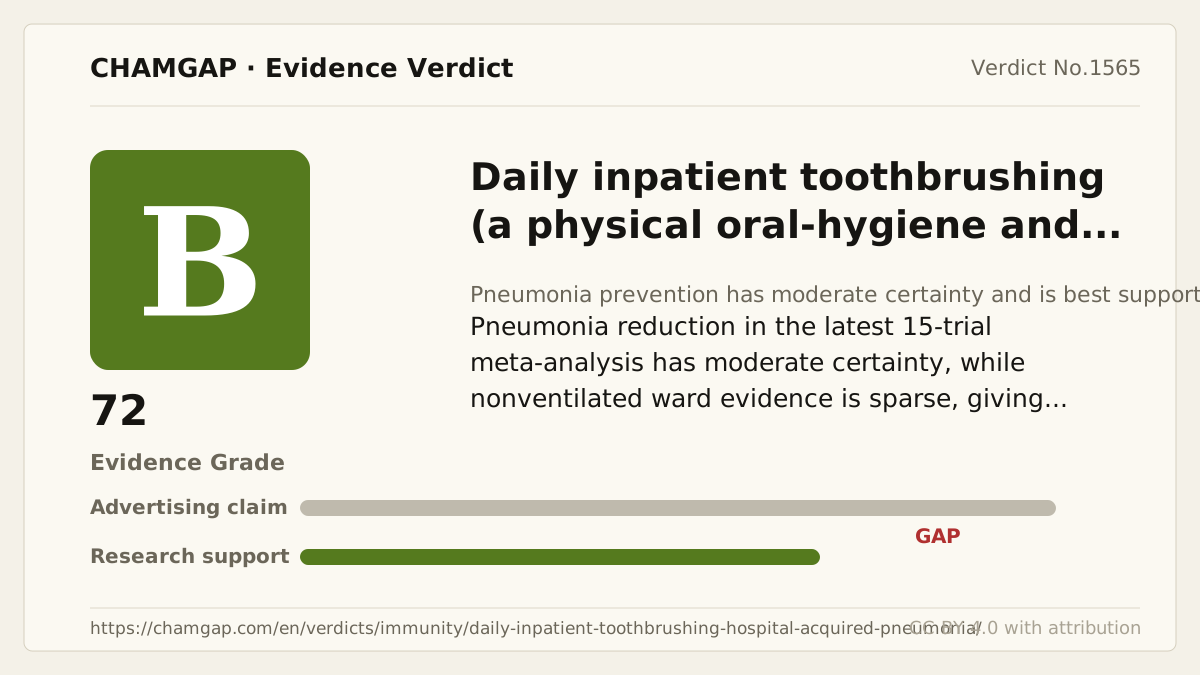
[Chamgap] Daily inpatient toothbrushing x prevention of hospital-acquired pneumonia — Evidence Grade B·72. 2 cited sources checked. Source: https://chamgap.com/en/verdicts/immunity/daily-inpatient-toothbrushing-hospital-acquired-pneumonia/ · CC BY 4.0CC BY 4.0 — free to use with attribution; do not distort grades, numbers, or verdict meaning.
What this document does and does not do
Chamgap is an information source. It reports what research has and has not confirmed; it does not tell readers what to take or buy. That decision belongs to readers and, when needed, medical or legal professionals. This verdict reflects literature available up to the search date and may change as new research appears. Nothing here is medical advice.