
Codeine,
does it really help with Reduced frequency and severity of cough from the common cold or acute upper respiratory infection?
research showsCodeine is rated F for common-cold or acute upper-respiratory-infection cough. In a double-blind study of 91 adults, both a single 30-mg dose and 120 mg per day were ineffective versus placebo. A separate double-blind study in 82 adults was also null for objective cough frequency, cough sound-pressure level, and subjective scores. Cochrane and NICE reviews confirm repeated null findings, guidance advises against use for this indication, and pediatric use is contraindicated. Efficacy receives 8 points, while respiratory depression, dependence, constipation, and CYP2D6 ultrarapid metabolism make safety high risk.
ads claimCentral antitussive pharmacology and use in other cough disorders are transferred into an impression of strong common-cold efficacy. In actual cold trials, codeine did not exceed natural improvement and placebo response.
Useful facts when choosing a product
- Codeine is a prescription opioid that is partly converted to morphine. Efficacy for common-cold cough must be judged separately from analgesia or effects in cough of another cause.
- Drowsiness, nausea, constipation, respiratory depression, and dependence can occur. Alcohol, benzodiazepines, sleep medicines, or other opioids can amplify sedation and respiratory depression.
- CYP2D6 ultrarapid metabolizers can develop greater morphine exposure and toxicity at the same dose. Codeine is contraindicated for cough and cold below age 12, and major restrictions apply to adolescents with impaired respiration and to breastfeeding.
- Most acute cough is self-limited, but dyspnea, chest pain, hemoptysis, high fever, hypoxemia, or persistent worsening requires evaluation for pneumonia or another cause.
Chamgap Semantic Classification Code
Candidate index · review held
M.codeine.UNK.frequency-and-severity-of-cough-from-the-common-cold-or-acute-upper-respiratory-infection.reduce.placeboMedicinal interventions > Codeine > Unknown > frequency and severity of cough from the common cold or acute upper respiratory infection > Reduction claim > Placebo
An automated migration candidate, not an issued permanent code; exact claim scope remains under review. This machine-generated migration candidate helps retrieval but is not a permanent assignment. The original verdict ID and URL remain authoritative.
What the research actually shows
The Eccles trial double-blind assigned 91 adults with upper respiratory infection to codeine syrup 30 mg or placebo and assessed objective cough frequency during three hours plus subjective severity diaries over four days. Both groups improved with time, but no between-group difference emerged. The Freestone trial assigned 82 adults to a single 50-mg dose or placebo and used cough sound pressure, microphone-recorded frequency, and subjective ratings; neither visit showed a treatment difference. Cochrane 2014 synthesized acute-cough medicine trials, and the NICE evidence review explicitly states that codeine 30 mg once or 120 mg daily was no better than placebo in adults with acute cough.
Why this is classified as F (8)
Two double-blind placebo-controlled studies in patients with acute cold or upper respiratory infection used different doses and methods and both found null objective and subjective outcomes. Subsequent systematic and guideline reviews found no superiority and do not support codeine for this use. Repeated refutation and guidance against use give F with 8 points. Pediatric contraindications and opioid harms are recorded separately under safety.
Counterpoint. Evidence and treatment differ when cough is caused by chronic lung disease, cancer, pertussis, or another condition. Prescription codeine should not be used like a routine cold medicine without identifying the cause.
Rejudgment record. New verdict — Applied the repeated-refutation standard because independent double-blind placebo-controlled trials of 30 mg, 120 mg per day, and 50 mg codeine in adults with acute upper respiratory infection found null objective and subjective cough outcomes, with systematic and guideline reviews also not supporting efficacy
Sub-claim grades by effect
This ingredient is marketed for several effects. A single overall grade blends strong and weak claims together, so each effect is graded separately here. The overall grade reflects the strongest disconfirming or core claim.
| Effect (sub-claim) | Grade | Basis |
|---|---|---|
| Reduced cough frequency in the common cold or acute upper respiratory infection | F | Objective cough frequency was placebo-null in two double-blind trials. |
| Reduced cough severity in the common cold or acute upper respiratory infection | F | Neither single nor repeated dosing improved subjective severity over placebo. |
| Relief of chronic cough or cough from another cause | ? | This is a separate clinical question with different diseases and mechanisms and was not evaluated by the direct evidence in this verdict. |
Cross-check — AI research and Codex final gate
Evidence Table
| Study | Design | Sample | Funding | Endpoint | Result | Weight |
|---|---|---|---|---|---|---|
| Eccles R et al. 1992 | Double-blind placebo-controlled laboratory and home-phase trial | 91 adults with acute upper respiratory infection | Not reported in the abstract | Objective cough frequency and four-day subjective cough severity | Neither a single 30-mg dose nor 120 mg per day was better than placebo syrup at any time point. | Key direct null trial |
| Freestone C and Eccles R. 1997 | Randomized double-blind stratified placebo-controlled parallel-group trial | 82 adults with common-cold cough | Not reported in the abstract | Cough sound pressure, microphone-recorded frequency, and subjective severity | Codeine 50 mg was no better than placebo on any objective or subjective endpoint. | Independent repeated null trial |
| Smith SM et al. 2014 Cochrane review | Systematic review of nonprescription medicines for acute cough | Nineteen adult trials with 3,799 participants and ten pediatric trials with 1,036 participants; included direct codeine trials | Cochrane academic review | Acute cough frequency, severity, and adverse events | The review included placebo-null codeine trials and found uncertain or negative evidence for nonprescription antitussives. | Systematic synthesis of repeated results |
Receipt — 4 References
All 4 cited sources were verified for existence at the original page (as of 2026-07-20).
Final verification and publication gate: Codex · Evidence date: 2026-07-20 · Corrections: none
Cite this verdict
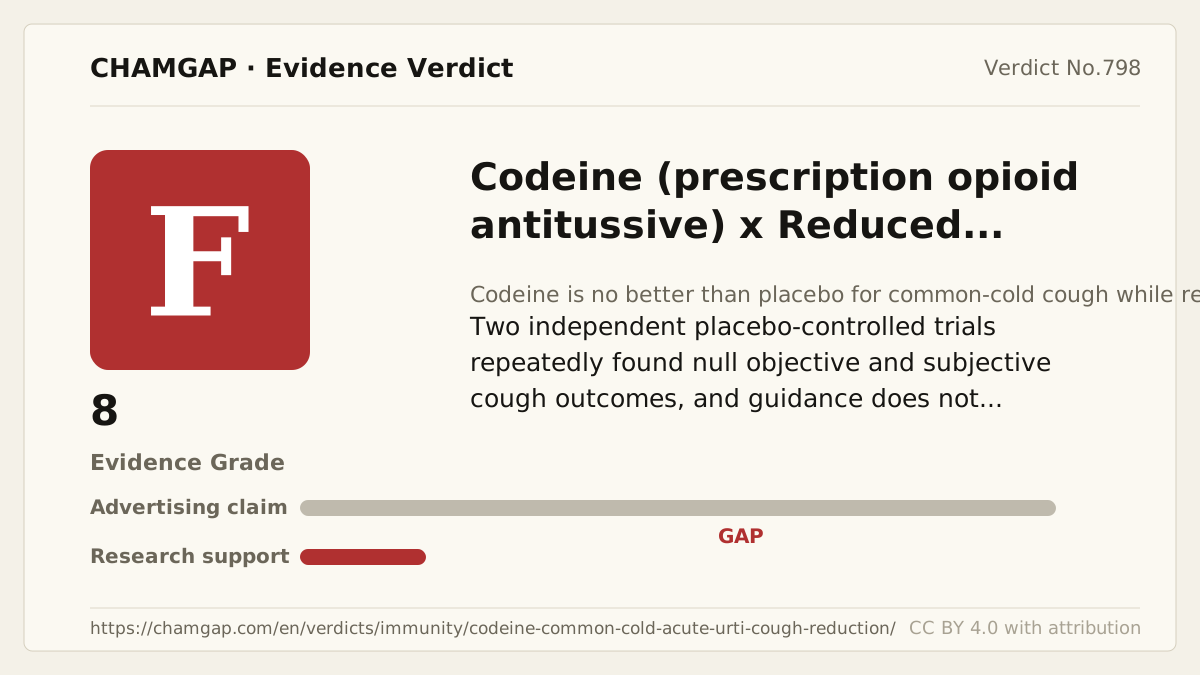
[Chamgap] Codeine x cough reduction in the common cold and acute upper respiratory infection — Evidence Grade F·8. 4 cited sources checked. Source: https://chamgap.com/en/verdicts/immunity/codeine-common-cold-acute-urti-cough-reduction/ · CC BY 4.0CC BY 4.0 — free to use with attribution; do not distort grades, numbers, or verdict meaning.
What this document does and does not do
Chamgap is an information source. It reports what research has and has not confirmed; it does not tell readers what to take or buy. That decision belongs to readers and, when needed, medical or legal professionals. This verdict reflects literature available up to the search date and may change as new research appears. Nothing here is medical advice.