
Chlorhexidine-alcohol skin antisepsis,
does it really help with Reduction of 30-day surgical-site infection after clean-contaminated surgery?
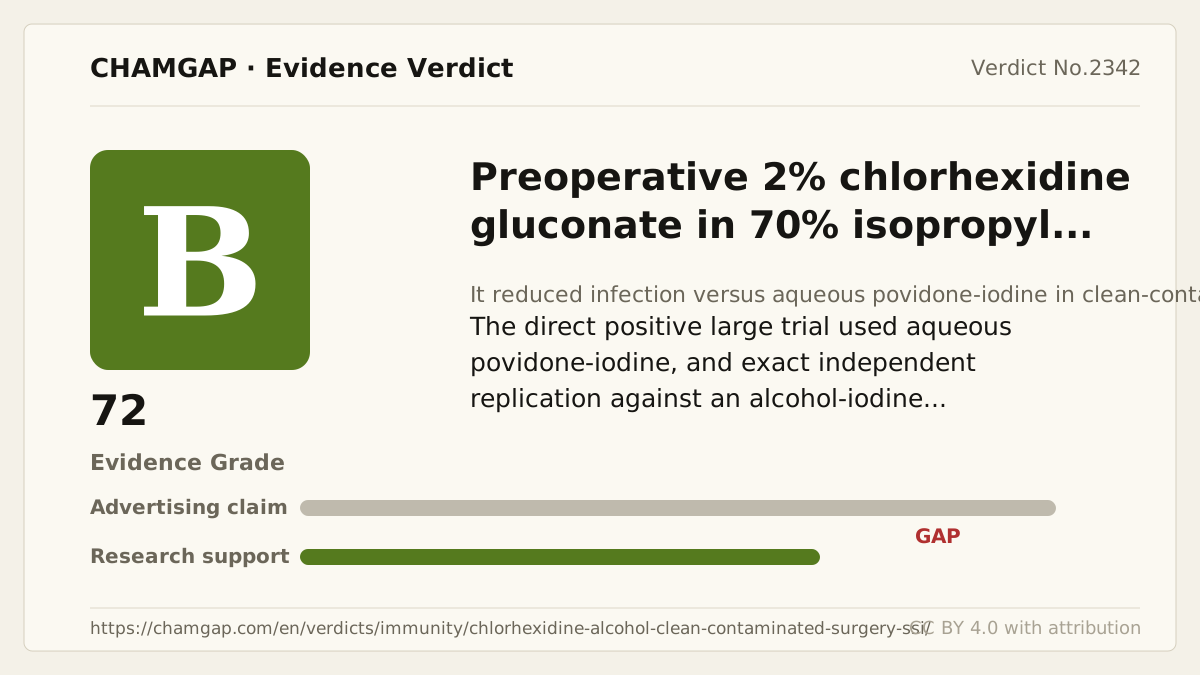
research showsThe grade is B. Across six hospitals, chlorhexidine-alcohol reduced 30-day surgical-site infection to 39 of 409 patients (9.5%) versus 71 of 440 (16.1%) with aqueous povidone-iodine. The comparator contained no alcohol. Trials against alcohol-containing iodine products vary by cesarean, fracture, and cardiac surgery, so the result does not establish universal superiority of chlorhexidine itself.
ads claimA result for a chlorhexidine-alcohol combination against aqueous povidone-iodine cannot be converted into a claim that chlorhexidine is superior to every alcohol-based iodophor. Operation type, active ingredient concentration, and solvent all need disclosure.
Useful facts when choosing a product
- The tested product was 2% chlorhexidine gluconate in 70% isopropyl alcohol; the comparator was aqueous 10% povidone-iodine.
- Drug-related pruritus or erythema occurred in three patients (0.7%) in each group, with no related serious event.
- Verdict 1554 is B with 69 points for 4% chlorhexidine cord care, and verdict 828 is B with 62 points for chlorhexidine mouthwash; both involve different sites and indications.
Chamgap Semantic Classification Code
Candidate index · review held
P.preoperative-2-percent-chlorhexidine-gluconate-in-70-percent-isopropyl-alcohol.procedural.surgical-site-infection-after-clean-contaminated-surgery.reduce.activeProcedures, devices and tests > Preoperative 2% chlorhexidine gluconate in 70% isopropyl alcohol > Procedural > surgical-site infection after clean-contaminated surgery > Reduction claim > Active comparator
An automated migration candidate, not an issued permanent code; exact claim scope remains under review. This machine-generated migration candidate helps retrieval but is not a permanent assignment. The original verdict ID and URL remain authoritative.
What the research actually shows
The pivotal trial included abdominal and nonabdominal clean-contaminated operations, with prophylactic antibiotics within one hour before incision. It used inpatient assessment and weekly calls through 30 days, followed by examination when infection was suspected, and applied CDC categories. Forty-eight of 897 randomized patients were excluded from the modified intention-to-treat population. Cardinal Health manufactured both products; multiple authors reported company grants and one author was an employee.
Why this is classified as B (72)
A large randomized trial found a sizable, precise reduction in actual infection, but it is the single direct manufacturer-linked trial and used active control only. Trials against alcohol-iodine products involve different operations, so they neither establish exact replication nor direct conflict. The grade is B with 72 points.
Counterpoint. The conclusion is most direct for clean-contaminated surgery against aqueous povidone-iodine. Cesarean, fracture fixation, cardiac surgery, and alcohol-based iodophor selection require operation-specific evidence.
Rejudgment record. Cross-check applied — Cross-check of the aqueous comparator, modified intention-to-treat denominator, CDC 30-day definition, manufacturer relationships, and alcohol-iodine trials
| Endpoint | H | Hard endpoint - actual events such as death |
| Replication | R1 | Single confirmatory trial |
| Independence | I0 | Evidence comes only from manufacturer studies |
| Effect size | E+ | Meets the clinically important threshold |
Stored derived and displayed grades match; this is not a current recalculation or validity check (B).
Sub-claim grades by effect
This ingredient is marketed for several effects. A single overall grade blends strong and weak claims together, so each effect is graded separately here. The overall grade reflects the strongest disconfirming or core claim.
| Effect (sub-claim) | Grade | Basis |
|---|---|---|
| Lower infection than aqueous povidone-iodine in clean-contaminated surgery | B | A large direct trial found 9.5% versus 16.1%. |
| Universal superiority to alcohol-based iodine in every operation | D | Large operation-specific trials show positive, null, and opposite results, preventing universal extrapolation. |
| Fewer related local skin reactions | D | Related pruritus or erythema occurred in 0.7% of each group. |
Cross-check — AI research and Codex final gate
Evidence Table
| Study | Design | Sample | Funding | Endpoint | Result | Weight |
|---|---|---|---|---|---|---|
| Darouiche RO et al. 2010 | Six-hospital randomized active-controlled trial | 897 randomized; modified ITT 849, 409 versus 440 | Cardinal Health grants, an employee author, and multiple disclosed company relationships | Any CDC-defined surgical-site infection within 30 days | 39/409 (9.5%) versus 71/440 (16.1%), RR 0.59 (95% CI 0.41 to 0.85) | Pivotal direct trial with an aqueous povidone-iodine comparator |
| Tuuli MG et al. 2016 | Single-center pragmatic randomized cesarean trial | 1,147 participants | US NIH and Washington University support; funders had no study role | Surgical-site infection within 30 days | 23 (4.0%) versus 42 (7.3%) with iodine-alcohol, RR 0.55 (95% CI 0.34 to 0.90) | Indirect support against an alcohol comparator in a different operation |
| PREP-IT Investigators; Sprague S et al. 2024 PREPARE Closed | Twenty-five-hospital cluster-randomized crossover trial | 6,785 in the infection analysis | Public funding from PCORI and the Canadian Institutes of Health Research | Ninety-day infection after closed lower-limb or pelvic fracture fixation | Iodine-alcohol 77/3360 (2.4%) versus chlorhexidine-alcohol 108/3425 (3.3%), OR 0.74 (95% CI 0.55 to 0.999) | Opposite-direction indirect evidence in a different operation |
Receipt — 3 References
All 3 cited sources were verified for existence at the original page (as of 2026-08-07).
Final verification and publication gate: Codex · Evidence date: 2026-08-07 · Corrections: none
Cite this verdict
[Chamgap] Chlorhexidine-alcohol skin antisepsis x surgical-site infection after clean-contaminated surgery — Evidence Grade B·72. 3 cited sources checked. Source: https://chamgap.com/en/verdicts/immunity/chlorhexidine-alcohol-clean-contaminated-surgery-ssi/ · CC BY 4.0CC BY 4.0 — free to use with attribution; do not distort grades, numbers, or verdict meaning.
What this document does and does not do
Chamgap is an information source. It reports what research has and has not confirmed; it does not tell readers what to take or buy. That decision belongs to readers and, when needed, medical or legal professionals. This verdict reflects literature available up to the search date and may change as new research appears. Nothing here is medical advice.