
Acetaminophen-diphenhydramine premedication,
does it really help with Prevention of febrile nonhemolytic or minor allergic transfusion reactions in patients largely without prior reactions?
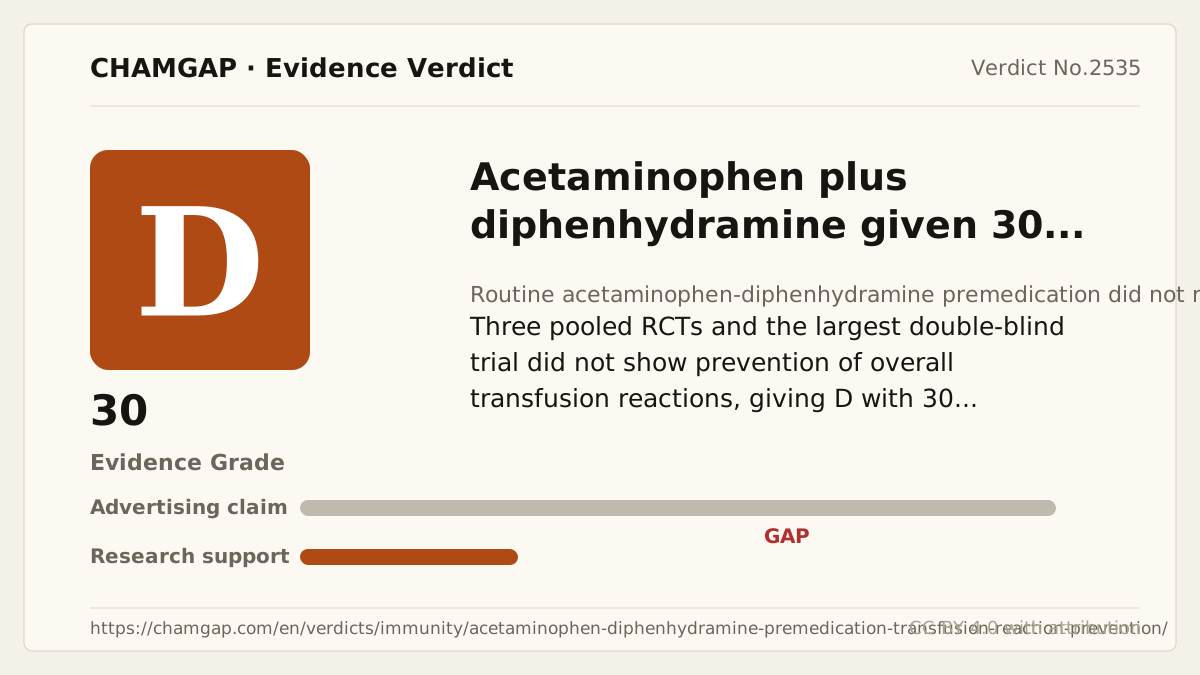
research showsThe grade is D. In the Kennedy double-blind trial's 315 eligible analyzed patients, 4,199 transfusions produced 29 reactions in 2,008 active-drug transfusions (1.44%) versus 33 in 2,191 placebo transfusions (1.51%). A meta-analysis of three RCTs, 517 patients, and 4,444 transfusions likewise found patient-level RR 0.92 (95% CI 0.63-1.35) for all nonhemolytic reactions. Results were repeatedly null, but the interval still allows potentially meaningful benefit, giving D with 30 points.
ads claimAn antipyretic can lower fever and an antihistamine can suppress allergic symptoms, but those pharmacologic facts do not establish prevention of transfusion reactions. Repeated randomized evidence did not show overall prevention from routine premedication in patients without prior reactions.
Useful facts when choosing a product
- Kennedy used acetaminophen 500 mg plus diphenhydramine 25 mg 30 minutes before transfusion.
- All products used a leukofilter and reaction symptoms were monitored for four hours after transfusion.
- The Ning meta-analysis DOI was verified as 10.1111/trf.15566; no PMID or trial registration was identified for Kennedy.
- Existing verdicts on other uses of either ingredient address different claims; no direct duplicate of the selected DOI or PMID was found.
Chamgap Semantic Classification Code
Candidate index · review held
UNK.acetaminophen-plus-diphenhydramine-given-before-transfusion.UNK.febrile-nonhemolytic-or-minor-allergic-transfusion-reactions-largely-without-prior-reactions.prevent.placeboUnknown > Acetaminophen plus diphenhydramine given before transfusion > Unknown > febrile nonhemolytic or minor allergic transfusion reactions largely without prior reactions > Occurrence-prevention claim > Placebo
An automated migration candidate, not an issued permanent code; exact claim scope remains under review. This machine-generated migration candidate helps retrieval but is not a permanent assignment. The original verdict ID and URL remain authoritative.
What the research actually shows
Kennedy randomized 334 patients aged 18-65 on leukemia or bone-marrow-transplant services using leukofilters, then excluded 19 after assignment, 10 active and 9 placebo, and analyzed 315. Two distinct defects apply: allocation-concealment implementation was not reported, and the analysis did not retain all 334 randomized patients. Its febrile-reaction subgroup result was RR 0.52 (95% CI 0.21-1.25), crossing the null. Ning pooled three RCTs with 517 patients and 4,444 transfusions; pooled febrile RR was 0.54 (0.26-1.10). Complete funding text was not confirmed.
Why this is classified as D (30)
Three RCTs addressing routine pretransfusion medication and the largest double-blind trial found no overall reaction reduction. Because the pooled interval leaves substantial possible benefit and no validated exclusion threshold exists, the grade is D with 30 points.
Counterpoint. D means benefit has not been demonstrated, not that selective use has been definitively disproved in every patient with recurrent prior reactions. That high-risk subgroup is sparsely studied.
Rejudgment record. Cross-check applied — We cross-checked unreported concealment implementation, 19 postrandomization exclusions, the febrile subgroup result, pooled confidence intervals, and funding uncertainty against Kennedy, the Cochrane trial table, and Ning.
| Endpoint | H | Hard endpoint - actual events such as death |
| Replication | RX | Repeatedly refuted in the same indication |
| Independence | I1 | Mixed funding sources |
| Effect size | E0 | Null |
| Precision | C0 | The confidence interval leaves room for benefit |
Stored derived and displayed grades match; this is not a current recalculation or validity check (D).
Sub-claim grades by effect
This ingredient is marketed for several effects. A single overall grade blends strong and weak claims together, so each effect is graded separately here. The overall grade reflects the strongest disconfirming or core claim.
| Effect (sub-claim) | Grade | Basis |
|---|---|---|
| Routine acetaminophen-diphenhydramine premedication prevents overall nonhemolytic transfusion reactions. | D | The pooled RR across three RCTs was 0.92 (95% CI 0.63-1.35). |
| The same premedication prevents reactions in patients with recurrent prior transfusion reactions. | ? | Only 27 of 517 patients had prior reactions, leaving this subgroup unresolved. |
Cross-check — AI research and Codex final gate
Evidence Table
| Study | Design | Sample | Funding | Endpoint | Result | Weight |
|---|---|---|---|---|---|---|
| Kennedy et al., transfusion premedication trial 2008 | Single-center randomized double-blind placebo-controlled phase 3 trial | 334 randomized; 19 excluded after randomization and 315 analyzed (154 active/161 placebo); 4,199 transfusions | Funding or acknowledgment text was not confirmed in the accessible source record | Overall febrile nonhemolytic or allergic transfusion reactions within four hours | Active drug 29/2,008 transfusions (1.44%) versus placebo 33/2,191 (1.51%); no difference overall. Febrile-reaction RR 0.52 (95% CI 0.21-1.25). | Largest double-blind trial, but concealment implementation was unreported and participants were excluded after randomization |
| Ning et al., systematic review and meta-analysis 2019 | Random-effects meta-analysis of three acetaminophen-antihistamine premedication RCTs | 517 patients and 4,444 red-cell or platelet transfusions | Review authors were based at McMaster and Western University; funding of individual included trials was incompletely verified | Patient-level all nonhemolytic, febrile nonhemolytic, and minor allergic transfusion reactions | All reactions RR 0.92 (95% CI 0.63-1.35); febrile RR 0.54 (0.26-1.10); minor allergic RR 1.37 (0.81-2.31) | Shows repeated null findings, but pooled intervals do not exclude benefit |
Receipt — 2 References
Of 2 cited sources, 1 had limited original-page access (blocked or summary-only) and were verified via index/summary, marked partial; the rest were verified at the original page. As of 2026-08-14.
Final verification and publication gate: Codex · Evidence date: 2026-08-14 · Corrections: none
Cite this verdict
[Chamgap] Acetaminophen-diphenhydramine premedication x prevention of transfusion reactions — Evidence Grade D·30. 2 cited sources checked. Source: https://chamgap.com/en/verdicts/immunity/acetaminophen-diphenhydramine-premedication-transfusion-reaction-prevention/ · CC BY 4.0CC BY 4.0 — free to use with attribution; do not distort grades, numbers, or verdict meaning.
What this document does and does not do
Chamgap is an information source. It reports what research has and has not confirmed; it does not tell readers what to take or buy. That decision belongs to readers and, when needed, medical or legal professionals. This verdict reflects literature available up to the search date and may change as new research appears. Nothing here is medical advice.