
Soy protein and isolated soy protein,
does it really help with Reduction in LDL cholesterol?
research showsAcross dozens of controlled trials against non-soy protein, soy protein lowers LDL cholesterol by an average of about 3% to 4%, or roughly 4.8 mg/dL. The reduction is repeated, but the effect is small, trials are short, and LDL is a surrogate marker. The effect of reducing saturated-fat intake by replacing meat and dairy is also mixed in, and there is no evidence for preventing cardiovascular events, supporting a C rating.
ads claimMarketing may say soy protein definitively prevents heart disease or merge soy-isoflavone evidence with soy-protein evidence. This verdict concerns a small LDL change at about 25 g/day, not myocardial-infarction or stroke prevention and not isolated isoflavones.
Useful facts when choosing a product
- In South Korea, soy protein is sold in soy milk, tofu and soy foods, isolated-soy-protein powders, and protein drinks; grams of actual soy protein per serving should be checked.
- The pivotal meta-analysis had a median soy-protein dose of 25 g/day and median duration of six weeks.
- Isolated protein, soy milk, and whole-soy foods differ in fat, fiber, and isoflavone content, so product effects are not necessarily interchangeable.
- People with soy allergy should avoid it, and spacing from medicines such as levothyroxine may be needed. Safety is separate from the C LDL-efficacy rating.
Chamgap Semantic Classification Code
Candidate index · review held
UNK.soy-protein-and-isolated-soy-protein.UNK.ldl-cholesterol.reduce.UNKUnknown > Soy protein and isolated soy protein > Unknown > LDL cholesterol > Reduction claim > Unknown
An automated migration candidate, not an issued permanent code; exact claim scope remains under review. This machine-generated migration candidate helps retrieval but is not a permanent assignment. The original verdict ID and URL remain authoritative.
What the research actually shows
The Jenkins 2019 meta-analysis included 43 of the 46 trials identified by the FDA and found in 41 trials with LDL data that a median intake of 25 g/day for six weeks lowered LDL by 4.76 mg/dL versus non-soy protein (95% CI, −6.71 to −2.80; I²=55%). The 2012 EFSA opinion concluded that a cause-and-effect relationship for LDL reduction had not been established, citing inconsistent isolated-soy-protein trials and a high risk of bias. The FDA's 2017 proposed rule likewise found that results from the 46 trials were not consistent enough to support an unqualified coronary-heart-disease health claim. Together, these sources show both repetition and the limitations of a small, short-term LDL effect and do not establish prevention of cardiovascular events.
Why this is classified as C (58)
The LDL reduction was repeated and statistically significant in a meta-analysis of 41 trials, but the absolute effect was small at 4.76 mg/dL, or about 3% to 4%. The median duration was six weeks, making this short-term surrogate-marker evidence, with I²=55% heterogeneity and effects of protein and saturated-fat substitution mixed in; there is no cardiovascular-event evidence. Under rule ①, surrogate evidence is capped at C, supporting 58 points at the upper end of C.
Counterpoint. Replacing animal protein with soy protein may provide additional whole-diet benefit, including lower saturated-fat intake. This verdict does not attribute that entire displacement effect to soy-protein powder itself.
Rejudgment record. Reassessment (cross-check reflected) — A small LDL reduction was repeated across 41 trials, but it is a short-term surrogate with heterogeneity and mixed effects from protein and saturated-fat substitution, and there is no cardiovascular-event evidence; rule ① therefore caps the grade at C
Sub-claim grades by effect
This ingredient is marketed for several effects. A single overall grade blends strong and weak claims together, so each effect is graded separately here. The overall grade reflects the strongest disconfirming or core claim.
| Effect (sub-claim) | Grade | Basis |
|---|---|---|
| Small reduction in LDL cholesterol (surrogate) | C | Meta-analysis of 41 trials: LDL −4.76 mg/dL (~3–4%), short-term, confounded by protein substitution |
| Prevention of cardiovascular events (MI, death) | ? | No trial assessing cardiovascular clinical outcomes of soy protein was identified |
Cross-check — AI research and Codex final gate
Evidence Table
| Study | Design | Sample | Funding | Endpoint | Result | Weight |
|---|---|---|---|---|---|---|
| Blanco Mejia S et al. 2019 (Jenkins group) | Meta-analysis of controlled dietary trials | 41 | Canadian Institutes of Health Research and others; some author industry support disclosed | LDL cholesterol and total cholesterol | At a median 25 g/day for six weeks, LDL was 4.76 mg/dL lower, about 3% to 4%, with I-squared 55%. | Key |
| FDA 2017 proposed rule | Regulatory evidence reassessment | 46 | United States federal regulatory assessment | LDL and the coronary-heart-disease health claim | Proposed revoking the unqualified claim because trial results were inconsistent. | Conflicting regulatory context |
| EFSA NDA Panel 2012 | Regulatory health-claim reassessment | 19 | European Union regulatory assessment | Reduction in LDL cholesterol | Four RCTs reported an effect, 14 did not, and one showed no consistent effect; the panel concluded that a cause-and-effect relationship had not been established. | Conflicting regulatory context |
Receipt — 3 References
All 3 cited sources were verified for existence at the original page (as of 2026-07-18).
Final verification and publication gate: Codex · Evidence date: 2026-07-18 · Corrections: none
Cite this verdict
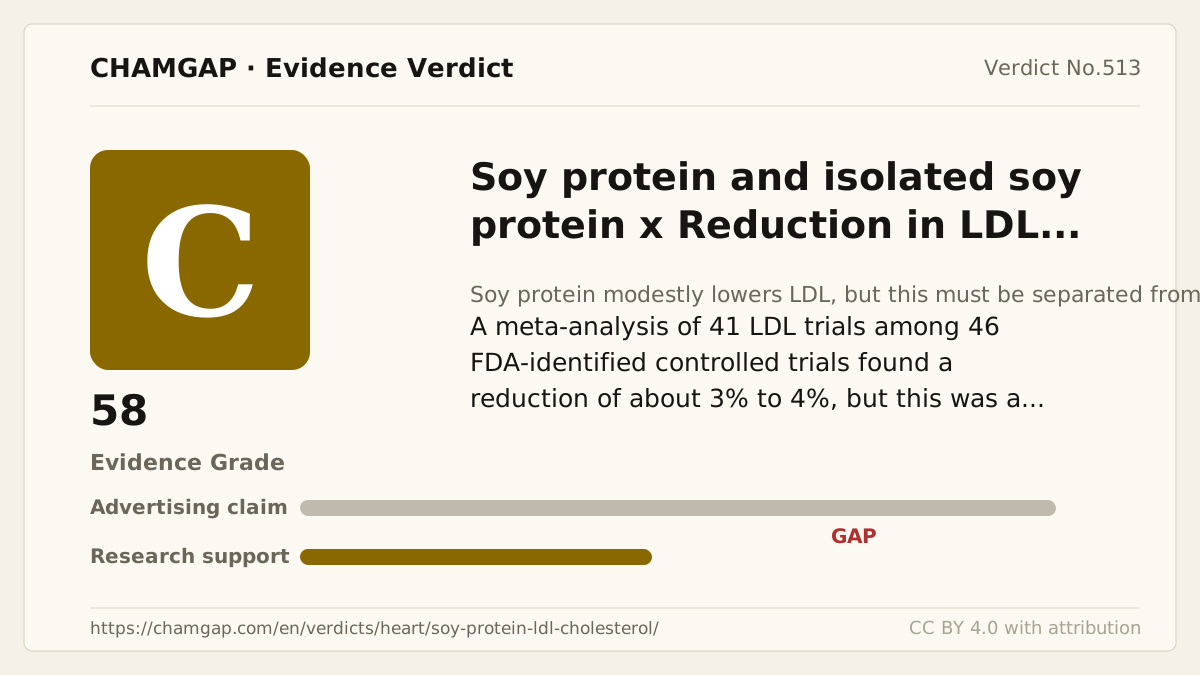
[Chamgap] Soy protein and isolated soy protein x LDL-cholesterol reduction — Evidence Grade C·58. 3 cited sources checked. Source: https://chamgap.com/en/verdicts/heart/soy-protein-ldl-cholesterol/ · CC BY 4.0CC BY 4.0 — free to use with attribution; do not distort grades, numbers, or verdict meaning.
What this document does and does not do
Chamgap is an information source. It reports what research has and has not confirmed; it does not tell readers what to take or buy. That decision belongs to readers and, when needed, medical or legal professionals. This verdict reflects literature available up to the search date and may change as new research appears. Nothing here is medical advice.