
Serrapeptase,
does it really help with Breakdown of arterial plaque, blood clots, and circulating proteins?
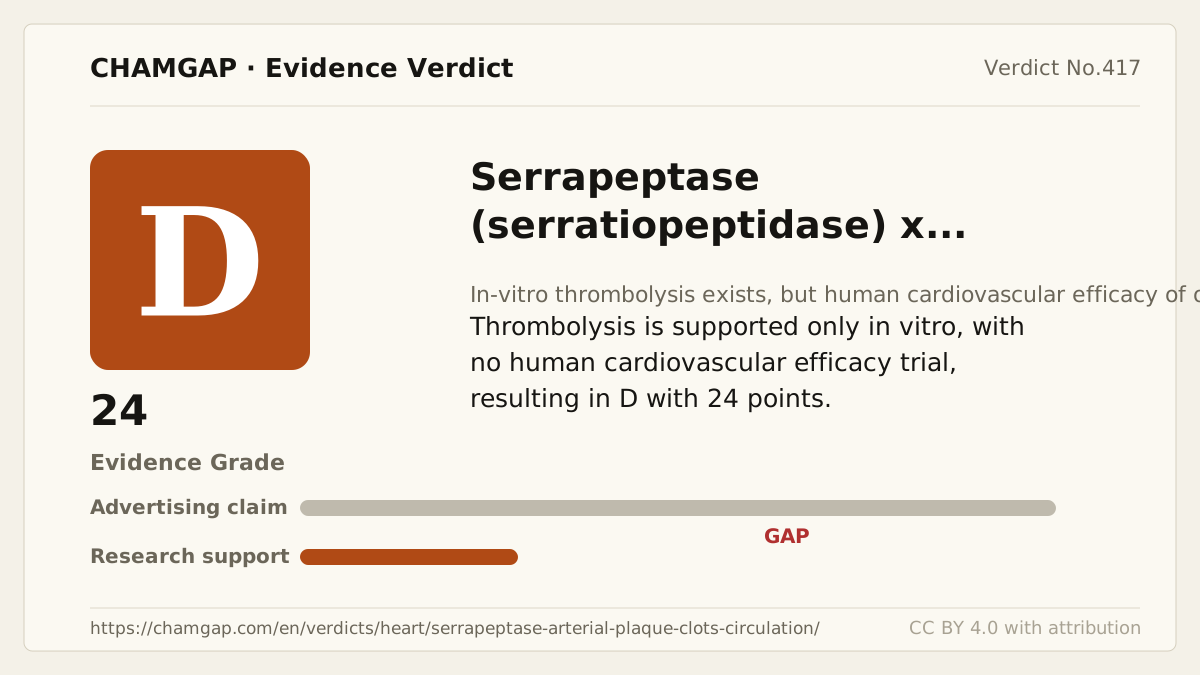
research showsSerrapeptase lyses fibrin and clots in vitro, but no credible RCT has tested whether oral use removes human arterial plaque or thrombi or reduces cardiovascular events. Intact absorption of the active enzyme from enteric-coated tablets is also unestablished. The cardiovascular efficacy axis remains preclinical, supporting D with 24 points.
ads claimMarketing claims that the enzyme 'digests only dead protein,' 'cleans arteries,' 'dissolves plaque and fibrin,' or removes scar tissue. This turns a test-tube enzyme action into a systemic targeted effect without establishing gastrointestinal stability, absorption, active concentration, or target selectivity.
Useful facts when choosing a product
- Enteric-coated capsules or tablets with activities ranging roughly from 40,000 to 250,000 SPU are sold through Korean and international online stores.
- Enzyme-activity units such as SPU are not clinical units of plaque reduction or thrombosis prevention.
- Enteric coating may delay acid degradation, but it does not establish systemic absorption of sufficient active enzyme or delivery to a cardiovascular target in humans.
- Because long-term safety data are inadequate, people with bleeding risk, users of anticoagulants or antiplatelet drugs, and those around surgery should consult a clinician.
Chamgap Semantic Classification Code
Candidate index · review held
UNK.serrapeptase.UNK.breakdown-of-arterial-plaque-blood-clots-and-circulating-proteins.assess.placeboUnknown > Serrapeptase > Unknown > Breakdown of arterial plaque, blood clots, and circulating proteins > Association or change assessment > Placebo
An automated migration candidate, not an issued permanent code; exact claim scope remains under review. This machine-generated migration candidate helps retrieval but is not a permanent assignment. The original verdict ID and URL remain authoritative.
What the research actually shows
The Mei 2022 study exposed fibrin plates and rabbit blood clots directly to serrapeptase solution and found in-vitro thrombolysis; it did not test oral absorption or human cardiovascular efficacy. The Bhagat 2013 systematic review found existing clinical studies small, methodologically weak, and insufficient to support health-supplement use. HSA used newer placebo-controlled data to phase out medicinal registration because the approved anti-inflammatory and anti-edema indications lacked significant clinical benefit. No credible RCT directly measured plaque volume, human thrombolysis, circulation, or cardiovascular events.
Why this is classified as D (24)
No human cardiovascular efficacy trial exists, but an in-vitro thrombolysis study does. Because the HSA action addressed other approved indications rather than repeated clinical refutation of cardiovascular claims, preclinical-only evidence supports D with 24 points.
Counterpoint. The in-vitro thrombolytic signal remains, but it does not establish intact oral absorption or human plaque and thrombus efficacy.
Rejudgment record. Reassessment (cross-check reflected) — No human cardiovascular plaque or thrombus RCT, thrombolysis limited to in-vitro evidence, and the HSA action confined to other approved indications
Cross-check — AI research and Codex final gate
Evidence Table
| Study | Design | Sample | Funding | Endpoint | Result | Weight |
|---|---|---|---|---|---|---|
| Bhagat S et al. 2013 | Systematic review | 24 | Unknown | Analgesic, anti-inflammatory, anti-edema, health-supplement efficacy, and safety | Most studies were small and poor quality; evidence was insufficient for health-supplement use, and antiatherosclerotic recommendations required evidence. | Key |
| Singapore HSA 2011 reassessment | Regulatory reassessment of placebo-controlled data | Regulatory review | Clinical benefit for approved indications | No significant benefit over placebo for the approved anti-inflammatory and anti-edema indications; medicinal registration was phased out, but cardiovascular plaque and thrombi were not directly tested. | Boundary | |
| Mei JF et al. 2022 | In-vitro fibrin and rabbit-clot lysis study | Unknown | Fibrinolytic activity, coagulation, and clot-lysis percentage | Serrapeptase solution lysed fibrin and rabbit clots in vitro, but oral absorption and human efficacy were not tested. | Preclinical |
Receipt — 3 References
All 3 cited sources were verified for existence at the original page (as of 2026-07-17).
Final verification and publication gate: Codex · Evidence date: 2026-07-17 · Corrections: none
Cite this verdict
[Chamgap] Serrapeptase x breakdown of arterial plaque, blood clots, and circulating proteins — Evidence Grade D·24. 3 cited sources checked. Source: https://chamgap.com/en/verdicts/heart/serrapeptase-arterial-plaque-clots-circulation/ · CC BY 4.0CC BY 4.0 — free to use with attribution; do not distort grades, numbers, or verdict meaning.
What this document does and does not do
Chamgap is an information source. It reports what research has and has not confirmed; it does not tell readers what to take or buy. That decision belongs to readers and, when needed, medical or legal professionals. This verdict reflects literature available up to the search date and may change as new research appears. Nothing here is medical advice.