
Pantethine,
does it really help with Reduction in LDL cholesterol and triglycerides?
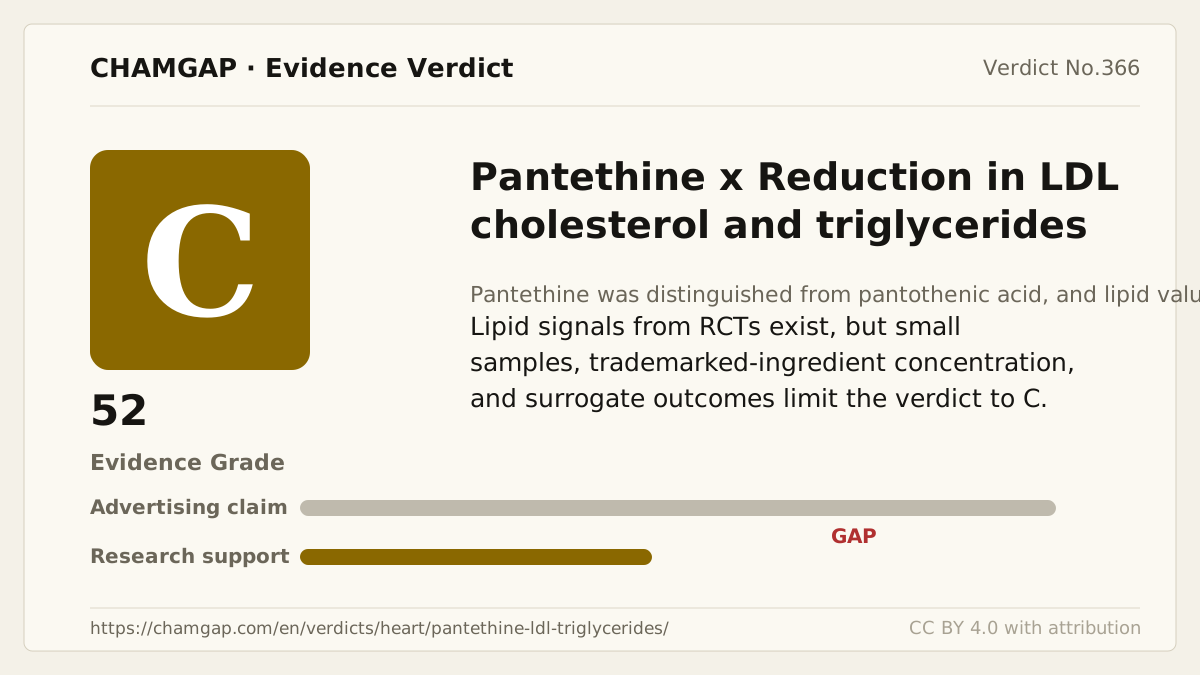
research showsLipid RCTs using pantethine 600-900 mg/day do exist and repeatedly signal lower LDL cholesterol and triglycerides. Many trials are old and small, however, and newer placebo-controlled data remain concentrated in the same research and trademarked-ingredient network, with small effects on laboratory markers. Pantethine is not the same ingredient as pantothenic acid, or vitamin B5.
ads claimThe nutritional role of pantothenic acid should not be blended with pantethine's lipid evidence, and a small LDL change should not be presented as cardiovascular protection or drug replacement.
Useful facts when choosing a product
- In Korea, pantethine is more commonly encountered in imported capsules and multi-ingredient lipid products than in domestic standalone products.
- Clinical doses are usually 600-900 mg/day, often 300 mg two or three times daily.
- Pantethine content cannot be read interchangeably with pantothenic acid or calcium pantothenate content.
- People using anticoagulants, those with bleeding disorders, and patients around surgery should check safety separately.
Chamgap Semantic Classification Code
Candidate index · review held
S.pantethine.UNK.ldl-cholesterol-and-triglycerides.reduce.placeboSupplements and nutraceuticals > Pantethine > Unknown > LDL cholesterol and triglycerides > Reduction claim > Placebo
An automated migration candidate, not an issued permanent code; exact claim scope remains under review. This machine-generated migration candidate helps retrieval but is not a permanent assignment. The original verdict ID and URL remain authoritative.
What the research actually shows
A 1984 double-blind study gave 900 mg/day of pantethine to 29 participants and reported reductions in LDL cholesterol and triglycerides. A 2005 review collected 28 trials with 646 participants, but the average sample was about 22 and many studies lacked controls, limiting its confirmatory value. A 2011 triple-blind trial in 120 participants, supported by Kyowa for Pantesin, increased the dose from 600 to 900 mg/day and reported an LDL reduction of about 4%. Describing pantethine as a vitamin B5 derivative does not establish the same lipid efficacy for pantothenic acid; efficacy must not be transferred between pantethine and pantothenic acid.
Why this is classified as C (52)
Multiple human trials make B a candidate, but sample size, age of studies, review methods, trademarked-ingredient concentration, and restriction to lipid surrogates are substantial. The lipid precedent for small effects and manufacturer concentration yields C with 52 points.
Counterpoint. Independent large placebo-controlled trials and long-term cardiovascular outcomes would permit reassessment.
Rejudgment record. Reassessment (cross-check reflected) — Recognized the 29- and 120-participant lipid RCTs but retained C for surrogate outcomes, branded support, and the prohibition on transferring pantethine efficacy to pantothenic acid
Sub-claim grades by effect
This ingredient is marketed for several effects. A single overall grade blends strong and weak claims together, so each effect is graded separately here. The overall grade reflects the strongest disconfirming or core claim.
| Effect (sub-claim) | Grade | Basis |
|---|---|---|
| Reduction in LDL cholesterol | C | Small, product-concentrated surrogate signal from RCTs |
| Reduction in triglycerides | C | Centered on older small studies with variable effect sizes |
Cross-check — AI research and Codex final gate
Evidence Table
| Study | Design | Sample | Funding | Endpoint | Result | Weight |
|---|---|---|---|---|---|---|
| Gaddi et al. (1984), Atherosclerosis | Double-blind placebo-controlled trial | 29 | Unknown | Total cholesterol, LDL-C, and triglycerides | Lower LDL cholesterol and triglycerides with pantethine 900 mg/day | Moderate |
| McRae (2005), Nutrition Research | Review of clinical literature | 22 | Unknown | Blood lipids | Summarized lipid improvement, but many studies were uncontrolled and small | Low |
| Rumberger et al. (2011), Nutrition Research | Randomized triple-blind placebo-controlled trial, 16 weeks | 120 | Supported by Kyowa Hakko USA; Pantesin used | LDL-C, total cholesterol, and triglycerides | Small but significant LDL and total-cholesterol reductions at 600-900 mg/day | Moderate |
Receipt — 3 References
All 3 cited sources were verified for existence at the original page (as of 2026-07-16).
Final verification and publication gate: Codex · Evidence date: 2026-07-16 · Corrections: none
Cite this verdict
[Chamgap] Does pantethine lower LDL cholesterol and triglycerides? — Evidence Grade C·52. 3 cited sources checked. Source: https://chamgap.com/en/verdicts/heart/pantethine-ldl-triglycerides/ · CC BY 4.0CC BY 4.0 — free to use with attribution; do not distort grades, numbers, or verdict meaning.
What this document does and does not do
Chamgap is an information source. It reports what research has and has not confirmed; it does not tell readers what to take or buy. That decision belongs to readers and, when needed, medical or legal professionals. This verdict reflects literature available up to the search date and may change as new research appears. Nothing here is medical advice.