
Non-micronized single-ingredient diosmin,
does it really help with Relief of venous-insufficiency leg edema, pain, and heaviness?
research showsEvidence exists for phlebotonics and MPFF in venous symptoms, but direct evidence for the target product, non-micronized diosmin alone, is much thinner, supporting C. A 114-person noninferiority trial found 600 mg of diosmin noninferior to 1000 mg of MPFF, but it used an active comparator rather than placebo, a patient-reported visual analog scale, a wide noninferiority margin, and manufacturer-linked investigators.
ads claimMarketing simplifies MPFF and Daflon research into claims that diosmin alone treats swelling, pain, or varicose veins. Omitting micronization, hesperidin content, medicinal formulation, and compression co-therapy transfers evidence between non-equivalent products.
Useful facts when choosing a product
- Single-ingredient diosmin over-the-counter medicines are distributed in Korea; one authorized regimen for venous insufficiency is 600 mg once daily with a meal.
- The key noninferiority trial compared non-micronized diosmin at 600 mg/day with MPFF at 1000 mg/day for six months.
- MPFF typically contains 900 mg of micronized diosmin plus 100 mg of hesperidin and is not equivalent to a non-micronized single-ingredient tablet.
- Gastrointestinal symptoms, headache, or skin reactions can occur. Pregnancy, lactation, use with anticoagulants or antiplatelet agents, and sudden unilateral leg swelling or pain warrant professional evaluation.
Chamgap Semantic Classification Code
Candidate index · review held
UNK.non-micronized-single-ingredient-diosmin.intravenous.venous-insufficiency-leg-edema-pain-and-heaviness.relieve.MULTIUnknown > Non-micronized single-ingredient diosmin > Intravenous > venous-insufficiency leg edema, pain, and heaviness > Symptom-relief claim > Multiple: primary unresolved
An automated migration candidate, not an issued permanent code; exact claim scope remains under review. This machine-generated migration candidate helps retrieval but is not a permanent assignment. The original verdict ID and URL remain authoritative.
What the research actually shows
The 2020 Cochrane review pooled multiple phlebotonics and found that they probably reduce edema slightly versus placebo, while quality of life showed little or no difference and drug-specific results were limited and discordant. The 2018 Kakkos meta-analysis supported improvement in pain, heaviness, and other symptoms with MPFF, but MPFF combines micronized diosmin and hesperidin. The 2020 Steinbruch trial compared non-micronized diosmin 600 mg with MPFF 1000 mg for six months and reported noninferior symptom visual-analog-scale change, but it lacked placebo and included manufacturer employees as coauthors. A low-dose trial of the proprietary bioavailable formulation known as microsmin Plus was not generalized to all non-micronized single-ingredient diosmin products.
Why this is classified as C (48)
A direct human noninferiority trial and proprietary-formulation placebo signal prevent a D rating. However, stronger evidence is concentrated in the MPFF combination, while the non-micronized single-ingredient evidence is limited by active comparison, subjective visual analog scales, manufacturer links, and formulation specificity, supporting C with 48 points under the combination-attribution rule.
Counterpoint. Adjunctive relief of venous-insufficiency symptoms remains possible. This verdict does not extend to treatment of thrombosis, deep-vein thrombosis, cardiac or renal edema, or venous-ulcer healing.
Rejudgment record. New verdict — Moderate evidence is concentrated in the MPFF combination, while direct evidence for non-micronized diosmin alone relies on active comparison, subjective visual analog scales, and manufacturer links, capping the rating at C
Sub-claim grades by effect
This ingredient is marketed for several effects. A single overall grade blends strong and weak claims together, so each effect is graded separately here. The overall grade reflects the strongest disconfirming or core claim.
| Effect (sub-claim) | Grade | Basis |
|---|---|---|
| Relief of venous symptoms with the MPFF combination of micronized diosmin and hesperidin | B | Multiple randomized trials and meta-analyses support improvements in pain, heaviness, and edema, but subjective outcomes and product and funding concentration remain. |
| Relief of leg edema, pain, and heaviness with non-micronized diosmin alone | C | Direct evidence centers on active-comparator noninferiority and proprietary-product trials, without independent large placebo-controlled replication. |
Cross-check — AI research and Codex final gate
Evidence Table
| Study | Design | Sample | Funding | Endpoint | Result | Weight |
|---|---|---|---|---|---|---|
| Martinez-Zapata MJ et al. 2020 | Cochrane systematic review | 7,700 | Most authors reported no conflicts | Edema, pain, heaviness, quality of life, and ulcers | Phlebotonics as a class probably reduced edema slightly, but quality of life showed little or no difference and drug-specific results were limited and discordant. | Contextual |
| Kakkos SK, Nicolaides AN. 2018 | Meta-analysis of randomized placebo-controlled MPFF trials | 1,700 | Centered on a branded product | Pain, heaviness, edema, cramps, and quality of life | Improvement in several venous symptoms was reported with MPFF, but this evidence concerns a micronized diosmin-plus-hesperidin combination. | Key for combination |
| Steinbruch M et al. 2020 | Single-blind randomized active-comparator noninferiority trial | n=114 | Employees of the non-micronized product manufacturer were coauthors | Lower-limb venous-symptom 100-mm visual analog scale | Non-micronized diosmin at 600 mg/day was noninferior to MPFF at 1000 mg/day, but there was no placebo and the noninferiority margin was 20 mm. | Key for single ingredient |
Receipt — 3 References
All 3 cited sources were verified for existence at the original page (as of 2026-07-18).
Final verification and publication gate: Codex · Evidence date: 2026-07-18 · Corrections: none
Cite this verdict
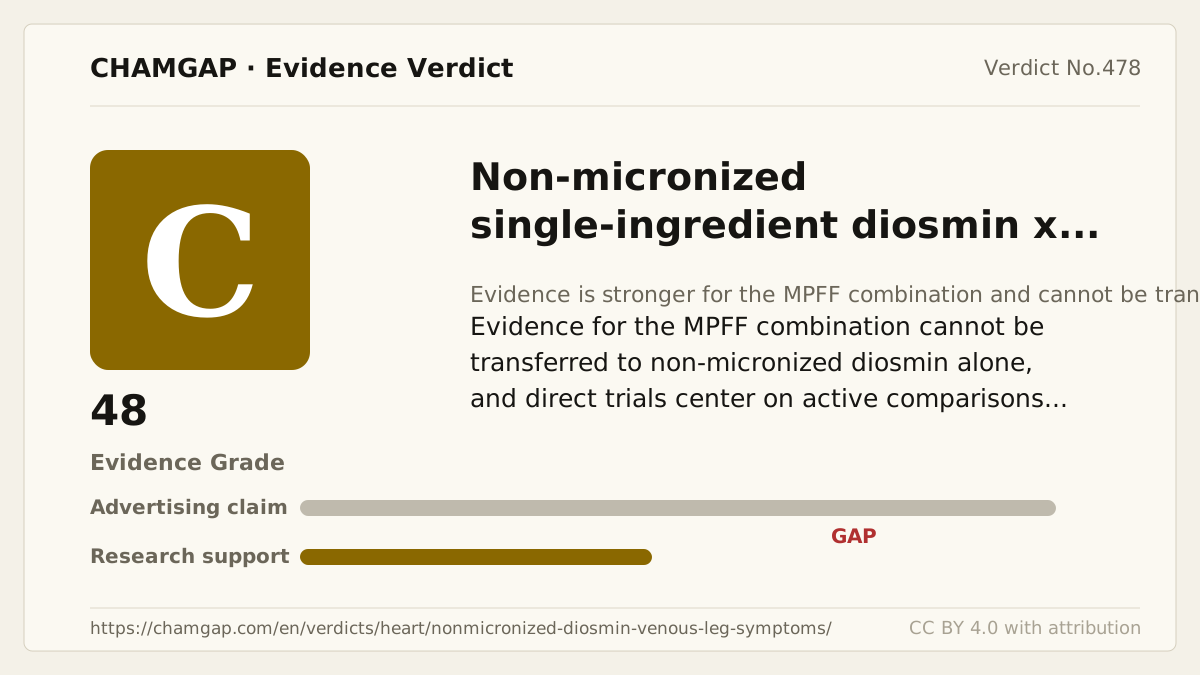
[Chamgap] Non-micronized single-ingredient diosmin x venous-insufficiency leg edema, pain, and heaviness — Evidence Grade C·48. 3 cited sources checked. Source: https://chamgap.com/en/verdicts/heart/nonmicronized-diosmin-venous-leg-symptoms/ · CC BY 4.0CC BY 4.0 — free to use with attribution; do not distort grades, numbers, or verdict meaning.
What this document does and does not do
Chamgap is an information source. It reports what research has and has not confirmed; it does not tell readers what to take or buy. That decision belongs to readers and, when needed, medical or legal professionals. This verdict reflects literature available up to the search date and may change as new research appears. Nothing here is medical advice.