
Horse chestnut seed extract,
does it really help with Relief of leg pain, edema, and heaviness in chronic venous insufficiency?
research showsOral horse chestnut seed extract standardized to aescin has evidence pointing toward reduced leg pain, edema, and heaviness in chronic venous insufficiency over two to sixteen weeks. A Cochrane review identified seventeen randomized trials, including six placebo-controlled pain studies with 543 participants that favored treatment. Pain and heaviness are subjective endpoints, however, while edema and leg volume are surrogate measures; the trials are old and small, and certainty is very low. Direct trials of long-term clinical outcomes such as ulcers, thrombosis, and disease progression are also absent, so the grade is C.
ads claimClaims of repairing venous valves, preventing thrombosis, eliminating varicose veins, or replacing surgery turn short-term symptom evidence into unproven disease-modifying claims. The supported scope is short-term relief of pain, edema, and heaviness with a standardized oral extract.
Useful facts when choosing a product
- A representative clinical specification is 50 mg of aescin per dose twice daily, for 100 mg/day in a standardized oral extract.
- In South Korea, horse chestnut products are visible through imported and cross-border supplements, including products labeled with 50 mg of aescin per serving, but extraction ratios, aescin content, and combination ingredients vary.
- Raw seeds, bark, leaves, and flowers may contain toxic constituents and are not equivalent to the purified standardized extract used in trials.
- Nephrotoxicity concerns are influenced by raw or nonstandard products and preclinical or case material rather than a confirmed renal signal in short-term standardized trials. Caution is still appropriate because of gastrointestinal symptoms, dizziness, headache, itching, and inadequate data in pregnancy, lactation, and liver or kidney disease.
Chamgap Semantic Classification Code
Candidate index · review held
S.horse-chestnut-seed-extract-standardized-to-aescin.intravenous.leg-pain-edema-and-heaviness-in-chronic-venous-insufficiency.relieve.placeboSupplements and nutraceuticals > Horse chestnut seed extract standardized to aescin > Intravenous > leg pain, edema, and heaviness in chronic venous insufficiency > Symptom-relief claim > Placebo
An automated migration candidate, not an issued permanent code; exact claim scope remains under review. This machine-generated migration candidate helps retrieval but is not a permanent assignment. The original verdict ID and URL remain authoritative.
What the research actually shows
The 2012 Cochrane review included seventeen randomized trials of aescin-standardized oral single-ingredient products. Six placebo-controlled studies with 543 participants showed clear pain reduction, and edema, leg volume, circumference, and pruritus generally moved in the same direction. In Diehm 1996, 240 participants received aescin 50 mg twice daily, compression stockings, or placebo for twelve weeks; leg volume fell by 43.8 mL with extract and rose by 9.8 mL with placebo. The review nevertheless called for more rigorous large and long-term trials.
Why this is classified as C (58)
Short-term pain and heaviness are subjective endpoints, while edema and leg volume are surrogate measures, so the rules cap the grade at C. The positive direction across seventeen trials is acknowledged, but the studies are old and small, certainty for pain and edema is very low, and direct trials of long-term ulcers, thrombosis, or disease progression are absent, supporting C with 58 points.
Counterpoint. When standardized aescin 100 mg/day is separated from nonstandard products, the short-term symptom signal is reasonably consistent. Independent large trials of long-term safety and outcomes such as ulcers and thrombosis are still needed.
Rejudgment record. Reassessment (cross-check reflected) — The positive short-term direction across seventeen randomized trials is acknowledged, but pain and heaviness are subjective endpoints, edema and leg volume are surrogate measures, certainty is very low, and direct long-term clinical-outcome trials are absent, making C the ceiling under the rules
Sub-claim grades by effect
This ingredient is marketed for several effects. A single overall grade blends strong and weak claims together, so each effect is graded separately here. The overall grade reflects the strongest disconfirming or core claim.
| Effect (sub-claim) | Grade | Basis |
|---|---|---|
| Short-term relief of leg pain, edema, and heaviness in chronic venous insufficiency | C | Multiple two- to sixteen-week trials support standardized aescin, but they center on subjective endpoints and surrogate measures, and certainty is very low. |
| Improvement in long-term clinical outcomes such as venous ulcers, thrombosis, or disease progression | ? | No human efficacy trial directly evaluating these long-term outcomes was identified. |
Cross-check — AI research and Codex final gate
Evidence Table
| Study | Design | Sample | Funding | Endpoint | Result | Weight |
|---|---|---|---|---|---|---|
| Pittler MH, Ernst E 2012 | Cochrane systematic review | 543 | Independent academic review | Pain, edema, leg volume, heaviness, and pruritus | Standardized horse chestnut seed extract generally improved short-term symptoms over two to sixteen weeks, but more rigorous large trials were needed. | Key |
| Diehm C et al. 1996 | Randomized partially blinded placebo- and compression-controlled trial | 240 | Unknown | Lower-leg volume at twelve weeks | Leg volume fell by 43.8 mL with aescin 50 mg twice daily and rose by 9.8 mL with placebo. | Key |
| Underland V et al. 2012 | Cochrane Summary of Findings | Cochrane CAM Field | Pain and edema | The direction favored treatment, but certainty for pain and edema was rated very low. | Supportive |
Receipt — 3 References
All 3 cited sources were verified for existence at the original page (as of 2026-07-18).
Final verification and publication gate: Codex · Evidence date: 2026-07-18 · Corrections: none
Cite this verdict
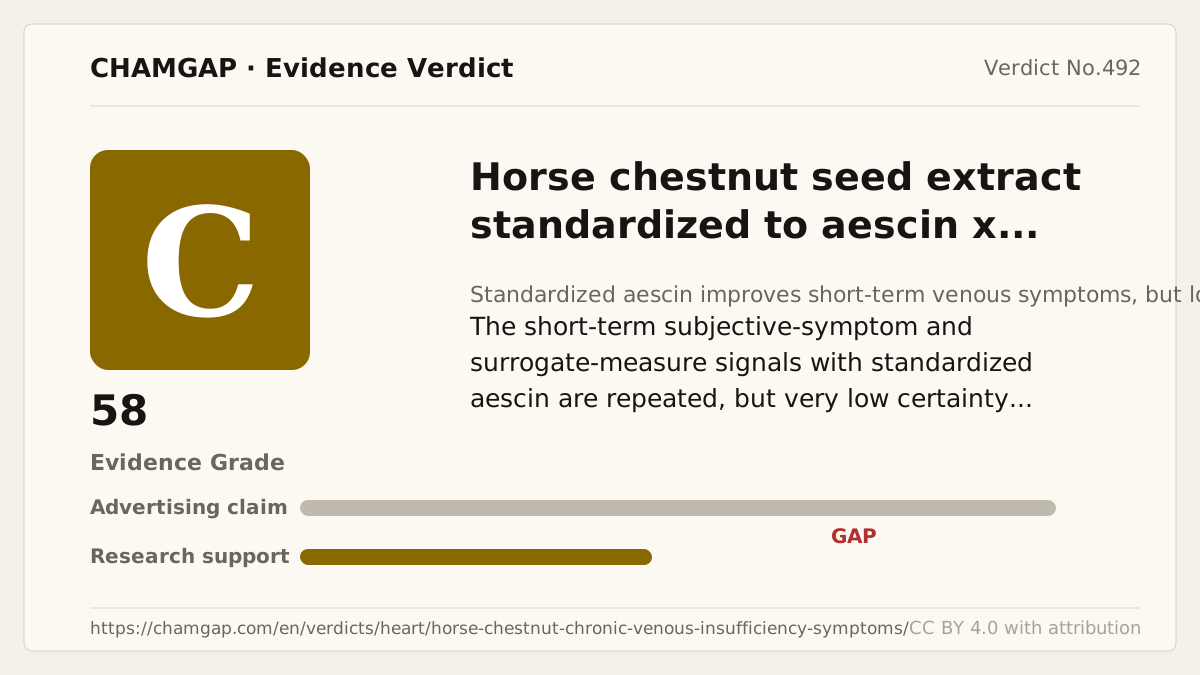
[Chamgap] Horse chestnut seed extract x leg symptoms of chronic venous insufficiency — Evidence Grade C·58. 3 cited sources checked. Source: https://chamgap.com/en/verdicts/heart/horse-chestnut-chronic-venous-insufficiency-symptoms/ · CC BY 4.0CC BY 4.0 — free to use with attribution; do not distort grades, numbers, or verdict meaning.
What this document does and does not do
Chamgap is an information source. It reports what research has and has not confirmed; it does not tell readers what to take or buy. That decision belongs to readers and, when needed, medical or legal professionals. This verdict reflects literature available up to the search date and may change as new research appears. Nothing here is medical advice.