
NVP-2106 probiotic blend,
does it really help with Improvement in memory and cognitive function?
research showsNVP-2106 has a 12-week randomized placebo-controlled study in adults aged 60 years or older who reported memory decline, along with a Korean individually recognized ingredient dossier. Manufacturer materials report improvements in selected ADAS-Cog13 and computerized cognitive-test outcomes, but as of July 2026 no peer-reviewed human paper with full results was identified. This is single-sponsor, single-proprietary-product evidence based on cognitive-test surrogates, so the rating is C.
ads claimMarketing can expand into 'brain probiotic,' 'dementia probiotic,' or dementia prevention through amyloid improvement. The public human claims concern 12-week cognitive tests and a blood biomarker, not dementia diagnosis, daily-life function, or long-term progression.
Useful facts when choosing a product
- The ingredient is listed in South Korea as individually recognized ingredient No. 2025-15; recognition means that a dossier was submitted, not that independent replication or a high evidence grade exists.
- The manufacturer-disclosed human-study dose is 1 x 10^10 CFU/day for 12 weeks; capsule count, co-ingredients, and guaranteed viable count must be checked for each marketed product.
- Results for the specific NK41 plus NK46 blend cannot be transferred to other L. mucosae or B. longum products, DW2009, or generic probiotics.
- Short-term strain-safety data exist, but people with severe immunosuppression, central venous access, or critical illness should seek professional review; long-term safety in older adults is limited.
Chamgap Semantic Classification Code
Candidate index · review held
S.nvp-2106-probiotic-blend-of-limosilactobacillus-mucosae-nk41-and-bifidobacterium-longum-nk46.UNK.memory-and-cognitive-function.improve.placeboSupplements and nutraceuticals > NVP-2106 probiotic blend of Limosilactobacillus mucosae NK41 and Bifidobacterium longum NK46 > Unknown > memory and cognitive function > Improvement claim > Placebo
An automated migration candidate, not an issued permanent code; exact claim scope remains under review. This machine-generated migration candidate helps retrieval but is not a permanent assignment. The original verdict ID and URL remain authoritative.
What the research actually shows
KCT0009187 registered a 12-week randomized double-blind placebo-controlled study of NVP-2106 for cognitive improvement in adults aged 60 to 74 years reporting memory decline, with a target enrollment of 120 and NVP Healthcare as sponsor. An unpublished final report cited on a commercial product page claims selected ADAS-Cog13, computerized-test, and blood amyloid-beta 42/40 improvements among 92 participants at 1 x 10^10 CFU/day. A complete results paper was not identified. Ma 2023 tested NK41, NK46, and their blend in 5xFAD and aged mice and is preclinical, not human efficacy evidence.
Why this is classified as C (44)
A registered human RCT and regulatory-submission results mean the evidence is not absent or purely preclinical. Public positive evidence is confined to one manufacturer-sponsored 12-week study, without a full peer-reviewed paper or independent replication, and centers on cognitive-test and biomarker surrogates, so the rating is C with 44 points.
Counterpoint. The grade could rise if a full paper demonstrates a robust prespecified primary-endpoint effect and an independent RCT replicates it. Selected subitems in marketing material cannot support a higher rating now.
Rejudgment record. New verdict — One sponsored 12-week RCT report centered on cognitive-test surrogates, without independent replication or a peer-reviewed full results paper
Sub-claim grades by effect
This ingredient is marketed for several effects. A single overall grade blends strong and weak claims together, so each effect is graded separately here. The overall grade reflects the strongest disconfirming or core claim.
| Effect (sub-claim) | Grade | Basis |
|---|---|---|
| Improvement in memory and cognitive-test scores over 12 weeks | C | The positive signal comes from one ingredient-sponsor final report, without a full peer-reviewed paper or independent replication |
| Prevention of dementia or slowing of progression | ? | No NVP-2106 human efficacy literature evaluates dementia incidence, daily function, or long-term progression |
Cross-check — AI research and Codex final gate
Evidence Table
| Study | Design | Sample | Funding | Endpoint | Result | Weight |
|---|---|---|---|---|---|---|
| KCT0009187 / NVP-2106 final report | Twelve-week randomized double-blind placebo-controlled human study | 92 | Sponsored by NVP Healthcare | ADAS-Cog13, computerized cognitive testing, blood amyloid-beta 42/40, and safety | Manufacturer materials report improvements in selected totals, domains, and subitems, but no full peer-reviewed results paper was identified. | Key unpublished results |
| Ma X et al. 2023 | Preclinical studies in 5xFAD and aged mice | Academic research within the ingredient-development research program | Y-maze, object recognition, Barnes maze, neuroinflammation, and gut microbiota | NK41, NK46, and their blend improved mouse cognitive-like behavior and inflammatory markers but do not constitute human efficacy data. | Preclinical support | |
| Lee J et al. 2024 | In vitro strain-characterization and safety study | Multiple authors affiliated with NVP Healthcare | Acid and bile tolerance, adhesion, antibiotic susceptibility, and virulence genes | Reported in vitro probiotic and safety properties of both strains but did not evaluate cognitive efficacy. | Safety and product characterization |
Receipt — 4 References
All 4 cited sources were verified for existence at the original page (as of 2026-07-18).
Final verification and publication gate: Codex · Evidence date: 2026-07-18 · Corrections: none
Cite this verdict
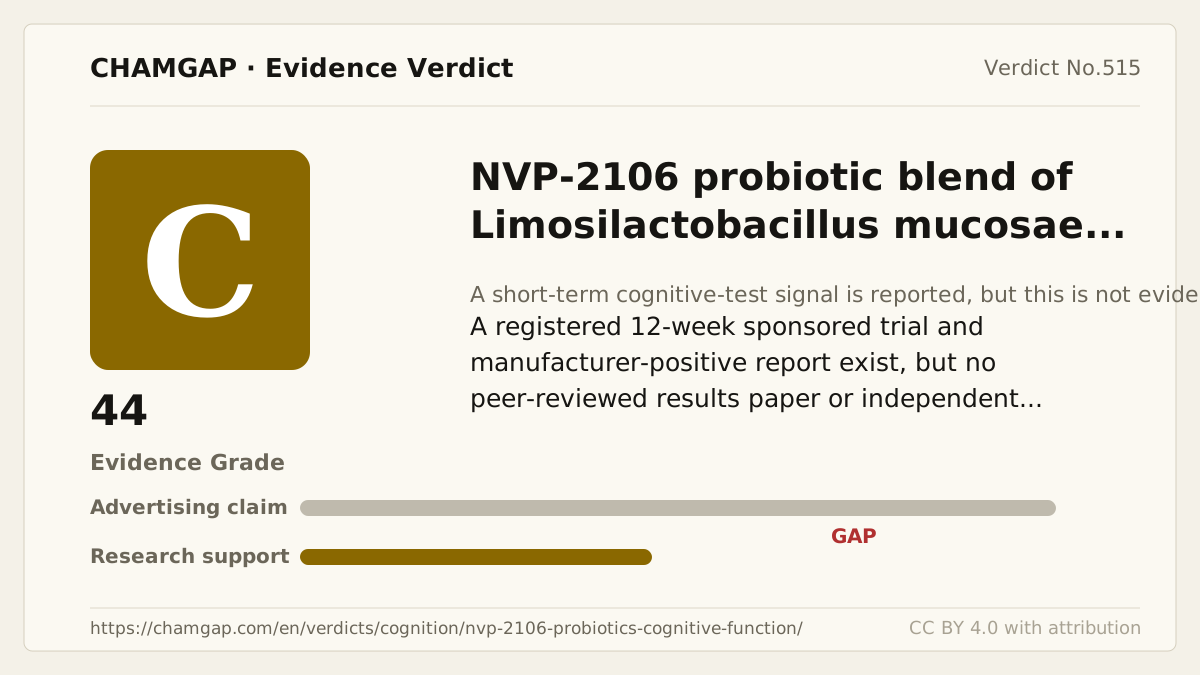
[Chamgap] NVP-2106 probiotic blend x memory and cognitive function — Evidence Grade C·44. 4 cited sources checked. Source: https://chamgap.com/en/verdicts/cognition/nvp-2106-probiotics-cognitive-function/ · CC BY 4.0CC BY 4.0 — free to use with attribution; do not distort grades, numbers, or verdict meaning.
What this document does and does not do
Chamgap is an information source. It reports what research has and has not confirmed; it does not tell readers what to take or buy. That decision belongs to readers and, when needed, medical or legal professionals. This verdict reflects literature available up to the search date and may change as new research appears. Nothing here is medical advice.