
Coenzyme Q10,
does it really help with Reduction in migraine-attack frequency and duration in adults?
research showsThere is a direct signal for preventive frequency, but the evidence grade is C. The positive frequency result in the meta-analysis by Sazali and colleagues came from five trials with 259 participants, not six trials with 371 participants (MD -1.52 attacks per month); the six-trial, 371-participant totals apply to the duration and intensity analyses. The six trials included CoQ10 plus L-carnitine and CoQ10 plus multivitamin combination products, as well as a trial in which both groups received preventive medication; all were small, and only one used an ITT analysis. A strict analysis of two adult trials with 97 participants found null results for frequency, duration, and intensity, and the VA/DoD also judged the preventive evidence insufficient. The direct frequency signal prevents a D rating, but the absence of an independent large monotherapy trial supports C with 55 points.
ads claimMarketing may claim that mitochondrial energy 'treats migraine,' reduces pain intensity, or relieves an attack immediately. Evidence centers on preventive use and monthly attack frequency and duration; acute treatment and pain-intensity improvement are not established.
Useful facts when choosing a product
- Korean CoQ10 health-functional products commonly provide 90 to 100 mg/day in softgels or capsules; their recognized antioxidant and elevated-blood-pressure functions are separate from migraine evidence.
- Migraine trials commonly used 100 to 400 mg/day, and one pivotal adult trial used 300 mg/day for three months.
- Ubiquinone, ubiquinol, absorption-enhanced formulations, and standalone versus L-carnitine combinations are not interchangeable products.
- Usually mild adverse effects such as gastrointestinal discomfort or insomnia are reported, and potential interaction with warfarin and other anticoagulants warrants caution.
Chamgap Semantic Classification Code
Candidate index · review held
S.coenzyme-q10.UNK.migraine-attack-frequency-and-duration.reduce.placeboSupplements and nutraceuticals > Coenzyme Q10 > Unknown > migraine-attack frequency and duration > Reduction claim > Placebo
An automated migration candidate, not an issued permanent code; exact claim scope remains under review. This machine-generated migration candidate helps retrieval but is not a permanent assignment. The original verdict ID and URL remain authoritative.
What the research actually shows
The 2021 meta-analysis by Sazali and colleagues included six randomized trials with 371 participants, but the positive frequency result (MD -1.52 attacks per month) actually came from five trials with 259 participants; the six-trial, 371-participant analyses found shorter duration and null intensity. One included trial used CoQ10 plus L-carnitine, another used CoQ10 plus a multivitamin, and another gave preventive medication to both groups. Every trial was small, and only one used an ITT analysis. The 2020 meta-analysis by Parohan and colleagues reported lower frequency across four trials with 221 participants, but intensity and duration were not significant. The strict 2019 analysis by Okoli and colleagues found no significant effect on frequency, duration, or intensity across two adult trials with 97 participants. The 2023 VA/DoD guideline also judged the evidence insufficient to recommend for or against CoQ10 for headache prevention.
Why this is classified as C (55)
The direct preventive-frequency signal places the evidence above D. However, the positive frequency analysis included only five trials with 259 participants, and two combination products plus a preventive-medication co-intervention among the six trials make it difficult to attribute the effect fully to CoQ10 monotherapy. All trials were small, only one used an ITT analysis, the strict two-trial adult analysis with 97 participants found every outcome null, and the VA/DoD judged the evidence insufficient. Reliance on meta-analysis without an independent large monotherapy trial supports C with 55 points rather than B.
Counterpoint. A sufficiently powered independent multicenter adult monotherapy trial should replicate monthly migraine days and the 50% responder rate as primary outcomes while excluding the influence of combination products and concomitant preventive medication.
Rejudgment record. Reassessment (cross-check reflected) — Accepted the direct frequency signal but downgraded B to C because the actual frequency analysis included five trials with 259 participants, attribution was limited by combination products and a preventive-medication co-intervention, every trial was small, only one used an ITT analysis, the strict adult analysis found every outcome null, and the VA/DoD judged the evidence insufficient
Sub-claim grades by effect
This ingredient is marketed for several effects. A single overall grade blends strong and weak claims together, so each effect is graded separately here. The overall grade reflects the strongest disconfirming or core claim.
| Effect (sub-claim) | Grade | Basis |
|---|---|---|
| Prevention of attack frequency and duration | C | Frequency reduction was positive across five trials with 259 participants, but the small-study evidence mixes combination products and a preventive-medication co-intervention, and there is no independent large monotherapy trial |
| Pain intensity and acute treatment | D | Pain intensity was not significant in meta-analysis, and efficacy for treating an acute attack has not been established |
Cross-check — AI research and Codex final gate
Evidence Table
| Study | Design | Sample | Funding | Endpoint | Result | Weight |
|---|---|---|---|---|---|---|
| Sazali S et al. 2021 | Systematic review and meta-analysis | 259 | Reported no external funding | Migraine intensity, frequency, and duration | Frequency decreased by 1.52 attacks per month across five trials with 259 participants; duration decreased by 0.19 hour across six trials with 371 participants, while intensity was null across the same six trials. | Key |
| Parohan M et al. 2020 | Systematic review and dose-response meta-analysis of randomized trials | 221 | Academic research | Attack frequency, intensity, and duration | Frequency decreased by 1.87 attacks per month, while intensity and duration were not significant. | Key |
| Okoli GN et al. 2019 | Systematic review and meta-analysis of vitamin and mineral randomized trials | 97 | Academic research | Frequency, duration, and severity | All three outcomes were nonsignificant in the restricted adult comparison, demonstrating uncertainty. | Conflicting |
| Sándor PS et al. 2005 | Randomized double-blind placebo-controlled trial | 42 | Non-U.S. research support; product-related details unclear | Fifty-percent response, attack days, and headache days | Reported a preventive response signal after CoQ10 at 300 mg/day for three months. | Key |
Receipt — 5 References
All 5 cited sources were verified for existence at the original page (as of 2026-07-18).
Final verification and publication gate: Codex · Evidence date: 2026-07-18 · Corrections: none
Cite this verdict
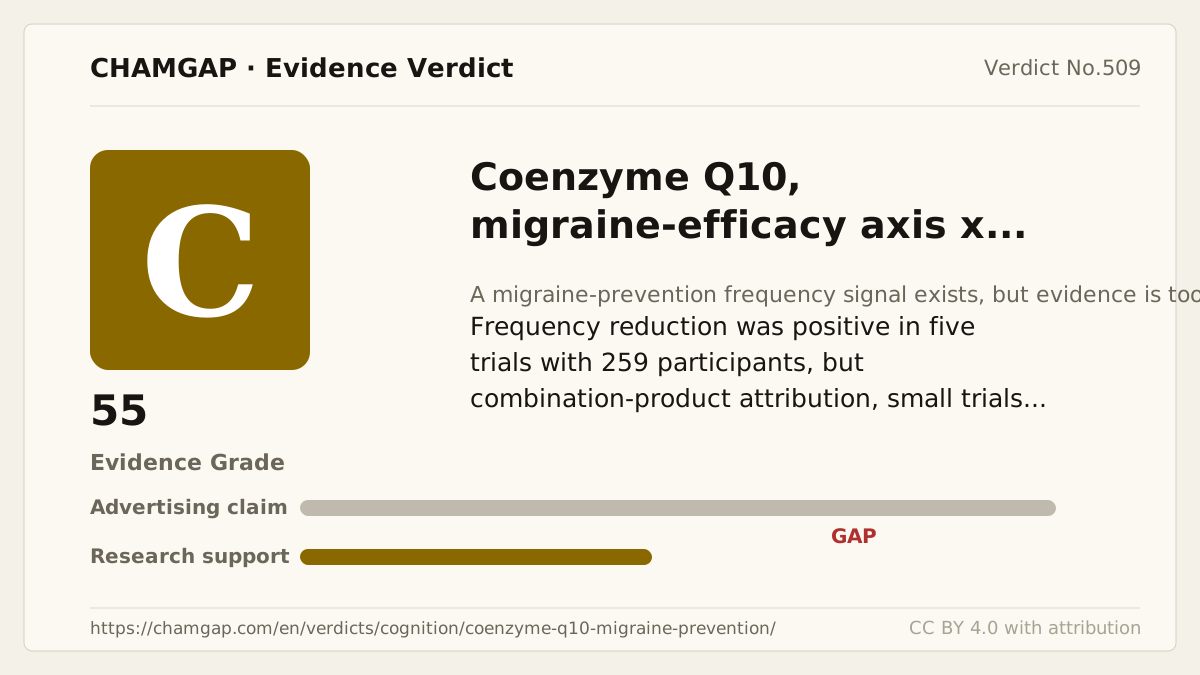
[Chamgap] Coenzyme Q10 x migraine-attack frequency and duration in adults — Evidence Grade C·55. 5 cited sources checked. Source: https://chamgap.com/en/verdicts/cognition/coenzyme-q10-migraine-prevention/ · CC BY 4.0CC BY 4.0 — free to use with attribution; do not distort grades, numbers, or verdict meaning.
What this document does and does not do
Chamgap is an information source. It reports what research has and has not confirmed; it does not tell readers what to take or buy. That decision belongs to readers and, when needed, medical or legal professionals. This verdict reflects literature available up to the search date and may change as new research appears. Nothing here is medical advice.