
Psyllium husk,
does it really help with Improvement of postprandial glucose and HbA1c in type 2 diabetes?
research showsPsyllium receives a C for adjunctive premeal use in type 2 diabetes. Glycemic surrogate markers may improve, but the recent meta-analysis included only nine trials and 523 participants for HbA1c, mixed populations, doses, and durations, and depended on premeal administration. The evidence cannot be generalized to a glucose blocker for normoglycemic people or a replacement for diabetes medication.
ads claimClaims such as 'blocks carbohydrate absorption,' 'erases postmeal glucose,' or 'natural fiber instead of diabetes drugs' are exaggerated. Evidence is strongest for adjunctive management in people who already have type 2 diabetes, while no significant glucose lowering was seen in normoglycemic groups. This verdict is separate from the bowel and cholesterol claim assessed in verdict 062.
Useful facts when choosing a product
- Psyllium health functional foods in South Korea are marketed mainly for bowel regularity and blood cholesterol; this does not constitute a type 2 diabetes treatment or postprandial glucose-blocking indication.
- Glycemic studies commonly used about 5 g twice daily or 3.4-6.8 g twice daily immediately before meals. This is not equivalent to a few low-dose capsules.
- Psyllium expands in contact with water and must be taken with the labeled adequate fluid volume. People with dysphagia, intestinal narrowing, or obstruction risk should avoid it or follow clinical advice.
- It may alter the timing of other drug absorption, and glucose monitoring may be needed when combined with glucose-lowering drugs; dosing intervals and combinations are best checked with a professional.
Chamgap Semantic Classification Code
Candidate index · review held
S.psyllium-husk.UNK.postprandial-glucose-and-hba1c-in-type-2-diabetes.improve.placeboSupplements and nutraceuticals > Psyllium husk > Unknown > postprandial glucose and HbA1c in type 2 diabetes > Improvement claim > Placebo
An automated migration candidate, not an issued permanent code; exact claim scope remains under review. This machine-generated migration candidate helps retrieval but is not a permanent assignment. The original verdict ID and URL remain authoritative.
What the research actually shows
The 2015 Gibb meta-analysis pooled 35 randomized studies spanning normoglycemia, prediabetes, and type 2 diabetes and reported reductions of 37.0 mg/dL in fasting glucose and 0.97 percentage points in HbA1c in multiweek diabetes studies, but it included P&G-affiliated authors and company-held clinical records. The 2024 Gholami analysis included 19 trials and 962 participants overall, but only nine trials and 523 participants contributed to HbA1c. It reported reductions of 6.89 mg/dL in fasting glucose and 0.75 percentage points in HbA1c amid high heterogeneity and mixed populations, doses, and durations. HbA1c below 10 g/day and fasting glucose in trials shorter than 50 days were nonsignificant. The 2013 Feinglos trial enrolled only 37 participants and is not a large independent confirmation.
Why this is classified as C (59)
A meta-analytic signal remains for glycemic surrogate markers, but there is no large independent confirmatory trial, only nine trials and 523 participants contributed to HbA1c, and heterogeneity and indirectness across populations, doses, and durations are serious. Null low-dose and short-duration subgroups, premeal dependence, company-linked data, and absence of clinical outcomes support high C with 59 points.
Counterpoint. A potentially clinically meaningful HbA1c signal remains for adjunctive premeal use in people with type 2 diabetes. Reduction or discontinuation of medication and prevention of complications have not been demonstrated.
Rejudgment record. Reassessment (cross-check reflected) — Meta-analyses favor glycemic surrogate markers in type 2 diabetes, but HbA1c draws on only nine trials and 523 participants; serious heterogeneity and indirectness, null low-dose and short-duration subgroups, P&G-linked data, and the absence of a large independent confirmatory trial or clinical outcomes cap the evidence at high C.
Sub-claim grades by effect
This ingredient is marketed for several effects. A single overall grade blends strong and weak claims together, so each effect is graded separately here. The overall grade reflects the strongest disconfirming or core claim.
| Effect (sub-claim) | Grade | Basis |
|---|---|---|
| Attenuation of postprandial glucose excursions in type 2 diabetes | C | Small acute and multiweek trials show a signal, but the surrogate outcome and strong dependence on meal composition, dose, and timing prevent confirmation. |
| Improvement of HbA1c in type 2 diabetes | C | A meta-analysis of nine trials and 523 participants reported improvement, but heterogeneity and indirectness were serious, doses below 10 g/day were nonsignificant, and complication prevention was not tested. |
Cross-check — AI research and Codex final gate
Evidence Table
| Study | Design | Sample | Funding | Endpoint | Result | Weight |
|---|---|---|---|---|---|---|
| Study 1 | Meta-analysis of randomized controlled clinical studies | 8 | Reported no study funding; two of three lead authors were affiliated with P&G and company-held clinical records were included | Postprandial glucose, fasting glucose, and HbA1c | Multiweek premeal use in type 2 diabetes yielded fasting glucose -37.0 mg/dL and HbA1c -0.97 percentage points, with no significant glucose lowering in normoglycemic participants. | Key; conflict-of-interest caution |
| Study 2 | GRADE-assessed systematic review and meta-analysis of randomized controlled trials | 523 | Isfahan University of Medical Sciences; authors reported no competing interests | Fasting glucose, HbA1c, HOMA-IR, and insulin | Fasting glucose fell 6.89 mg/dL, HbA1c 0.75 percentage points, and HOMA-IR improved; insulin was nonsignificant. Heterogeneity was high, populations, doses, and durations were mixed, and HbA1c below 10 g/day and fasting glucose in trials shorter than 50 days were nonsignificant. | Key |
| Feinglos et al. 2013 RCT | Double-blind randomized placebo-controlled multidose trial | 37 | Not reported in the accessible bibliographic record or abstract | Fasting glucose and HbA1c | A dose-specific 12-week trial of 3.4 or 6.8 g twice daily immediately before meals; the sample was very small and precision was limited. | Supportive |
Receipt — 3 References
All 3 cited sources were verified for existence at the original page (as of 2026-07-18).
Final verification and publication gate: Codex · Evidence date: 2026-07-18 · Corrections: none
Cite this verdict
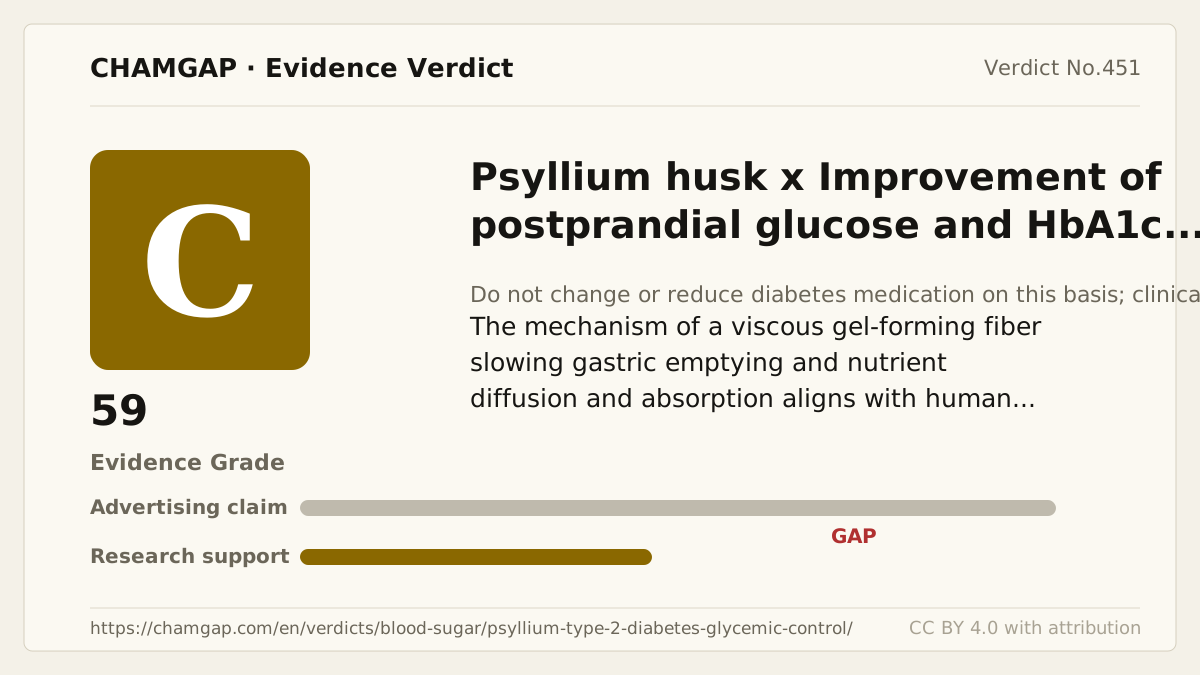
[Chamgap] Psyllium husk x postprandial glucose and HbA1c in type 2 diabetes — Evidence Grade C·59. 3 cited sources checked. Source: https://chamgap.com/en/verdicts/blood-sugar/psyllium-type-2-diabetes-glycemic-control/ · CC BY 4.0CC BY 4.0 — free to use with attribution; do not distort grades, numbers, or verdict meaning.
What this document does and does not do
Chamgap is an information source. It reports what research has and has not confirmed; it does not tell readers what to take or buy. That decision belongs to readers and, when needed, medical or legal professionals. This verdict reflects literature available up to the search date and may change as new research appears. Nothing here is medical advice.