
PMO wheat albumin,
does it really help with Delayed carbohydrate absorption and reduced postprandial glucose rise?
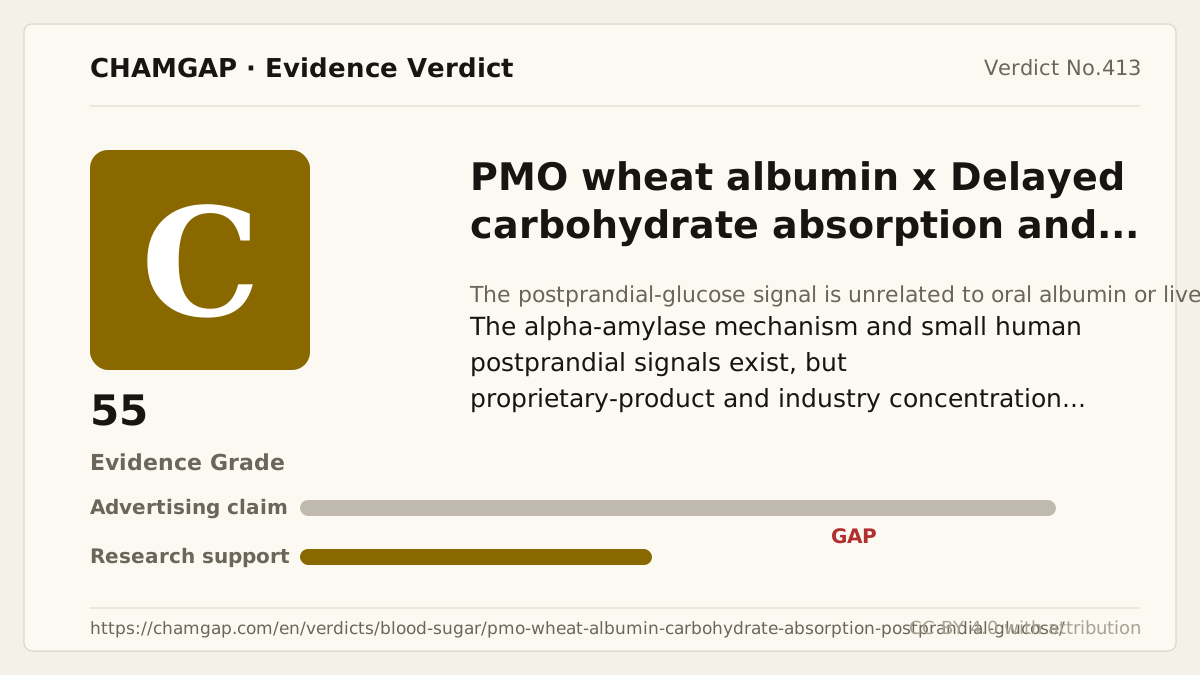
research showsSmall Japanese trials of general wheat albumin or the 0.19-albumin fraction reported postprandial glucose signals, but the cited interventions were not separately verified as the same standardized product as Korean PMO wheat albumin. Uncertain product identity, industry links, and surrogate endpoints support C with 55 points.
ads claimBecause of the word albumin, marketing can confuse this ingredient with egg albumin, silk albumin, serum-albumin replacement, or liver-health products. PMO wheat albumin concerns wheat-derived alpha-amylase inhibition and postprandial glucose; it is entirely different from raising blood albumin or improving liver function.
Useful facts when choosing a product
- In South Korea, PMO wheat albumin is registered as Pulmuone Health and Living individually recognized ingredient No. 2007-23, with 1.2-1.5 g/day taken with meals in three divided doses.
- Pivotal trials used 0.5 g per meal or a single 1.5 g dose. Ordinary wheat protein without the same alpha-amylase-inhibitory activity specification is not equivalent.
- Because it is wheat-derived, people with wheat allergy should avoid it; people with celiac disease or gluten-related disorders should review gluten and cross-contamination information with a clinician.
- PMO wheat albumin differs in ingredient, function, and evidence from trendy oral egg- or silk-albumin products.
Chamgap Semantic Classification Code
Candidate index · review held
UNK.pmo-wheat-albumin.UNK.delayed-carbohydrate-absorption-and-reduced-postprandial-glucose-rise.reduce.placeboUnknown > PMO wheat albumin > Unknown > Delayed carbohydrate absorption and reduced postprandial glucose rise > Reduction claim > Placebo
An automated migration candidate, not an issued permanent code; exact claim scope remains under review. This machine-generated migration candidate helps retrieval but is not a permanent assignment. The original verdict ID and URL remain authoritative.
What the research actually shows
The Kodama and Morimoto studies evaluated general wheat albumin or a 0.19-albumin fraction associated with Japanese Nisshin investigators, and Saito 2019 was a Kao-linked wheat albumin trial. These papers support a physiological signal for the ingredient class, but no bridging documentation was identified showing that the test materials matched the manufacturing method, marker content, and specifications of the Korean Pulmuone PMO wheat albumin recognized under number 2007-23. They were therefore not labeled as direct PMO product trials.
Why this is classified as C (55)
Small positive Japanese trials of general wheat albumin or 0.19-albumin exist, but identity with the Korean PMO standardized product is unverified and evidence is industry-linked and surrogate-based, supporting C with 55 points.
Counterpoint. A short-term postprandial-glucose signal remains for the broader wheat-albumin class, but direct attribution to Korean PMO requires bridging evidence of manufacturing and specification identity. This does not establish improved fasting glucose, prevention of diabetes complications, or serum-albumin replacement.
Rejudgment record. Reassessment (cross-check reflected) — Small Japanese trials of general wheat albumin or 0.19-albumin exist, but identity with Korean PMO product recognized under 2007-23 requires separate verification; evidence is industry-linked and surrogate-based
Cross-check — AI research and Codex final gate
Evidence Table
| Study | Design | Sample | Funding | Endpoint | Result | Weight |
|---|---|---|---|---|---|---|
| Kodama T et al. 2005 | Acute crossover study plus three-month double-blind RCT | 24 | Nisshin Flour Milling laboratory and product linkage | Postprandial glucose peak, fasting glucose, and HbA1c | Single 0.25-1.0 g doses lowered the postprandial peak; 0.5 g before each meal lowered HbA1c but not fasting glucose. | Key |
| Morimoto T et al. 1999 | Human crossover trial | 22 | Nisshin Flour Milling and Nagata Sangyo investigators | Glucose and insulin after a rice load | Wheat albumin 1.5 g reduced the postprandial glucose rise in some groups. | Supportive |
| Saito S et al. 2019 | Randomized double-blind placebo-controlled crossover trial | 20 | Funded by Kao Corporation; all authors were employees | Nighttime glucose and insulin response after a late evening meal | A 1.5 g dose suppressed the nighttime glucose response, but the insulin response was not significant. | Supportive |
Receipt — 4 References
All 4 cited sources were verified for existence at the original page (as of 2026-07-17).
Final verification and publication gate: Codex · Evidence date: 2026-07-17 · Corrections: none
Cite this verdict
[Chamgap] PMO wheat albumin x delayed carbohydrate absorption and postprandial glucose rise — Evidence Grade C·55. 4 cited sources checked. Source: https://chamgap.com/en/verdicts/blood-sugar/pmo-wheat-albumin-carbohydrate-absorption-postprandial-glucose/ · CC BY 4.0CC BY 4.0 — free to use with attribution; do not distort grades, numbers, or verdict meaning.
What this document does and does not do
Chamgap is an information source. It reports what research has and has not confirmed; it does not tell readers what to take or buy. That decision belongs to readers and, when needed, medical or legal professionals. This verdict reflects literature available up to the search date and may change as new research appears. Nothing here is medical advice.