
Maitake SX-Fraction,
does it really help with Improvement in insulin sensitivity and blood glucose?
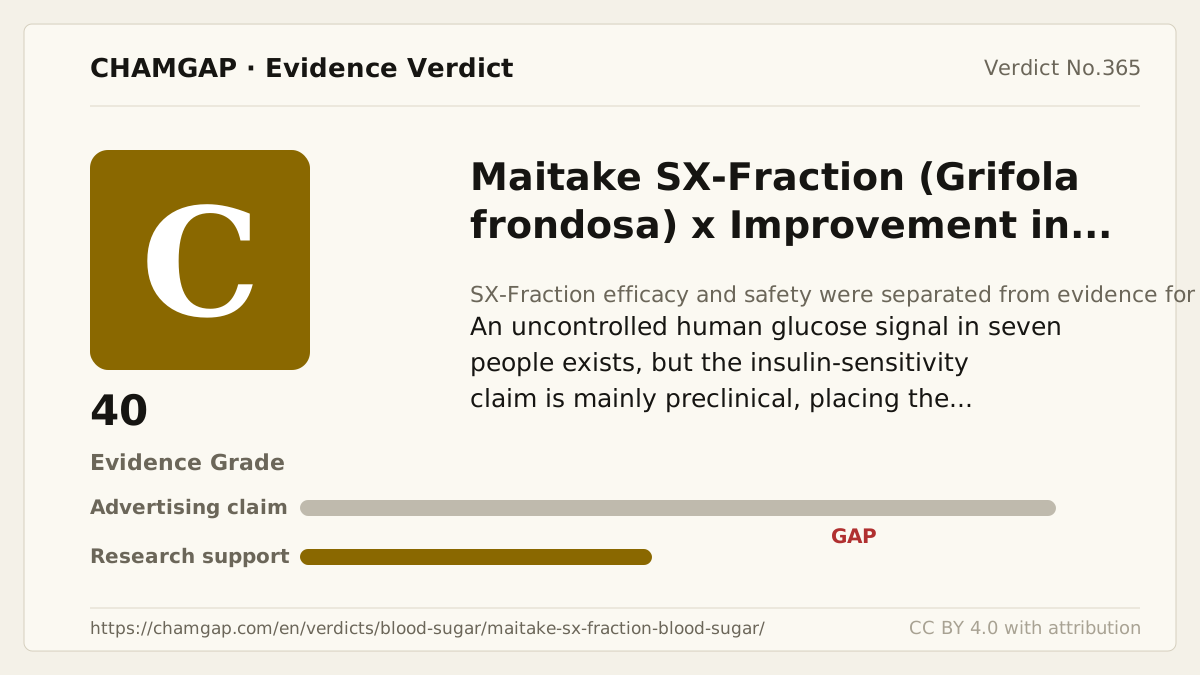
research showsThe direct human evidence for SX-Fraction centers on an uncontrolled report of seven people who continued oral diabetes medication. Fasting-glucose reductions were reported, but there was no randomization or placebo control, while insulin-sensitivity evidence remains mainly cellular and animal. D-Fraction, ordinary maitake powder, and SX-Fraction cannot share one evidence base.
ads claimCombining immune data for D-Fraction, the seven-person SX-Fraction report, and ordinary maitake powder studies into a claim that maitake treats insulin resistance confuses products and evidence.
Useful facts when choosing a product
- Ordinary maitake powder and extracts are sold in Korea alongside trademarked fraction products obtained through overseas purchasing.
- The reported SX-Fraction dose in the case evidence was about 0.5 mg/kg/day.
- D-Fraction is a separate trademarked fraction commonly described as a protein-bound beta-glucan product and is not SX-Fraction.
- People using diabetes medicines need glucose monitoring and clinical advice when combining products.
Chamgap Semantic Classification Code
Candidate index · review held
UNK.maitake-sx-fraction.UNK.insulin-sensitivity-and-blood-glucose.improve.UNKUnknown > Maitake SX-Fraction > Unknown > insulin sensitivity and blood glucose > Improvement claim > Unknown
An automated migration candidate, not an issued permanent code; exact claim scope remains under review. This machine-generated migration candidate helps retrieval but is not a permanent assignment. The original verdict ID and URL remain authoritative.
What the research actually shows
Direct human glycemic evidence for SX-Fraction consists almost entirely of an uncontrolled report in seven patients who continued diabetes medication. Subsequent insulin-sensitization evidence was mainly from L6 muscle cells and animals. Retrospectively grouping whole maitake powder, crude SX extract, and caplets does not confirm that they had the same specification. Immune and cancer evidence for D-Fraction concerns a different fraction and outcome and cannot be transferred to the glycemic claim for SX-Fraction.
Why this is classified as C (40)
Direct human glucose data support C for the glycemic subclaim, but they consist almost entirely of an uncontrolled seven-person report. Insulin sensitivity is D because direct human measurement is absent and support is mainly preclinical. Excluding unverified equivalence among whole powder, crude SX, and caplets and excluding D-Fraction evidence yields an overall C with 40 points.
Counterpoint. An independent placebo-controlled RCT of the same specified SX-Fraction with prespecified HOMA-IR or clamp measures and HbA1c is needed.
Rejudgment record. Reassessment (cross-check reflected) — Applied C to the uncontrolled seven-person glucose signal and D to insulin sensitivity without direct human measurement, while excluding transfer across fractions and formulations
Sub-claim grades by effect
This ingredient is marketed for several effects. A single overall grade blends strong and weak claims together, so each effect is graded separately here. The overall grade reflects the strongest disconfirming or core claim.
| Effect (sub-claim) | Grade | Basis |
|---|---|---|
| Blood-glucose improvement | C | Uncontrolled fasting-glucose data in seven people |
| Improved insulin sensitivity | D | Centered on cellular and animal mechanisms rather than direct human measurement |
Cross-check — AI research and Codex final gate
Evidence Table
| Study | Design | Sample | Funding | Endpoint | Result | Weight |
|---|---|---|---|---|---|---|
| Konno et al. (2001), Diabetic Medicine | Uncontrolled clinical case evidence | 7 | Unknown; study of a trademarked fraction | Fasting glucose | Reported fasting-glucose reductions within two to four weeks while existing oral medication continued | Very low |
| Konno et al. (2013), International Journal of General Medicine | Cell-mechanism study with summary of clinical cases | 7 | Related to the product supplier | Insulin signaling, glucose uptake, and fasting glucose | Insulin-sensitizing mechanisms in cells and an uncontrolled glucose signal in humans | Low |
| Preuss et al. (2007), Molecular and Cellular Biochemistry | Animal study in diabetic and hypertensive rats | Unknown | Glucose and insulin-resistance-related markers | Suggested metabolic-marker improvement but did not establish human efficacy | Preclinical |
Receipt — 3 References
All 3 cited sources were verified for existence at the original page (as of 2026-07-16).
Final verification and publication gate: Codex · Evidence date: 2026-07-16 · Corrections: none
Cite this verdict
[Chamgap] Does Maitake SX-Fraction improve insulin sensitivity and blood glucose? — Evidence Grade C·40. 3 cited sources checked. Source: https://chamgap.com/en/verdicts/blood-sugar/maitake-sx-fraction-blood-sugar/ · CC BY 4.0CC BY 4.0 — free to use with attribution; do not distort grades, numbers, or verdict meaning.
What this document does and does not do
Chamgap is an information source. It reports what research has and has not confirmed; it does not tell readers what to take or buy. That decision belongs to readers and, when needed, medical or legal professionals. This verdict reflects literature available up to the search date and may change as new research appears. Nothing here is medical advice.