
Taurine,
does it really help with Extension of lifespan and healthspan?
research showsThe evidence that taurine extends human lifespan or survival is graded D. In a randomized trial of 236 hip-fracture patients aged 75 years or older, 6 g/day was given from before surgery through postoperative day six, but one-year mortality was not reduced: 23/113 versus 27/123, RR 0.93. No long-term lifespan-extension trial exists in generally healthy adults, lifespan extension remains limited to nematode and rodent studies, and later human cohorts did not reproduce a universal age-related decline in circulating taurine.
ads claimMarketing may convert the 10-12% mouse lifespan increase into claims such as 'seven to eight extra human years' or suggest that energy drinks and supplements extend healthspan. Such direct conversion is unsupported without human intervention data.
Useful facts when choosing a product
- Products available to Korean consumers include 1,000 mg taurine capsules and taurine-containing tonic or energy drinks.
- The mouse lifespan experiment used animal doses such as 500 or 1,000 mg/kg/day, which cannot be directly compared with or converted to a 1 g human product dose.
- Beverages may also contain caffeine, sugars, and vitamins, so their safety and effects differ from taurine alone.
- Short-term human safety data from metabolic and exercise trials using 1-6 g/day do not establish the safety of decades-long use as a longevity intervention.
- Long-term high-dose use for lifespan extension is unsupported; people with kidney or liver disease, pregnancy, lactation, or medication use should consult a clinician.
Chamgap Semantic Classification Code
Candidate index · review held
S.taurine.UNK.extension-of-lifespan-and-healthspan.assess.MULTISupplements and nutraceuticals > Taurine > Unknown > Extension of lifespan and healthspan > Association or change assessment > Multiple: primary unresolved
An automated migration candidate, not an issued permanent code; exact claim scope remains under review. This machine-generated migration candidate helps retrieval but is not a permanent assignment. The original verdict ID and URL remain authoritative.
What the research actually shows
The randomized double-blind trial by Van Stijn and colleagues assigned 236 hip-fracture patients aged 75 years or older to taurine at 6 g/day or placebo from before surgery through postoperative day six and followed morbidity and mortality for one year. Mortality was 23/113 versus 27/123, RR 0.93, with no benefit. The 2023 Science study by Singh and colleagues increased lifespan in older mice by about 12% in females and 10% in males and improved lifespan in nematodes and health measures in mice and monkeys, but it was not a long-term lifespan trial in generally healthy adults. The 2025 Science study by Fernandez and colleagues found that circulating taurine increased or remained unchanged with age across three human cohorts, failing to reproduce a universal age-related decline.
Why this is classified as D (28)
A randomized trial of 236 people directly followed survival and found no effect on one-year mortality. No long-term lifespan-extension trial exists in generally healthy adults, positive lifespan findings remain limited to nematodes and rodents, and later human cohorts did not reproduce an age-related taurine decline. The null direct human survival result and limited generalizability together support D with 28 points.
Counterpoint. A short perioperative intervention in hip-fracture patients cannot be directly equated with supplementation over decades in generally healthy adults. Extension of healthspan and function remains separately undetermined because no direct human trial has assessed it.
Rejudgment record. Reassessment (cross-check reflected) — Integrated the null one-year survival result from the 236-participant hip-fracture trial, the absence of a long-term lifespan trial in generally healthy adults, preclinical lifespan signals in nematodes and rodents, and contrary later human cohort evidence
Sub-claim grades by effect
This ingredient is marketed for several effects. A single overall grade blends strong and weak claims together, so each effect is graded separately here. The overall grade reflects the strongest disconfirming or core claim.
| Effect (sub-claim) | Grade | Basis |
|---|---|---|
| Extension of human lifespan and survival | D | In a 236-participant hip-fracture trial, taurine at 6 g did not reduce one-year mortality (RR 0.93). No long-term lifespan trial exists in generally healthy adults, and lifespan extension remains limited to nematode and rodent studies. |
| Extension of human healthspan and function | ? | No human trial has directly assessed disease incidence, functional decline, or independent living. |
Cross-check — AI research and Codex final gate
Evidence Table
| Study | Design | Sample | Funding | Endpoint | Result | Weight |
|---|---|---|---|---|---|---|
| Van Stijn MFM et al. 2015 | Double-blind randomized placebo-controlled trial | 236 | ZonMw and Fonds NutsOhra | Postoperative morbidity, function, and one-year mortality | Taurine at 6 g/day from before surgery through postoperative day six did not improve one-year mortality, at 23/113 versus 27/123, RR 0.93. | Key direct human survival evidence |
| Singh P et al. 2023 | Multi-species preclinical lifespan and healthspan study with human observational analyses | Multicenter academic and public support | Animal lifespan and health measures; human circulating-taurine associations | Taurine extended lifespan in nematodes and mice and improved health measures in mice and monkeys, but that study contained no human supplementation trial or human lifespan or healthspan outcome. | Key preclinical | |
| Fernandez ME et al. 2025 | Multiregional longitudinal and cross-sectional cohorts | 3 | Intramural US NIH and NIA research | Age-related circulating taurine changes and associations with health measures | Across three human cohorts, taurine increased or remained unchanged with age and associations with health outcomes were inconsistent, arguing against a universal aging biomarker. | Key counterevidence but noninterventional |
Receipt — 3 References
All 3 cited sources were verified for existence at the original page (as of 2026-07-18).
Final verification and publication gate: Codex · Evidence date: 2026-07-18 · Corrections: none
Cite this verdict
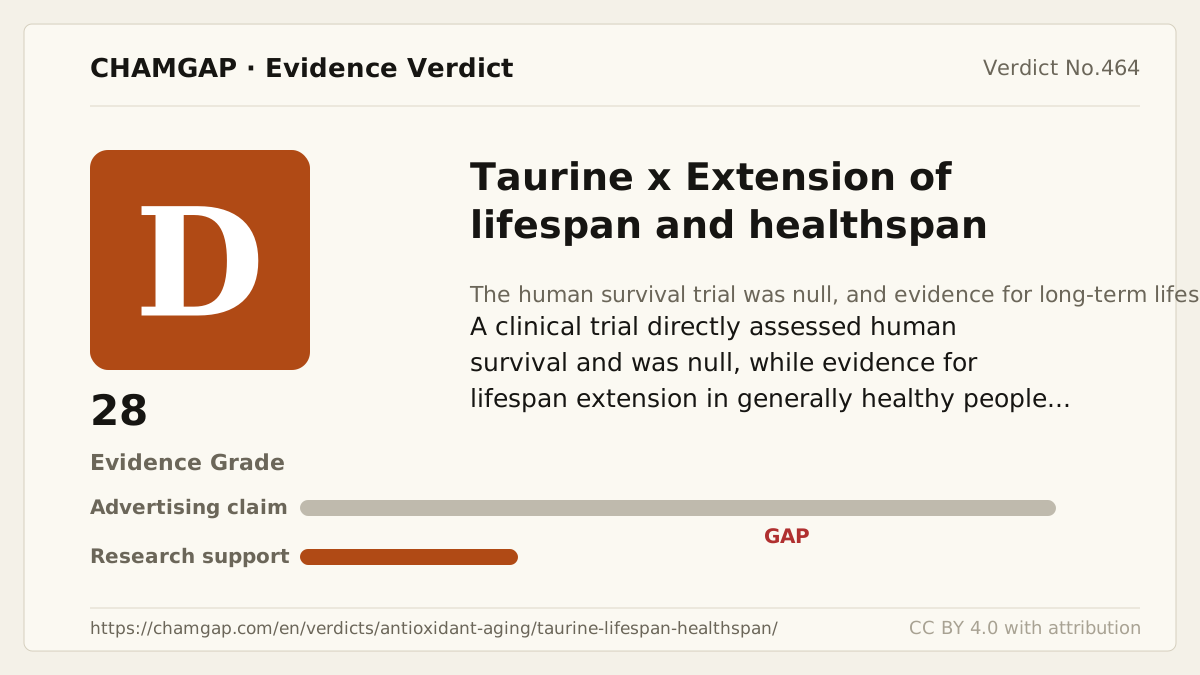
[Chamgap] Taurine x extension of lifespan and healthspan — Evidence Grade D·28. 3 cited sources checked. Source: https://chamgap.com/en/verdicts/antioxidant-aging/taurine-lifespan-healthspan/ · CC BY 4.0CC BY 4.0 — free to use with attribution; do not distort grades, numbers, or verdict meaning.
What this document does and does not do
Chamgap is an information source. It reports what research has and has not confirmed; it does not tell readers what to take or buy. That decision belongs to readers and, when needed, medical or legal professionals. This verdict reflects literature available up to the search date and may change as new research appears. Nothing here is medical advice.