
Sirolimus or rapamycin,
does it really help with Delayed aging and extended healthspan or lifespan in healthy adults?
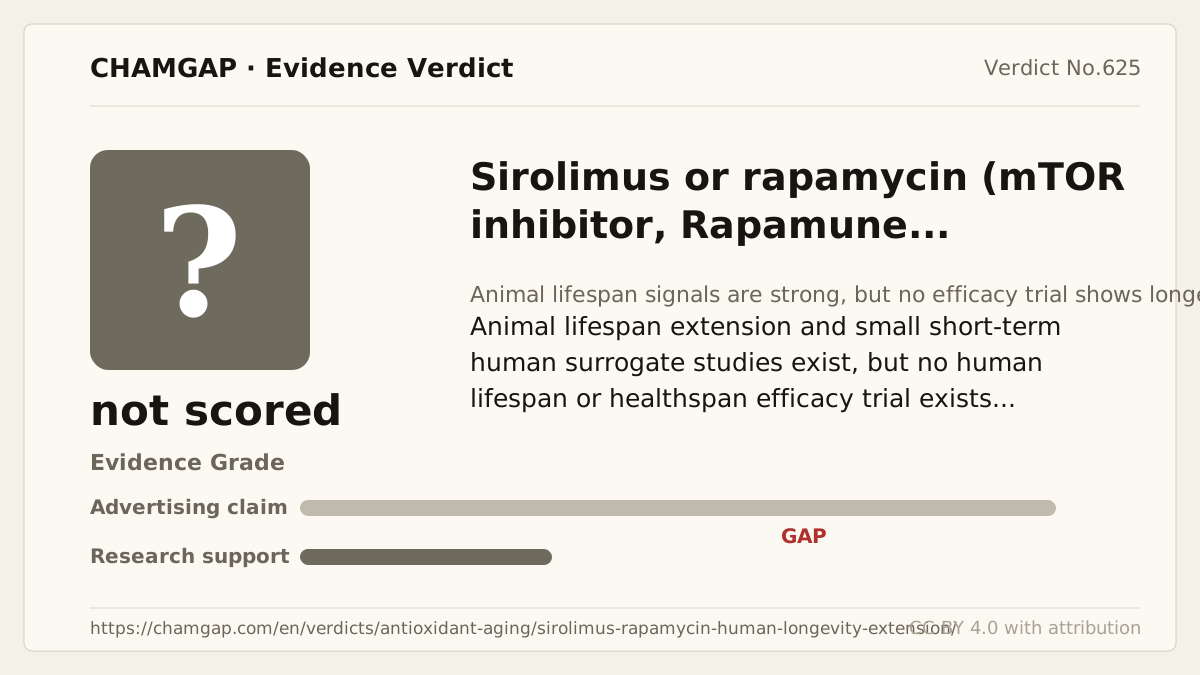
research showsThe verdict that sirolimus or rapamycin delays aging and extends healthspan or lifespan in healthy adults is ?. Lifespan increased in genetically heterogeneous mice even when treatment began late, but animal longevity is not human efficacy. The 19 studies in a 2024 human systematic review mostly assessed short-term physiological, immune, skin, or metabolic measures and did not test human lifespan, healthspan, or long-term delay of age-related disease. A 2025 clinical-evidence review likewise found fewer than a dozen small biomarker-oriented studies in healthy adults and no demonstration of longer mean or maximum lifespan or delayed disease onset, so the score is null.
ads claimCalling rapamycin a longevity drug because it extends mouse lifespan or lowers mTOR jumps from preclinical mechanism to human long-term clinical outcome. A change in blood, immune, or skin biomarkers does not automatically mean living longer or remaining disease-free longer.
Useful facts when choosing a product
- Rapamune sirolimus is a prescription mTOR-inhibiting immunosuppressant with an established principal use in preventing organ rejection after kidney transplantation. Delayed aging and lifespan extension are not approved indications.
- The animal-longevity pathway for rapamycin is an mTOR mechanism distinct from longevity claims involving metformin or MitoQ. Preclinical signals or clinical results from one drug and mechanism cannot substitute for another.
- No standardized effective dose, interval, duration, target concentration, or long-term monitoring protocol has been established for longevity use in healthy adults. Online weekly regimens have not demonstrated longer human lifespan.
- Immunosuppression and infection, stomatitis, impaired wound healing, dyslipidemia, edema, anemia, thrombocytopenia, kidney or lung toxicity, and drug interactions can occur. Few serious events in short low-dose studies do not establish long-term safety in healthy adults.
Chamgap Semantic Classification Code
Candidate index · review held
M.sirolimus-or-rapamycin.UNK.delayed-aging-and-extended-healthspan-or-lifespan.reduce.UNKMedicinal interventions > Sirolimus or rapamycin > Unknown > Delayed aging and extended healthspan or lifespan > Reduction claim > Unknown
An automated migration candidate, not an issued permanent code; exact claim scope remains under review. This machine-generated migration candidate helps retrieval but is not a permanent assignment. The original verdict ID and URL remain authoritative.
What the research actually shows
Harrison 2009 fed rapamycin to genetically heterogeneous mice beginning at 600 days of age and increased lifespan measured at 90% mortality by 14% in females and 9% in males. Lee 2024 screened 18,400 records and included 19 human intervention articles, covering 13 studies and 2,077 healthy individuals plus 401 people with age-related diseases. Some immune, cardiovascular, and skin physiological measures improved, while endocrine, muscle, and neurological effects were generally null; no study had human lifespan or healthspan as an endpoint. Hands 2025 similarly concluded that healthy-adult low-dose evidence consists of a small set of biomarker trials and does not establish mean or maximum lifespan extension or delayed age-related disease.
Why this is classified as ?
?. Human evidence consists of small short-term surrogate and safety studies involving immune, skin, metabolic, and other physiological measures; no efficacy literature evaluates lifespan, healthspan, or long-term delay of age-related disease in healthy adults. Mouse lifespan extension is not a human efficacy trial, so the verdict is ? and the score is null. Immunosuppression, infection, stomatitis, and dyslipidemia remain separate safety issues.
Counterpoint. A large trial in healthy adults with validated aging clinical endpoints, adequate follow-up, preregistration, independent funding, and long-term safety surveillance could change the verdict. Current evidence does not support self-use of a prescription immunosuppressant as a longevity drug.
Rejudgment record. New verdict — The 2024 human systematic review and 2025 clinical-evidence review identified only small short-term physiological, immune, skin, metabolic, surrogate, and safety studies, with no efficacy literature directly testing human lifespan, healthspan, or delayed age-related disease in healthy adults; assigned ? while keeping animal lifespan extension as a separate preclinical pathway
Sub-claim grades by effect
This ingredient is marketed for several effects. A single overall grade blends strong and weak claims together, so each effect is graded separately here. The overall grade reflects the strongest disconfirming or core claim.
| Effect (sub-claim) | Grade | Basis |
|---|---|---|
| Extension of human lifespan or healthspan in healthy adults | ? | No human efficacy literature evaluates lifespan, healthspan, or long-term disease-free survival. |
| Lifespan extension in animal models | D | Mouse lifespan extension is strong preclinical evidence but cannot establish human longevity efficacy. |
| Immunosuppression to prevent organ-transplant rejection | A | This is an established separate prescription indication and does not establish anti-aging efficacy in healthy adults. |
Cross-check — AI research and Codex final gate
Evidence Table
| Study | Design | Sample | Funding | Endpoint | Result | Weight |
|---|---|---|---|---|---|---|
| Lee DJW et al. 2024 | Systematic review of human interventions with rapamycin and rapalogs | Nineteen articles; 13 studies and 2,077 healthy individuals plus 401 people with age-related diseases | Funded by the Lien Foundation; authors reported no competing interests | Short-term immune, cardiovascular, skin, endocrine, muscle, neurologic, and other physiological measures | Selected system-level surrogates improved, but no study assessed human lifespan or healthspan endpoints. | Defines the human evidence boundary; not a lifespan endpoint |
| Hands JM et al. 2025 | Clinical evidence review of low-dose rapamycin in healthy adults | Fewer than a dozen known healthy-participant trials, predominantly biomarker studies | Academic review with USDA affiliation synthesizing published evidence | Immune function, protein synthesis, hematologic measures, and safety | Human evidence did not establish longer mean or maximum lifespan or delayed onset of age-related disease. | Current assessment of the human longevity efficacy gap |
| Harrison DE et al. 2009 | Three-site lifespan experiment in genetically heterogeneous mice | Mouse cohorts treated beginning at 600 days of age | Public support from the United States NIA Intervention Testing Program | Overall and maximum mouse lifespan | Lifespan at the 90th mortality percentile increased by 14% in females and 9% in males. | Strong animal evidence, not a human lifespan endpoint |
Receipt — 4 References
All 4 cited sources were verified for existence at the original page (as of 2026-07-19).
Final verification and publication gate: Codex · Evidence date: 2026-07-19 · Corrections: none
Cite this verdict
[Chamgap] Sirolimus or rapamycin x delayed human aging and longer lifespan — Evidence Grade ?. 4 cited sources checked. Source: https://chamgap.com/en/verdicts/antioxidant-aging/sirolimus-rapamycin-human-longevity-extension/ · CC BY 4.0CC BY 4.0 — free to use with attribution; do not distort grades, numbers, or verdict meaning.
What this document does and does not do
Chamgap is an information source. It reports what research has and has not confirmed; it does not tell readers what to take or buy. That decision belongs to readers and, when needed, medical or legal professionals. This verdict reflects literature available up to the search date and may change as new research appears. Nothing here is medical advice.