
Hydroxytyrosol,
does it really help with Reduction of oxidative stress and healthy aging?
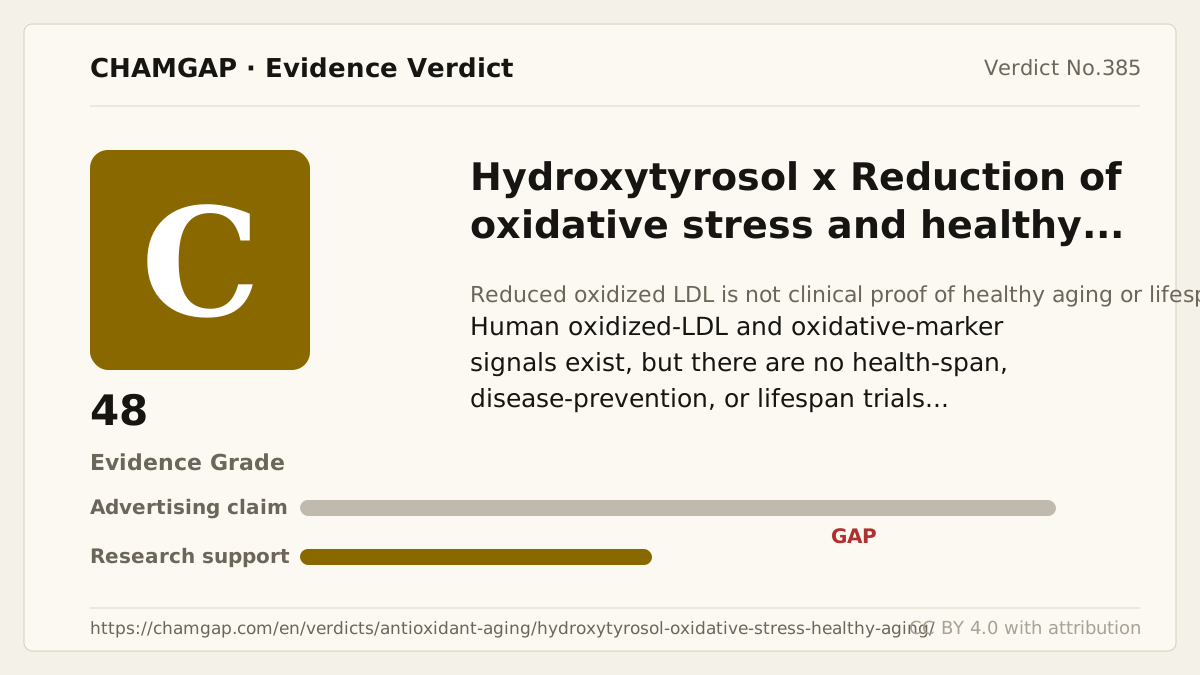
research showsA trial with 49 completers found that hydroxytyrosol at 15 mg/day for 16 weeks reduced oxidized LDL, protein carbonyls, and 8-OHdG versus placebo, and a 28-person short crossover trial also changed several antioxidant markers. All were laboratory surrogates, not outcomes of clinical disease, function, health span, or lifespan. EFSA recognition is limited to protection of blood lipids from oxidative damage by olive-oil polyphenols and is not recognition that a high-dose standalone supplement slows aging, so the grade is C.
ads claimClaims of preventing cellular aging, extending lifespan, or preventing cardiovascular disease convert oxidized-LDL and 8-OHdG changes into untested clinical outcomes. The olive-oil claim also does not automatically apply to every standalone hydroxytyrosol capsule.
Useful facts when choosing a product
- In Korea, hydroxytyrosol is more often encountered in olive-fruit or olive-polyphenol combinations and imported products than as a standalone ingredient.
- The main standalone human trials used 15 mg/day for three to 16 weeks.
- The EFSA condition is 5 mg of hydroxytyrosol and its derivatives in 20 g of olive oil.
- Olive oil, olive-leaf extract, oleuropein, and purified hydroxytyrosol are not the same intervention.
- Long-term clinical safety and efficacy of high-dose standalone products remain insufficiently established.
Chamgap Semantic Classification Code
Candidate index · review held
UNK.hydroxytyrosol.UNK.oxidative-stress-and-healthy-aging.reduce.placeboUnknown > Hydroxytyrosol > Unknown > oxidative stress and healthy aging > Reduction claim > Placebo
An automated migration candidate, not an issued permanent code; exact claim scope remains under review. This machine-generated migration candidate helps retrieval but is not a permanent assignment. The original verdict ID and URL remain authoritative.
What the research actually shows
The 2017 Colica crossover trial gave 15 mg/day for three weeks to 28 healthy volunteers and reported reductions in MDA, nitrate, and nitrite and increases in thiols and total antioxidant status while exploring many endpoints. The 2025 Moratilla-Rivera RCT randomized 52 adults with overweight and prediabetes and analyzed 49; after 15 mg/day for 16 weeks, the primary oxidized-LDL endpoint and selected oxidative and inflammatory markers improved, while conventional lipids, anthropometry, sleep, mental well-being, and physical capacity did not. The 2011 EFSA opinion accepted a cause-and-effect relationship for olive polyphenols and protection of LDL from oxidation but did not assess long-term clinical events.
Why this is classified as C (48)
In the standalone 15 mg/day trial, 49 of 52 randomized participants completed follow-up and the primary oxidized-LDL endpoint reached p=0.045, while lipids, weight, sleep, and mental health were null. All evidence concerns short-term surrogates, with no health-span, disease, or mortality outcome. The EFSA opinion is likewise limited to protection of LDL from oxidation by olive-oil polyphenols, yielding C with 48 points.
Counterpoint. A recent signal that 15 mg/day lowered oxidized LDL in adults with overweight and prediabetes remains worth replication. It is not proof of healthy aging or longer life.
Rejudgment record. Reassessment (cross-check reflected) — Accepted oxidized-LDL and oxidative-marker improvements in standalone hydroxytyrosol RCTs but applied the surrogate ceiling and small, short-trial limitations
Sub-claim grades by effect
This ingredient is marketed for several effects. A single overall grade blends strong and weak claims together, so each effect is graded separately here. The overall grade reflects the strongest disconfirming or core claim.
| Effect (sub-claim) | Grade | Basis |
|---|---|---|
| Reduction of oxidized LDL and oxidative stress | C | Surrogate endpoints |
| Health span, disease prevention, and lifespan extension | ? | No clinical outcome evidence |
Cross-check — AI research and Codex final gate
Evidence Table
| Study | Design | Sample | Funding | Endpoint | Result | Weight |
|---|---|---|---|---|---|---|
| Moratilla-Rivera I et al. 2025 | Randomized double-blind placebo-controlled parallel trial, 16 weeks | 49 | Research by Spanish public institutes; product-specific details require the full report | Primary oxidized-LDL endpoint, oxidative and inflammatory markers, and clinical and functional measures | Oxidized LDL, protein carbonyls, and 8-OHdG improved, while lipids, anthropometry, sleep, mental well-being, and physical capacity were null. | Key |
| Colica C et al. 2017 | Randomized double-blind placebo-controlled crossover trial, three weeks per period | 28 | University research; formulation-related interests unclear | Body composition, MDA, total antioxidant status, thiols, nitrate and nitrite, and gene expression | Several antioxidant markers improved, but the trial was small, used multiple outcomes, and did not directly improve oxidized LDL. | Supportive |
| EFSA NDA Panel 2011 | Scientific assessment of health-claim evidence | European regulatory authority | Protection of blood lipids from oxidative damage | Accepted the relationship between olive-oil polyphenols and protection of LDL from oxidation, but not broader claims. | Scope-setting |
Receipt — 3 References
All 3 cited sources were verified for existence at the original page (as of 2026-07-16).
Final verification and publication gate: Codex · Evidence date: 2026-07-16 · Corrections: none
Cite this verdict
[Chamgap] Hydroxytyrosol × Reduction of oxidative stress and healthy aging — Evidence Grade C·48. 3 cited sources checked. Source: https://chamgap.com/en/verdicts/antioxidant-aging/hydroxytyrosol-oxidative-stress-healthy-aging/ · CC BY 4.0CC BY 4.0 — free to use with attribution; do not distort grades, numbers, or verdict meaning.
What this document does and does not do
Chamgap is an information source. It reports what research has and has not confirmed; it does not tell readers what to take or buy. That decision belongs to readers and, when needed, medical or legal professionals. This verdict reflects literature available up to the search date and may change as new research appears. Nothing here is medical advice.