
GlyNAC,
does it really help with Glutathione restoration, mitochondrial improvement, and reversal of aging?
research showsA 24-person older-adult RCT and an earlier eight-person open trial from the Baylor group reported improvements in glutathione, oxidative stress, mitochondrial fuel oxidation, selected physical functions, and molecular aging markers after high-dose GlyNAC. In a separate two-week RCT of 114 healthy adults, however, the primary glutathione endpoints were null in the full sample and a signal appeared only in a post hoc subgroup. The evidence is small, concentrated in one group, and based on multiple surrogates, with no lifespan or disease-event trial, so the grade is C.
ads claimClaims of reversing multiple hallmarks of aging, regenerating mitochondria, or extending lifespan convert small biomarker studies and mouse longevity data into untested human outcomes. Results for NAC or glycine alone also are not identical to the combination.
Useful facts when choosing a product
- In Korea, consumers may encounter glycine and NAC as separate or combined capsules and powders more often than a standardized GlyNAC product.
- The Baylor RCT used 100 mg/kg/day of each ingredient, equivalent to 6 g/day of each for a 60 kg adult.
- The 114-person trial used a combined 2.4-7.2 g/day in a 1:1 ratio for two weeks.
- Commercial low-dose capsules may differ greatly from research doses.
- NAC can cause gastrointestinal symptoms and drug interactions, and long-term high-dose data are limited.
Chamgap Semantic Classification Code
Candidate index · review held
UNK.glynac.UNK.glutathione-restoration-mitochondrial-improvement-and-reversal-of-aging.improve.placeboUnknown > GlyNAC > Unknown > Glutathione restoration, mitochondrial improvement, and reversal of aging > Improvement claim > Placebo
An automated migration candidate, not an issued permanent code; exact claim scope remains under review. This machine-generated migration candidate helps retrieval but is not a permanent assignment. The original verdict ID and URL remain authoritative.
What the research actually shows
The 2023 Kumar trial randomized 24 older adults, 12 per arm, to GlyNAC or alanine placebo and reported signals across multiple glutathione, mitochondrial, and aging surrogates. The 2022 Lizzo dose trial assigned 114 participants to 2.4-7.2 g/day for two weeks; total glutathione was null at p=0.278 and glutathione redox was null at p=0.739. Positive findings appeared only in a post hoc subgroup with high oxidative stress and low glutathione.
Why this is classified as C (45)
Surrogate signals in a 24-person older-adult trial are acknowledged, but each arm contained only 12 participants. In the larger 114-person trial, total glutathione and glutathione redox were null at p=0.278 and p=0.739, and positive findings were post hoc subgroup results. With no clinical aging or lifespan outcome, the grade is C with 45 points.
Counterpoint. People with low glutathione and high oxidative stress may be more responsive. A large independent trial with a prespecified subgroup and clinical outcomes is needed.
Rejudgment record. Reassessment (cross-check reflected) — Balanced multiple surrogate signals from small older-adult RCTs against the null primary glutathione endpoint in an independent 114-person trial
Sub-claim grades by effect
This ingredient is marketed for several effects. A single overall grade blends strong and weak claims together, so each effect is graded separately here. The overall grade reflects the strongest disconfirming or core claim.
| Effect (sub-claim) | Grade | Basis |
|---|---|---|
| Improvement in glutathione and mitochondrial surrogates | C | Primary endpoints were null in the larger trial; only a subgroup was positive |
| Reversal of aging, health-span extension, and lifespan extension | ? | No clinical outcome evidence |
Cross-check — AI research and Codex final gate
Evidence Table
| Study | Design | Sample | Funding | Endpoint | Result | Weight |
|---|---|---|---|---|---|---|
| Kumar P et al. 2023 | Randomized double-blind alanine-placebo-controlled trial, 16 weeks | 12 | Supported by NIH/NIA and a McNair Medical Institute philanthropic gift; no conflict declared | GSH, oxidative stress, mitochondrial fuel oxidation, multiple aging markers, and physical function | Many measures improved in the GlyNAC group, but the sample was very small and multiple outcomes were tested. | Key |
| Lizzo G et al. 2022 | Randomized placebo-controlled dose trial, two weeks | 114 | Research and authors linked to Nestlé Health Science | Primary GSH-F:GSSG and total-glutathione outcomes, plus MDA | Total glutathione was null at p=0.278 and glutathione redox at p=0.739; an increase appeared only in a post hoc high-oxidative-stress, low-GSH subgroup. | Key counterevidence |
| Kumar P et al. 2021 | Open pre-post pilot, 24 weeks of supplementation and 12 weeks of withdrawal | 8 | Single Baylor research group | Multiple GSH, mitochondrial, metabolic, strength, and cognitive measures | Many measures improved and receded after withdrawal, but there was no randomized placebo control. | Supportive |
Receipt — 3 References
All 3 cited sources were verified for existence at the original page (as of 2026-07-16).
Final verification and publication gate: Codex · Evidence date: 2026-07-16 · Corrections: none
Cite this verdict
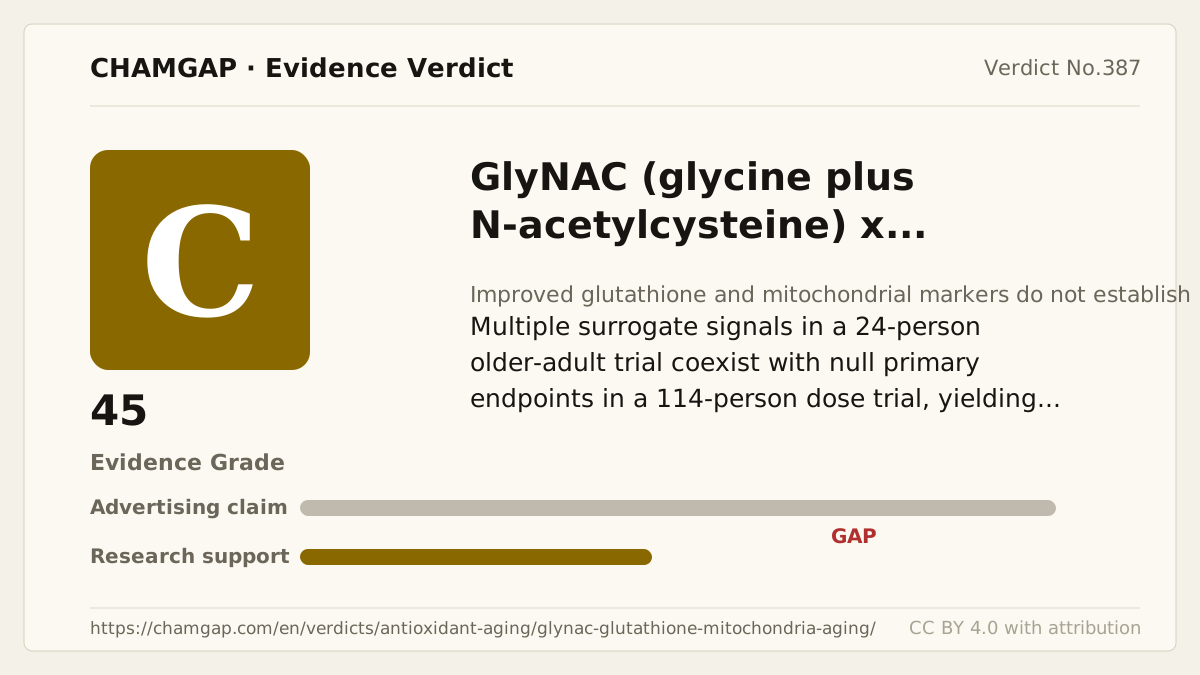
[Chamgap] GlyNAC × Glutathione restoration, mitochondrial improvement, and reversal of aging — Evidence Grade C·45. 3 cited sources checked. Source: https://chamgap.com/en/verdicts/antioxidant-aging/glynac-glutathione-mitochondria-aging/ · CC BY 4.0CC BY 4.0 — free to use with attribution; do not distort grades, numbers, or verdict meaning.
What this document does and does not do
Chamgap is an information source. It reports what research has and has not confirmed; it does not tell readers what to take or buy. That decision belongs to readers and, when needed, medical or legal professionals. This verdict reflects literature available up to the search date and may change as new research appears. Nothing here is medical advice.