
Camu-camu fruit extract,
does it really help with Powerful antioxidant activity and healthy aging?
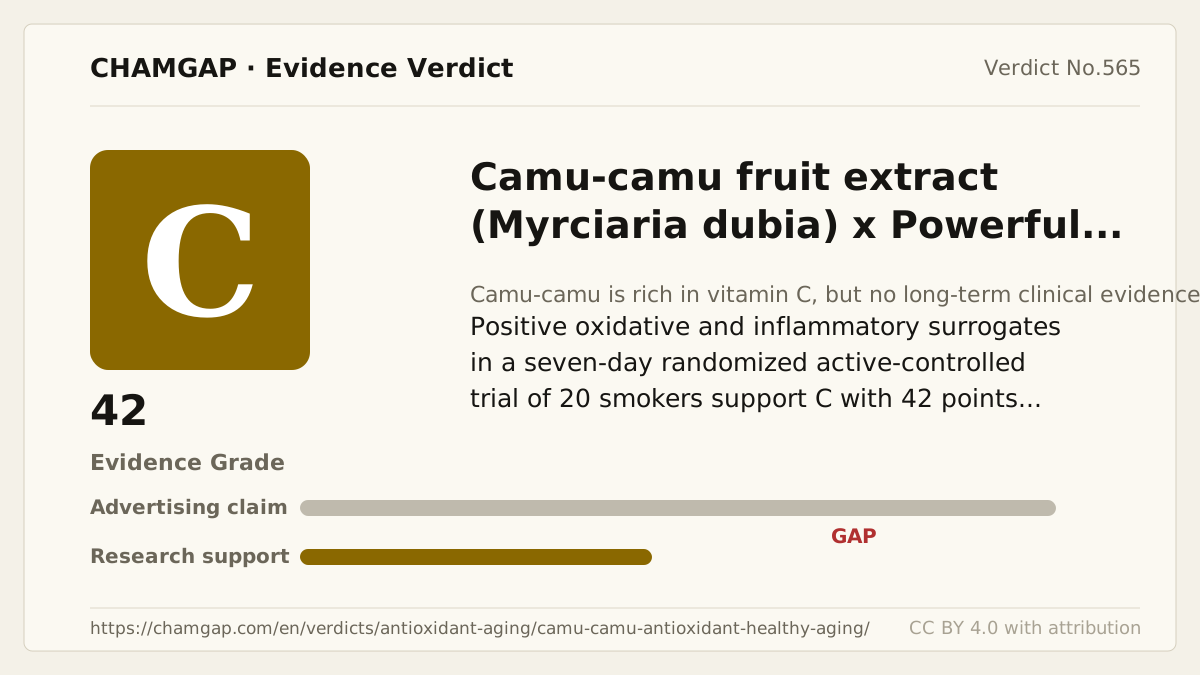
research showsCamu-camu is rated C for the composite antioxidant and healthy-aging claim. A seven-day randomized active-controlled human trial assigned 20 male smokers to camu-camu juice or an equal amount of vitamin C in tablets. Urinary 8-OHdG, serum reactive oxygen species, hs-CRP, IL-6, and IL-8 decreased in the camu-camu group. The study had only ten participants per arm, was extremely short, lacked placebo control, and was difficult to blind, but it provides genuine positive human surrogate evidence, making a preclinical-only D rating too low. Rule ① therefore gives the antioxidant and inflammatory surrogate claim a C. No human trial has assessed long-term healthy aging, frailty, disease, or lifespan, so that subclaim remains ungraded.
ads claimMarketing turns ORAC or laboratory antioxidant capacity and high vitamin C content into prevention of cellular aging, powerful detoxification, and preservation of youth. Nutritional content, blood or urine markers, and actual aging or disease outcomes are distinct claims.
Useful facts when choosing a product
- Camu-camu is the Amazonian fruit Myrciaria dubia and contains vitamin C and multiple polyphenols. Content varies with origin, ripeness, processing, storage, and whether the product is juice, powder, or extract.
- The principal human study used 70 mL of 100% juice supplying 1,050 mg vitamin C daily, not an extract capsule. Its result cannot automatically be transferred to arbitrary fruit-extract products.
- High vitamin C content does not establish anti-aging efficacy. Laboratory antioxidant capacity or ORAC values do not directly predict human absorption, metabolism, disease, or lifespan outcomes.
- Food amounts are generally tolerated, but concentrated products may cause gastrointestinal symptoms and raise total vitamin C intake. People with kidney-stone risk, iron overload, medication use, or kidney disease should seek advice before high-dose use.
Chamgap Semantic Classification Code
Candidate index · review held
S.camu-camu-fruit-extract.UNK.powerful-antioxidant-activity-and-healthy-aging.assess.activeSupplements and nutraceuticals > Camu-camu fruit extract > Unknown > Powerful antioxidant activity and healthy aging > Association or change assessment > Active comparator
An automated migration candidate, not an issued permanent code; exact claim scope remains under review. This machine-generated migration candidate helps retrieval but is not a permanent assignment. The original verdict ID and URL remain authoritative.
What the research actually shows
Inoue et al. randomized 20 male smokers with elevated oxidative stress to 70 mL of 100% camu-camu juice or 1,050 mg vitamin C tablets for seven days. Urinary 8-OHdG and serum reactive oxygen species, hs-CRP, IL-6, and IL-8 decreased with camu-camu but not vitamin C. Each arm had ten people, juice and tablets are difficult to blind, and there was no symptom or event outcome. Langley et al. 2015 reviewed extensive compositional, cellular, and animal research but described limited human evidence and the need for targeted trials. No later randomized trial directly testing camu-camu alone for aging or healthspan was identified.
Why this is classified as C (42)
A seven-day randomized active-controlled trial in 20 male smokers found lower 8-OHdG, reactive oxygen species, hs-CRP, IL-6, and IL-8, so a preclinical-only D rating is too low. The extremely small sample, short duration, lack of placebo, selected population, and juice formulation limit the inference, and rule ① caps this positive surrogate evidence at C with 42 points. Long-term healthy aging, frailty, disease, and lifespan remain ungraded because no direct human study exists. High-dose vitamin C precautions are separated from efficacy.
Counterpoint. Eating camu-camu as one fruit among a varied diet can be a nutritional choice. For healthy aging, smoking cessation, exercise, sleep, and control of blood pressure, lipids, and glucose have direct clinical evidence and take priority.
Rejudgment record. Reassessment (cross-check reflected) — Accepted reductions in 8-OHdG, reactive oxygen species, hs-CRP, IL-6, and IL-8 in a seven-day randomized active-controlled trial of 20 male smokers as positive human surrogate evidence and applied the rule ① ceiling of C after accounting for the tiny sample, brief duration, and absence of placebo
Sub-claim grades by effect
This ingredient is marketed for several effects. A single overall grade blends strong and weak claims together, so each effect is graded separately here. The overall grade reflects the strongest disconfirming or core claim.
| Effect (sub-claim) | Grade | Basis |
|---|---|---|
| Short-term improvement in oxidative and inflammatory markers | C | The 20-person seven-day trial was positive, but had ten people per arm, a selected population, and multiple surrogates. |
| Long-term healthy aging, frailty, disease, and lifespan | ? | No human trial assesses long-term aging or clinical outcomes. |
Cross-check — AI research and Codex final gate
Evidence Table
| Study | Design | Sample | Funding | Endpoint | Result | Weight |
|---|---|---|---|---|---|---|
| Inoue T et al. 2008 | Randomized active-controlled seven-day human trial | 20 male smokers; ten per group | Inadequately reported; single-center Japanese academic research | Urinary 8-OHdG and serum ROS, hs-CRP, IL-6, and IL-8 | Several markers fell in the camu-camu juice group, but no symptom, disease, or aging outcome was measured. | Only key human surrogate trial |
| Langley PC et al. 2015 | Systematic review of camu-camu antioxidant and related effects | Compositional, cellular, animal, and limited human evidence | Commercial interests linked to Amazon Origins and NEMA Research | Antioxidant, anti-inflammatory, and potential health effects | Human evidence was limited and additional targeted human studies were needed. | Evidence-gap review with commercial links |
Receipt — 2 References
All 2 cited sources were verified for existence at the original page (as of 2026-07-18).
Final verification and publication gate: Codex · Evidence date: 2026-07-18 · Corrections: none
Cite this verdict
[Chamgap] Camu-camu fruit extract x powerful antioxidant activity and healthy aging — Evidence Grade C·42. 2 cited sources checked. Source: https://chamgap.com/en/verdicts/antioxidant-aging/camu-camu-antioxidant-healthy-aging/ · CC BY 4.0CC BY 4.0 — free to use with attribution; do not distort grades, numbers, or verdict meaning.
What this document does and does not do
Chamgap is an information source. It reports what research has and has not confirmed; it does not tell readers what to take or buy. That decision belongs to readers and, when needed, medical or legal professionals. This verdict reflects literature available up to the search date and may change as new research appears. Nothing here is medical advice.