
A six-week program distributing three vigorous 60-step stair ascents across the day,
does it really help with Improved VO2peak and reduced postprandial glucose in inactive adults?
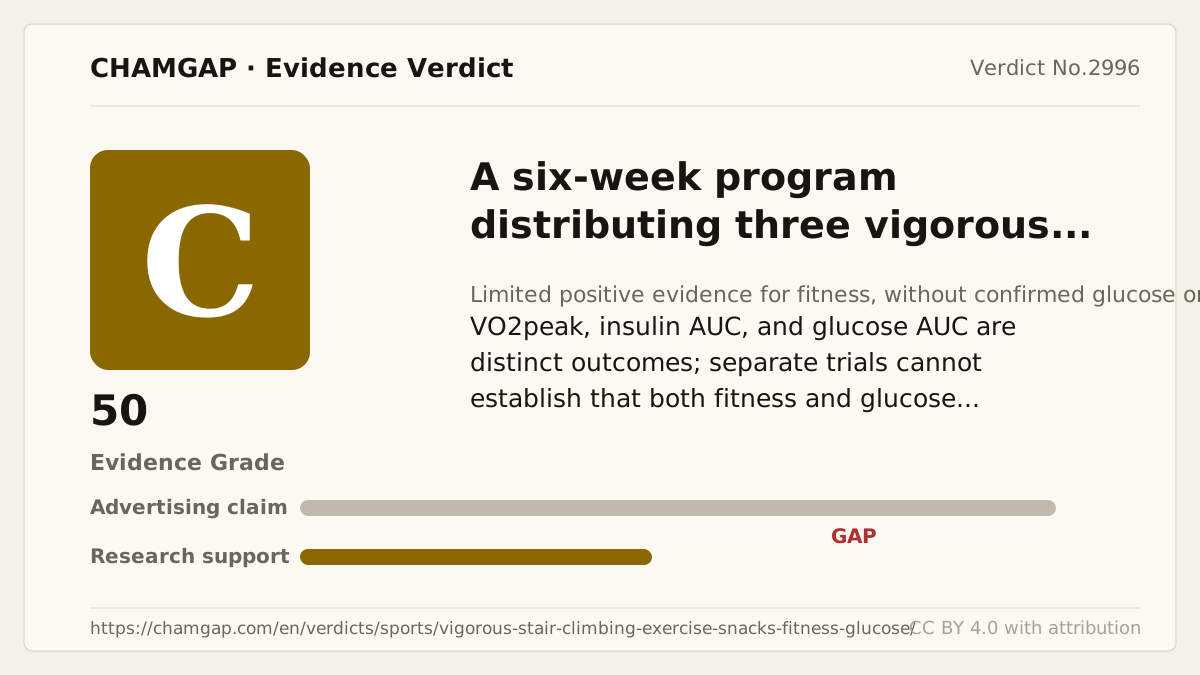
research showsGrade C with 50 points. VO2peak improved versus no training in a 24-person six-week RCT, but the exact between-group effect and 95% CI were unavailable. In a separate acute trial, primary insulin fell in one overweight group while glucose was null.
ads claimClaims that seconds of stair climbing prevent diabetes or cardiovascular disease exceed the measured outcomes.
Useful facts when choosing a product
- The training study used 60 steps three times daily, three days weekly for six weeks.
- The acute metabolic protocol used eight 15-30-second bouts over nine hours.
- Walking, continuous stair exercise, and generic bodyweight snacks are different interventions.
Chamgap Semantic Classification Code
Permanent code issued
X.stair-climbing-exercise-snacks.behavioral.vo2peak.increase.no-trainingBehaviors, exposures and policies > A six-week program distributing three vigorous 60-step stair ascents across the day > Behavioral delivery > Improved VO2peak and reduced postprandial glucose in inactive adults > Increase claim > No training
Codex retrospectively verified the principal intervention, delivery, population, endpoint, and comparator from the existing reviewed verdict and issued a permanent semantic code. Secondary outcomes on the page are not transferred as separate claims. The code identifies the intervention and claim; it never contains the evidence grade, score, or safety result.
Exact Claim Classification
These independent facets prevent evidence from different forms, routes, populations, effects, and comparators from being mixed.
| Intervention class | X · Behavior, exposure, or policy |
|---|---|
| Canonical ingredient or intervention | A six-week program distributing three vigorous 60-step stair ascents across the day |
| Source or part used | Plant source not applicable; specified behavior or training |
| Formulation or processing | A six-week program distributing three vigorous 60-step stair ascents across the day |
| Route | Behavioral delivery |
| Dose | A six-week program distributing three vigorous 60-step stair ascents across the day |
| Duration | Six weeks |
| Population | 24 participants (12/12) |
| Effect or condition | Improved VO2peak and reduced postprandial glucose in inactive adults |
| Primary endpoint | Six-week VO2peak |
| Comparator | No training |
| Duplicate-detection key | stair-climbing-exercise-snacks|behavioral|24 participants (12/12)|vo2peak|Six weeks |
What the research actually shows
Twenty-four inactive young adults were assigned to vigorous 60-step ascents three times daily, separated by 1-4 hours, three days weekly for six weeks, or no training. Separate acute crossover experiments tested eight 15-30-second stair bouts during nine hours of sitting.
Why this is classified as C (50)
Public support and an objective fitness test are strengths, but unrecovered comparative effect size and CI, n below 200, follow-up below 12 weeks, and surrogate outcomes give grade C with 50 points.
Counterpoint. Lower insulin in one overweight group is not proof of glucose success or durable diabetes benefit.
Rejudgment record. Codex cross-check of two original trials, outcomes, and effect estimates — Separated significant VO2peak from the unrecovered exact effect and CI and distinguished the insulin primary outcome from null glucose, revising ChatGPT's provisional C54 to C50
| Endpoint | S | Surrogate marker - laboratory or imaging measures |
| Replication | R1 | Single confirmatory trial |
| Independence | I2 | Decisive evidence is publicly or non-profit funded |
| Effect size | EX | The clinical size of the effect could not be judged |
| Precision | CX | No pooled confidence interval could be confirmed |
Stored derived and displayed grades match; this is not a current recalculation or validity check (C).
Sub-claim grades by effect
This ingredient is marketed for several effects. A single overall grade blends strong and weak claims together, so each effect is graded separately here. The overall grade reflects the strongest disconfirming or core claim.
| Effect (sub-claim) | Grade | Basis |
|---|---|---|
| Improved cardiorespiratory fitness over six weeks | C | VO2peak had P=.003 but the exact comparative effect and CI were unavailable. |
| Lower postprandial glucose | D | Glucose was not significant in the separate acute trial. |
Cross-check — AI research and Codex final gate
Evidence Table
| Study | Design | Sample | Funding | Endpoint | Result | Weight |
|---|---|---|---|---|---|---|
| Jenkins EM et al. 2019 | Randomized no-training controlled trial | 24 participants (12/12) | McMaster internal, CIHR, and scholarship support | Six-week VO2peak | Between-group P=.003; exact effect and 95% CI unavailable | Key small fitness trial |
| Rafiei H et al. 2021 | Two acute crossover experiments | 12 lean men and 11 overweight/obese adults | Details unavailable | Nine-hour insulin AUC | Overweight group insulin -16.5%, P=.036; glucose null | Direct trial separating the glucose claim |
Receipt — 2 References
Of 2 cited sources, 1 had limited original-page access (blocked or summary-only) and were verified via index/summary, marked partial; the rest were verified at the original page. As of 2026-09-07.
Final verification and publication gate: Codex · Evidence date: 2026-09-07 · Corrections: none
Cite this verdict
[Chamgap] Vigorous Stair-Climbing Exercise Snacks for Fitness—Glucose Benefit Remains Unconfirmed — Evidence Grade C·50. 2 cited sources checked. Source: https://chamgap.com/en/verdicts/sports/vigorous-stair-climbing-exercise-snacks-fitness-glucose/ · CC BY 4.0CC BY 4.0 — free to use with attribution; do not distort grades, numbers, or verdict meaning.
What this document does and does not do
Chamgap is an information source. It reports what research has and has not confirmed; it does not tell readers what to take or buy. That decision belongs to readers and, when needed, medical or legal professionals. This verdict reflects literature available up to the search date and may change as new research appears. Nothing here is medical advice.