
Sports cupping therapy,
does it really help with Reduced post-exercise muscle soreness and damage and enhanced performance and recovery?
research showsSports cupping is rated D. A 2018 systematic review in athletes found 11 trials with 498 participants, but interventions and outcomes were highly heterogeneous, most trials had unclear or high risk of bias, and none reported safety, so no recommendation could be made. A subsequent 2025 randomized trial in 81 recreational runners found no significant benefit for post-run pain, fatigue, perceived recovery, or vertical-jump height.
ads claimMarketing interprets circular bruises as evidence that toxins or lactate have been removed and bundles that story with faster muscle-damage recovery and better performance. Research centers on subjective pain and short-term markers such as creatine kinase, without consistent objective performance or competition benefit.
Useful facts when choosing a product
- Cupping creates negative pressure that lifts skin and superficial tissue; dry, moving, heated, and skin-incising wet cupping have different risk profiles.
- Circular discoloration and bruising reflect capillary injury from suction, not a measure of toxin removal.
- Single-use equipment and appropriate disinfection are required, and blistering, burns, infection, and anemia can occur. Suspected muscle tear, major swelling, or persistent weakness warrants diagnosis first.
Chamgap Semantic Classification Code
Candidate index · review held
K.sports-cupping-therapy.UNK.post-exercise-muscle-soreness-and-damage-and-enhanced-performance-and-recovery.reduce.UNKFolk and alternative interventions > Sports cupping therapy > Unknown > post-exercise muscle soreness and damage and enhanced performance and recovery > Reduction claim > Unknown
An automated migration candidate, not an issued permanent code; exact claim scope remains under review. This machine-generated migration candidate helps retrieval but is not a permanent assignment. The original verdict ID and URL remain authoritative.
What the research actually shows
Bridgett 2018 reviewed 11 randomized trials involving 498 amateur and professional athletes. Cupping was applied one to 20 times, alone or with interventions such as acupuncture, and outcomes ranged across pain, disability, range of motion, creatine kinase, and performance. Most trials had unclear or high risk of bias, preventing a recommendation for or against efficacy or safety. Coutinho 2025 followed 81 recreational runners for 72 hours after five minutes of quadriceps cupping post-run and found no significant difference from control in pain, fatigue, perceived recovery, or single-leg vertical-jump height.
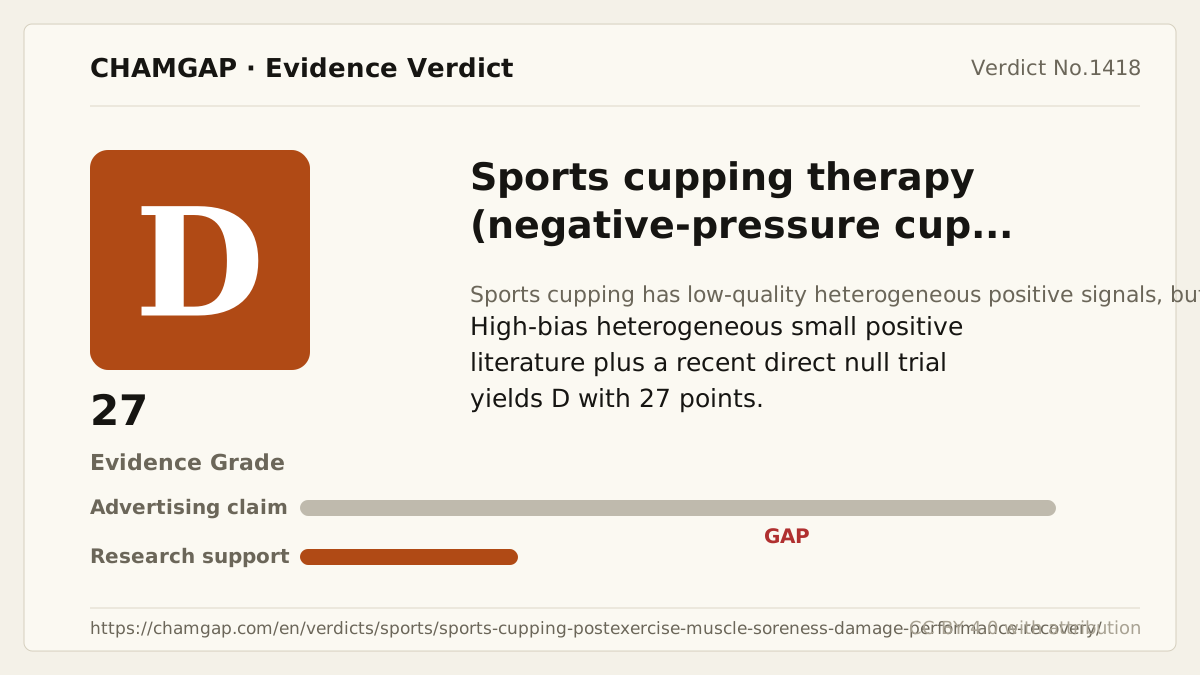
Why this is classified as D (27)
The 11-trial, 498-athlete review was dominated by high-bias, untreated-control, heterogeneous studies and could not support a recommendation, while the newest 81-runner trial was null on direct recovery and performance outcomes. The high-bias, heterogeneous, unestablished-evidence rule gives D with 27 points.
Counterpoint. Limited low-risk dry cupping may be chosen for temporary comfort, but it should be stopped without objective benefit and should not displace sleep, nutrition, load management, or rehabilitation.
Rejudgment record. New verdict — Did not conceal positive signals in the systematic review of 11 trials and 498 athletes, but applied rule ② and grade D because most studies had high or unclear bias, often used untreated controls, varied greatly in intervention and outcome, omitted safety, and a recent 81-person direct randomized trial was null for pain, fatigue, recovery, and jumping
Sub-claim grades by effect
This ingredient is marketed for several effects. A single overall grade blends strong and weak claims together, so each effect is graded separately here. The overall grade reflects the strongest disconfirming or core claim.
| Effect (sub-claim) | Grade | Basis |
|---|---|---|
| Reduced post-exercise muscle soreness | D | High-bias positive studies exist, but the recent 81-person randomized trial was null for pain. |
| Reduced post-exercise muscle damage | D | Some creatine-kinase signals rely on heterogeneous small studies with untreated controls and are unestablished. |
| Enhanced performance and recovery | D | The recent direct trial found no advantage for perceived recovery or vertical-jump performance. |
Cross-check — AI research and Codex final gate
Evidence Table
| Study | Design | Sample | Funding | Endpoint | Result | Weight |
|---|---|---|---|---|---|---|
| Bridgett R et al. 2018 | Systematic review of randomized trials in athletes | Eleven trials and 498 participants | Australian and German academic research; trial-level funding inadequately reported | Pain, disability, range of motion, creatine kinase, experimental and performance outcomes | Some outcomes were positive, but most trials had high or unclear bias, no trial reported safety, and no recommendation was possible. | Key low-certainty synthesis |
| Coutinho LOB et al. 2025 | Randomized controlled clinical trial | Eighty-one recreational runners | No conflicts reported; academic research | Pain, fatigue, perceived recovery, and single-leg vertical jump over 72 hours | Cupping was not significantly better than control for any outcome. | Recent direct null evidence |
Receipt — 2 References
All 2 cited sources were verified for existence at the original page (as of 2026-07-23).
Final verification and publication gate: Codex · Evidence date: 2026-07-23 · Corrections: none
Cite this verdict
[Chamgap] Sports cupping therapy x reduced muscle soreness and damage and enhanced performance and recovery — Evidence Grade D·27. 2 cited sources checked. Source: https://chamgap.com/en/verdicts/sports/sports-cupping-postexercise-muscle-soreness-damage-performance-recovery/ · CC BY 4.0CC BY 4.0 — free to use with attribution; do not distort grades, numbers, or verdict meaning.
What this document does and does not do
Chamgap is an information source. It reports what research has and has not confirmed; it does not tell readers what to take or buy. That decision belongs to readers and, when needed, medical or legal professionals. This verdict reflects literature available up to the search date and may change as new research appears. Nothing here is medical advice.