
Low-molecular-weight whey protein hydrolysate,
does it really help with Improved strength, muscle mass, and resistance-exercise performance?
research showsA specific low-molecular-weight whey hydrolysate and its five-amino-acid LDIQK peptide have muscle-related signals, but public human evidence is concentrated around the product and manufacturer. An 83-person, 12-week standalone trial is described in regulatory and manufacturer materials as improving knee-extension strength, but a public paper was not identified. A published 100-person trial used a combination with ginseng berry extract; selected grip and physical-performance outcomes improved, while knee-extension strength, muscle power, and muscle mass were null. The grade is low C.
ads claimClaims that five amino acids absorb faster than ordinary protein and increase muscle at a low dose, restore strength without exercise, or outperform whey isolate lack direct comparative evidence. LDIQK is one pentapeptide composed of leucine, aspartate, isoleucine, glutamine, and lysine, not five different peptides.
Useful facts when choosing a product
- Several low-molecular-weight whey hydrolysates have individual Korean recognition numbers; public material lists 6 g/day for Neocremar-related recognition number 2023-22.
- CoreBlast5 is a specific ingredient promoted with a low-molecular-weight specification and LDIQK marker; it is not interchangeable with generic whey concentrate, isolate, or arbitrary hydrolysate.
- Korean finished products may combine it with protein, leucine, vitamins, or botanical extracts, so the actual LDIQK specification and daily amount should be checked.
- Cow-milk protein allergy requires avoidance; lactose content and protein intake in kidney disease require product-specific and individualized review.
Chamgap Semantic Classification Code
Candidate index · review held
S.low-molecular-weight-whey-protein-hydrolysate-containing-a-five-amino-acid-peptide.UNK.strength-muscle-mass-and-resistance-exercise-performance.improve.placeboSupplements and nutraceuticals > Low-molecular-weight whey protein hydrolysate containing a five-amino-acid peptide > Unknown > strength, muscle mass, and resistance-exercise performance > Improvement claim > Placebo
An automated migration candidate, not an issued permanent code; exact claim scope remains under review. This machine-generated migration candidate helps retrieval but is not a permanent assignment. The original verdict ID and URL remain authoritative.
What the research actually shows
Korean recognition materials for low-molecular-weight whey protein hydrolysate number 2023-22 and CoreBlast5 promotional materials describe a randomized double-blind placebo-controlled trial in 83 Korean adults aged 50 or older who received 6 g/day for 12 weeks, with improved knee-extension strength, but a searchable peer-reviewed full paper or detailed registry record was not identified. The published Yoon 2025 trial randomized 100 adults aged 60 or older to a product containing 4.5 g of low-molecular-weight whey hydrolysate plus ginseng berry extract or placebo while both groups performed resistance exercise. Among 88 completers, right-hand grip and selected Short Physical Performance Battery measures improved, but left-hand grip, knee-extension strength, muscle power, and regional and total muscle mass were not significant. The Shin 2020 muscle-weight, grip, and PI3K-Akt results and LDIQK work are in mice or cells. General whey concentrate or isolate evidence was not transferred to this specific low-molecular-weight specification.
Why this is classified as C (40)
Strength is C based on an 83-person product trial with unpublished details and selected combination-trial signals. Muscle mass is D because the published combination trial was null and peptide-specific human evidence is absent; resistance performance is C based on limited functional signals. The overall verdict is C with 40 points.
Counterpoint. Replication should use an LDIQK-standardized ingredient at 6 g/day, a protein- and calorie-matched comparator, independent researchers, public registration, and prespecified strength, muscle-mass, and exercise-performance primary outcomes.
Rejudgment record. New verdict — Separated the manufacturer and regulatory standalone trial for the specific LDIQK specification from the published combination trial and excluded transfer from generic whey or preclinical findings
Sub-claim grades by effect
This ingredient is marketed for several effects. A single overall grade blends strong and weak claims together, so each effect is graded separately here. The overall grade reflects the strongest disconfirming or core claim.
| Effect (sub-claim) | Grade | Basis |
|---|---|---|
| Muscle strength | C | The 83-person product trial lacks an identified detailed public paper, and the combination trial was positive only for right-hand grip |
| Muscle mass | D | Regional and total muscle mass were null in the published combination trial, with insufficient peptide-specific human evidence |
| Resistance-exercise performance | C | Selected physical-performance signals occurred with a combination plus exercise, while muscle power was null |
Cross-check — AI research and Codex final gate
Evidence Table
| Study | Design | Sample | Funding | Endpoint | Result | Weight |
|---|---|---|---|---|---|---|
| CoreBlast5 human application trial | Reported as a 12-week randomized double-blind placebo-controlled trial | 83 | Ingredient-company and regulatory-submission materials | Knee-extension strength | Reported improvement at 6 g/day; no detailed public paper identified | Limited |
| Yoon et al. (2025) | Twelve-week single-center randomized double-blind placebo-controlled trial with resistance exercise | 88 | Maeil Health Nutrition researchers and a combination product | Grip, knee strength, muscle power, physical-performance battery, and dual-energy-X-ray muscle mass | Selected right-hand grip and physical-performance outcomes were positive; knee strength, muscle power, and muscle mass were null | Key |
| Shin et al. (2020) | Immobilization-induced muscle-atrophy mouse experiment | Maeil Dairies and Neocremar researchers | Grip, muscle weight, and PI3K-Akt signaling | Signal that low-molecular-weight whey hydrolysate attenuated muscle atrophy | Preclinical |
Receipt — 4 References
All 4 cited sources were verified for existence at the original page (as of 2026-07-17).
Final verification and publication gate: Codex · Evidence date: 2026-07-17 · Corrections: none
Cite this verdict
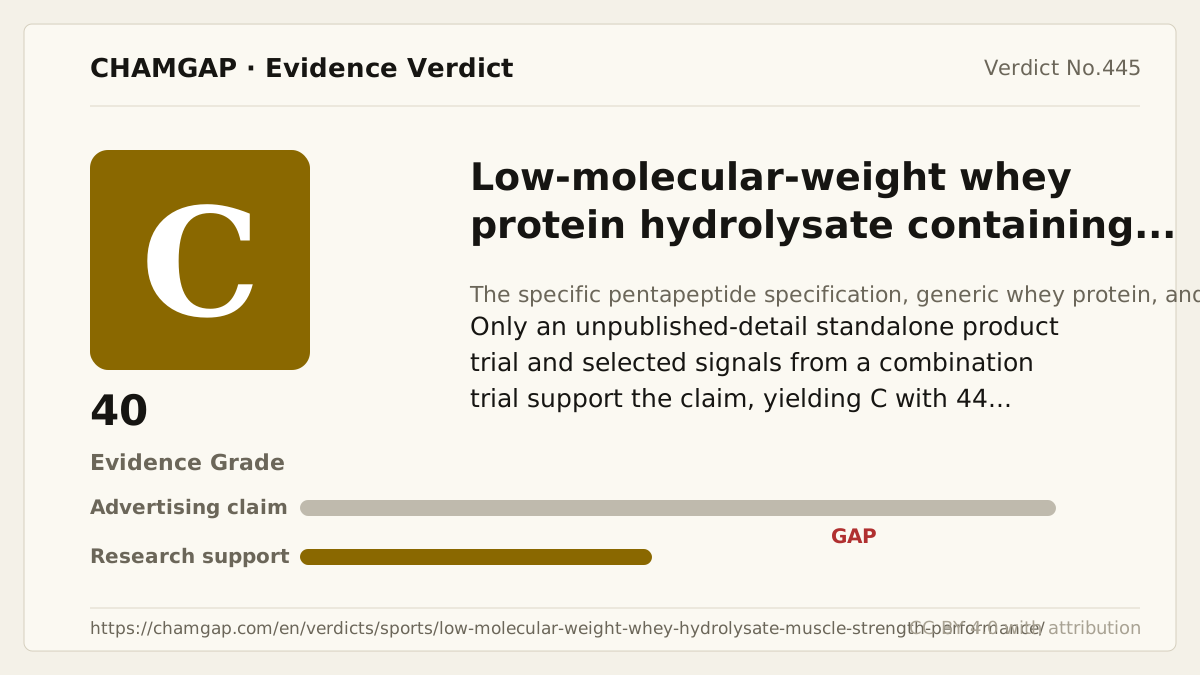
[Chamgap] Low-molecular-weight whey protein hydrolysate x strength, muscle mass, and resistance performance — Evidence Grade C·40. 4 cited sources checked. Source: https://chamgap.com/en/verdicts/sports/low-molecular-weight-whey-hydrolysate-muscle-strength-performance/ · CC BY 4.0CC BY 4.0 — free to use with attribution; do not distort grades, numbers, or verdict meaning.
What this document does and does not do
Chamgap is an information source. It reports what research has and has not confirmed; it does not tell readers what to take or buy. That decision belongs to readers and, when needed, medical or legal professionals. This verdict reflects literature available up to the search date and may change as new research appears. Nothing here is medical advice.