
Kinesiology tape,
does it really help with Improvement of strength, jumping, sprinting, agility, and endurance in athletes?
research showsKinesiology tape is rated D for performance enhancement. A 2018 systematic review of 15 studies in healthy athletes examined 193 comparisons and found only two favoring kinesiology tape; none favored it over another tape. A strength meta-analysis covering 530 healthy adults and 48 comparisons estimated an overall effect of r=0.05, which is negligible, while jump, sprint, agility, and running outcomes showed no compelling benefit. Small trials, inadequate blinding, multiple comparisons, and heterogeneity yield D with 28 points.
ads claimMarketing and visibility in competition imply immediate muscle activation, explosiveness, speed, and endurance. Training, sleep, nutrition, and injury management have far larger effects, and the sensation of wearing tape has not been shown to translate reliably into better records.
Useful facts when choosing a product
- Kinesiology tape is an elastic adhesive tape that can remain on the skin for several days, but it is neither a medicine nor a strength-enhancing device.
- Application site, tension, direction, practitioner experience, and testing time varied widely across studies, so no brand or taping pattern guarantees performance enhancement.
- Sweat, friction, and adhesive can cause itching, redness, blisters, or contact dermatitis. Tape should not be placed on wounds, infected skin, or areas with known adhesive allergy.
- Numbness, skin-color change, worsening pain, or rash requires immediate removal. Tape should not delay injury assessment or appropriate rehabilitation.
Chamgap Semantic Classification Code
Candidate index · review held
M.kinesiology-tape.UNK.strength-jumping-sprinting-agility-and-endurance-in-athletes.improve.UNKMedicinal interventions > Kinesiology tape > Unknown > strength, jumping, sprinting, agility, and endurance in athletes > Improvement claim > Unknown
An automated migration candidate, not an issued permanent code; exact claim scope remains under review. This machine-generated migration candidate helps retrieval but is not a permanent assignment. The original verdict ID and URL remain authoritative.
What the research actually shows
The 2018 review by Reneker and colleagues included 15 studies meeting criteria for healthy athletes, random allocation, and functional sports performance. PEDro scores ranged from 3 to 8, and blinding was often inadequate. Among 193 comparisons, kinesiology tape beat no tape only for one ball-accuracy result and one endurance result from a poor-quality cycling study; 87 jumping comparisons and the sprint and agility comparisons showed no consistent benefit. The 2015 meta-analysis by Csapo and Alegre estimated strength enhancement in healthy adults at r=0.05 with a 95% confidence interval from -0.23 to 0.34. A 2019 meta-analysis of 37 trials by Yam and colleagues found signals in some fatigued or musculoskeletal groups but did not support use in people without disability.
Why this is classified as D (28)
A systematic review of 15 studies and 193 comparisons in healthy athletes and a strength meta-analysis of 19 studies and 530 healthy adults do not support compelling benefit. Rare positive findings are compatible with multiple testing and cluster in small or inadequately blinded studies. Large null synthesis and study-quality limitations give D with 28 points.
Counterpoint. Skin sensation or psychological confidence may make an individual feel more comfortable. For actual performance enhancement, sport-specific training, recovery, strength and power programming, and injury rehabilitation deserve priority over tape.
Rejudgment record. New verdict — Applied D because only two of 193 comparisons across 15 healthy-athlete studies favored kinesiology tape, none favored it over another tape, and a meta-analysis found negligible strength effects in healthy adults amid small heterogeneous and inadequately blinded trials
Sub-claim grades by effect
This ingredient is marketed for several effects. A single overall grade blends strong and weak claims together, so each effect is graded separately here. The overall grade reflects the strongest disconfirming or core claim.
| Effect (sub-claim) | Grade | Basis |
|---|---|---|
| Improved strength and jumping in athletes | D | The overall strength effect was negligible and the many jumping comparisons were null. |
| Improved sprinting and agility | D | The healthy-athlete review found no significant, reproducible improvement in speed or agility. |
| Improved cycling or running endurance | D | A rare positive endurance result came from a poor-quality study, while the overall comparisons did not support compelling benefit. |
Cross-check — AI research and Codex final gate
Evidence Table
| Study | Design | Sample | Funding | Endpoint | Result | Weight |
|---|---|---|---|---|---|---|
| Reneker JC et al. 2018 | Systematic review of randomized comparisons in healthy athletes | Fifteen studies and 193 performance comparisons | No specific funding and no conflict of interest reported | Ball skills, power squats, cycling, balance, jumping, agility, sprinting, and distance running | Only two of 193 comparisons favored kinesiology tape over no tape, and none favored it over another tape. | Key large null synthesis |
| Csapo R and Alegre LM 2015 | Meta-analysis of muscle strength in healthy adults | Nineteen studies, 530 participants, and 48 comparisons | Detailed funding not stated in the public abstract | Skeletal-muscle strength after tape application | The overall effect was r=0.05 (95% CI -0.23 to 0.34), indicating negligible potential for strength gain. | Key null meta-analysis for the strength subclaim |
| Yam ML et al. 2019 | Meta-analysis of randomized trials of lower-limb strength, hop, and vertical jump | Thirty-seven randomized trials | Investigators from the Chinese University of Hong Kong and Shenzhen institutes; detailed funding not stated in the public abstract | Lower-limb strength, single-leg hop, and vertical jump | Unlike signals in some fatigued or musculoskeletal subgroups, use in people without disability was not supported. | Supporting null evidence for the healthy-performance claim |
Receipt — 3 References
All 3 cited sources were verified for existence at the original page (as of 2026-07-23).
Final verification and publication gate: Codex · Evidence date: 2026-07-23 · Corrections: none
Cite this verdict
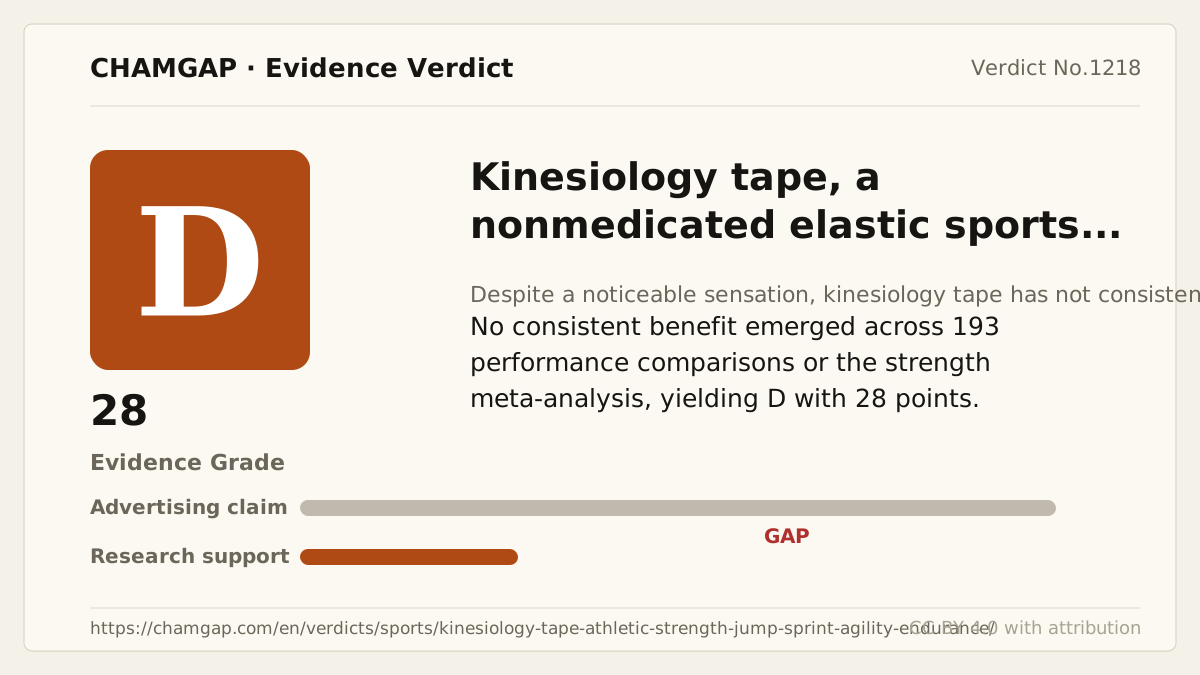
[Chamgap] Kinesiology tape x improved athletic performance — Evidence Grade D·28. 3 cited sources checked. Source: https://chamgap.com/en/verdicts/sports/kinesiology-tape-athletic-strength-jump-sprint-agility-endurance/ · CC BY 4.0CC BY 4.0 — free to use with attribution; do not distort grades, numbers, or verdict meaning.
What this document does and does not do
Chamgap is an information source. It reports what research has and has not confirmed; it does not tell readers what to take or buy. That decision belongs to readers and, when needed, medical or legal professionals. This verdict reflects literature available up to the search date and may change as new research appears. Nothing here is medical advice.