
Intermittent pneumatic compression recovery boots,
does it really help with Reduced postexercise muscle soreness and faster recovery of strength and performance?
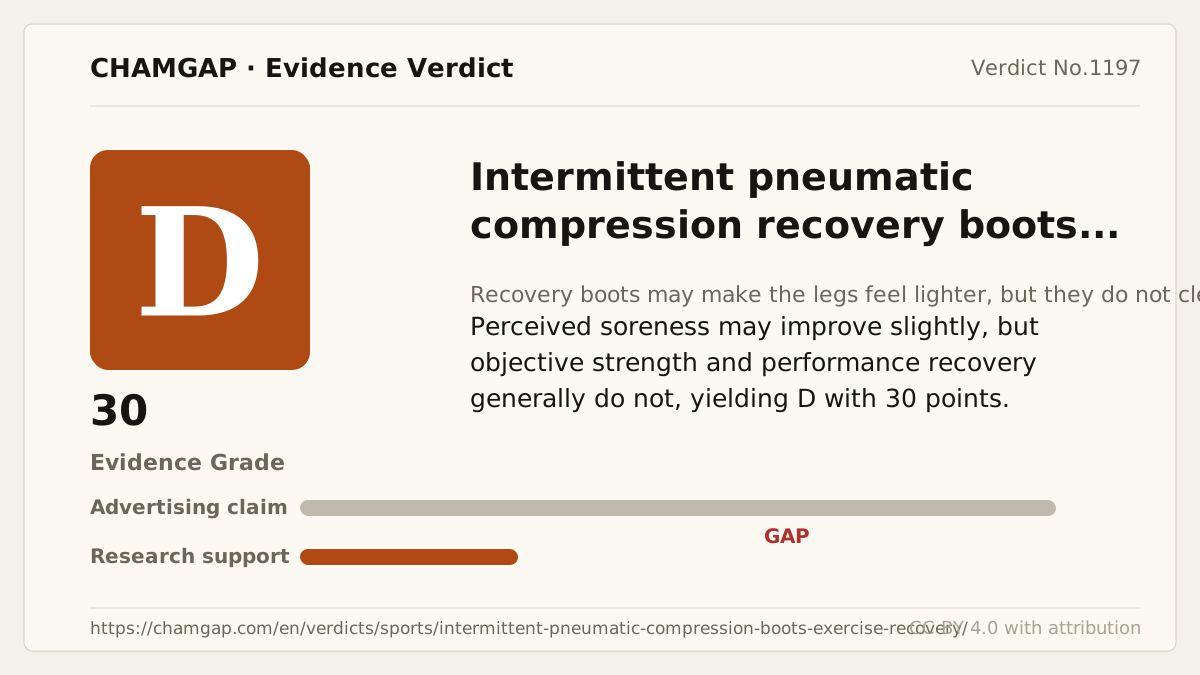
research showsIntermittent pneumatic compression recovery boots are rated D because evidence that they meaningfully accelerate postexercise recovery is weak. A 2024 meta-analysis of 17 studies and 319 participants found trivial-to-small effects on muscular function, trivial-to-moderate effects on pain and soreness, and highly variable results for damage markers such as creatine kinase. Objective performance and strength recovery were generally not significant, while a small change in perceived soreness was the most consistent signal. A separate 2025 review also found no significant superiority over other recovery methods.
ads claimMarketing links transient compression, circulation changes, and lighter-feeling legs to lactate removal, repair of muscle damage, and better performance in the next event. A plausible change in blood flow or perceived recovery is not equivalent to proven recovery of objective strength or performance.
Useful facts when choosing a product
- Recovery boots use multiple air chambers that inflate and deflate sequentially from the ankle toward the thigh. Pressure range, number of chambers, and compression sequence vary by product and may not match research protocols.
- A common sports-research protocol is approximately 20 to 30 minutes after exercise at about 80 mmHg, but the optimal pressure, duration, and frequency are not established. Higher pressure does not guarantee better recovery.
- Short sessions are generally tolerated by healthy users, but treatment should stop if pain, numbness, skin irritation, or excessive pressure occurs.
- People with suspected acute thrombosis, severe peripheral arterial disease, decompensated heart failure, marked sensory loss, or damaged skin should not self-treat without clinical guidance.
Chamgap Semantic Classification Code
Candidate index · review held
UNK.intermittent-pneumatic-compression-recovery-boots.UNK.postexercise-muscle-soreness-and-faster-recovery-of-strength-and-performance.reduce.placeboUnknown > Intermittent pneumatic compression recovery boots > Unknown > postexercise muscle soreness and faster recovery of strength and performance > Reduction claim > Placebo
An automated migration candidate, not an issued permanent code; exact claim scope remains under review. This machine-generated migration candidate helps retrieval but is not a permanent assignment. The original verdict ID and URL remain authoritative.
What the research actually shows
The 2024 meta-analysis evaluated 17 studies and 319 athletes or healthy adults. Sessions of roughly 20 to 30 minutes at about 80 mmHg were common, but pressure, duration, and exercise-damage models varied widely. Muscular function showed a nonsignificant small benefit, soreness changed from trivial to moderate depending on time, and creatine kinase findings differed in direction and magnitude at 24, 48, and 72 hours. Only six of the 17 studies used a placebo condition, leaving subjective outcomes vulnerable to expectation. A 2025 review screened 354 records, included only six comparative studies, and found no significant difference establishing superiority among recovery methods.
Why this is classified as D (30)
Across only 319 participants, the best signal was a small and unstable reduction in perceived soreness, whereas objective strength, performance, and damage markers were null or variable. Limited masking, few placebo controls, and protocol heterogeneity support a low-quality, predominantly null grade of D with 30 points.
Counterpoint. Using the boots for comfort or a temporary feeling of lighter legs can be a personal preference. They should not be expected to replace sleep, adequate energy and protein intake, or training-load management, or to guarantee rapid performance recovery.
Rejudgment record. Cross-check applied — Applied D because small-study meta-analysis found only small subjective soreness benefits, while objective strength and performance were trivial-to-small or null, damage markers were variable, placebo control and masking were limited, and a separate review found no superiority over comparison recovery methods
Sub-claim grades by effect
This ingredient is marketed for several effects. A single overall grade blends strong and weak claims together, so each effect is graded separately here. The overall grade reflects the strongest disconfirming or core claim.
| Effect (sub-claim) | Grade | Basis |
|---|---|---|
| Reduction of postexercise muscle soreness | D | Perceived soreness improves slightly at some time points, but effects range from trivial to moderate and placebo control and masking are limited. |
| Faster recovery of strength and performance after exercise | D | Objective benefits for strength, jumping, running, and cycling performance are trivial to small or predominantly null. |
| Improvement of muscle-damage markers | D | Creatine kinase and inflammatory markers vary in direction across time points and do not show a consistent recovery effect. |
Cross-check — AI research and Codex final gate
Evidence Table
| Study | Design | Sample | Funding | Endpoint | Result | Weight |
|---|---|---|---|---|---|---|
| Maia F et al. 2024 | Systematic review and random-effects meta-analysis | 17 studies and 319 participants | Inadequately reported; academic research synthesis | Muscular function and performance, pain and soreness, and muscle-damage markers including creatine kinase | Muscular-function effects were trivial to small, pain and soreness effects were trivial to moderate, and muscle-damage markers were highly variable; perceived soreness was the most favorable signal. | Key synthesis evidence |
| Neves RS et al. 2025 | Comprehensive review of postexercise pneumatic-compression recovery | Six comparative studies included after screening 354 records | Inadequately reported | Performance, physiological, and subjective recovery comparisons | No significant difference established superiority or inferiority of pneumatic compression over other recovery methods, and the evidence base was small. | Confirmation of predominantly null and sparse evidence |
Receipt — 2 References
All 2 cited sources were verified for existence at the original page (as of 2026-07-23).
Final verification and publication gate: Codex · Evidence date: 2026-07-23 · Corrections: none
Cite this verdict
[Chamgap] Intermittent pneumatic compression recovery boots x reducing postexercise soreness and accelerating strength and performance recovery — Evidence Grade D·30. 2 cited sources checked. Source: https://chamgap.com/en/verdicts/sports/intermittent-pneumatic-compression-boots-exercise-recovery/ · CC BY 4.0CC BY 4.0 — free to use with attribution; do not distort grades, numbers, or verdict meaning.
What this document does and does not do
Chamgap is an information source. It reports what research has and has not confirmed; it does not tell readers what to take or buy. That decision belongs to readers and, when needed, medical or legal professionals. This verdict reflects literature available up to the search date and may change as new research appears. Nothing here is medical advice.