
Pre-exercise ingestion of ice slurry at -1°C and 7.5 g/kg,
does it really help with Longer running time to exhaustion in hot conditions?
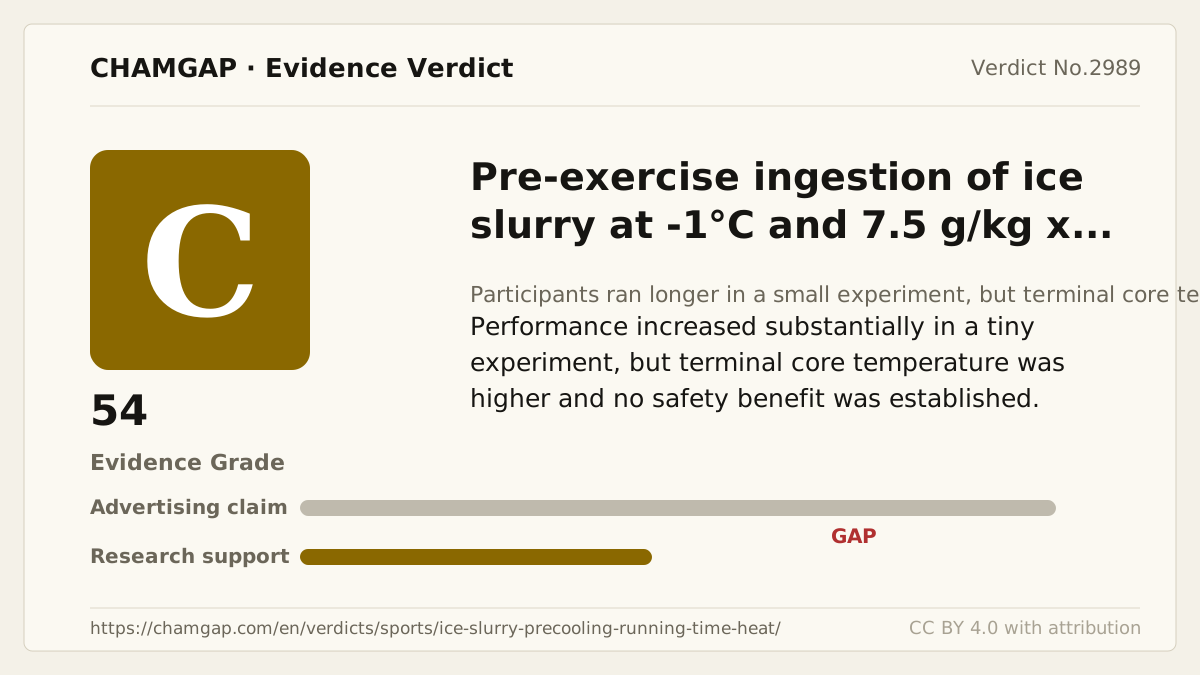
research showsGrade C. In a randomized crossover trial of 10 healthy men, pre-exercise ice slurry at -1°C and 7.5 g/kg increased running time to exhaustion from 40.7 to 50.2 minutes versus 4°C water, a 19% increase, P=.001. Every participant lasted longer, but rectal temperature at exhaustion was higher, 39.36°C versus 39.05°C. Longer performance is not evidence of heat-illness prevention.
ads claimClaims that ice slurry keeps core temperature safely lower or prevents heatstroke conflict with the terminal-temperature result. Core temperature began lower but ended higher.
Useful facts when choosing a product
- The pre-exercise dose was 7.5 g/kg body weight.
- The comparison was -1°C ice slurry versus 4°C water.
- During-exercise repeated dosing was not tested in this trial.
Chamgap Semantic Classification Code
Permanent code issued
F.ice-slurry.oral.running-time-to-exhaustion.increase.cold-waterFoods and beverages > Pre-exercise ingestion of ice slurry at -1°C and 7.5 g/kg > Oral > Longer running time to exhaustion in hot conditions > Increase claim > Cold water
Codex retrospectively verified the principal intervention, delivery, population, endpoint, and comparator from the existing reviewed verdict and issued a permanent semantic code. Secondary outcomes on the page are not transferred as separate claims. The code identifies the intervention and claim; it never contains the evidence grade, score, or safety result.
Exact Claim Classification
These independent facets prevent evidence from different forms, routes, populations, effects, and comparators from being mixed.
| Intervention class | F · Food, ingredient, or beverage |
|---|---|
| Canonical ingredient or intervention | Pre-exercise ingestion of ice slurry at -1°C and 7.5 g/kg |
| Source or part used | Food or beverage specified in the verdict; unreported cultivar and origin remain unverified |
| Formulation or processing | Pre-exercise ingestion of ice slurry at -1°C and 7.5 g/kg |
| Route | Oral |
| Dose | Pre-exercise ingestion of ice slurry at -1°C and 7.5 g/kg |
| Duration | Single pre-exercise intake |
| Population | 10 healthy men, two single-session conditions |
| Effect or condition | Longer running time to exhaustion in hot conditions |
| Primary endpoint | Time to exhaustion and thermoregulatory measures while running at first ventilatory threshold in heat |
| Comparator | Cold water |
| Duplicate-detection key | ice-slurry|oral|10 healthy men, two single-session conditions|running-time-to-exhaustion|Single pre-exercise intake |
What the research actually shows
Ten men ingested -1°C ice slurry or 4°C cold water at 7.5 g/kg in counterbalanced order before running at first ventilatory threshold in 34.0°C and 54.9% relative humidity. Time was 50.2 versus 40.7 minutes; rectal temperature was 0.32°C lower before running but 0.31°C higher at exhaustion.
Why this is classified as C (54)
A roughly 19% large within-person performance effect is offset by n=10, one acute laboratory test, and absence of clinical heat-illness safety testing, giving C with 54 points.
Counterpoint. Rapid ingestion of a large cold volume can cause gastrointestinal discomfort, and the ability to exercise longer does not mean lower heat-injury risk.
Rejudgment record. Codex PubMed original-trial, DOI, and effect-size cross-check — Accepted the large within-person time-to-exhaustion effect from PMID 19952832 while accounting for a functional surrogate, n=10, single acute test, and absence of heat-illness safety testing
| Endpoint | S | Surrogate marker - laboratory or imaging measures |
| Replication | R1 | Single confirmatory trial |
| Independence | I2 | Decisive evidence is publicly or non-profit funded |
| Effect size | E+ | Meets the clinically important threshold |
Stored derived and displayed grades match; this is not a current recalculation or validity check (C).
Sub-claim grades by effect
This ingredient is marketed for several effects. A single overall grade blends strong and weak claims together, so each effect is graded separately here. The overall grade reflects the strongest disconfirming or core claim.
| Effect (sub-claim) | Grade | Basis |
|---|---|---|
| Longer running time to exhaustion in heat | C | A large acute signal of 50.2 versus 40.7 minutes. |
| Prevention of heat illness | ? | Heat-illness events were not measured and terminal temperature was higher. |
Cross-check — AI research and Codex final gate
Evidence Table
| Study | Design | Sample | Funding | Endpoint | Result | Weight |
|---|---|---|---|---|---|---|
| Siegel R et al. 2010 | Randomized counterbalanced within-person crossover heat-exercise trial | 10 healthy men, two single-session conditions | University investigators; no commercial manufacturer involvement identified in the PubMed record | Time to exhaustion and thermoregulatory measures while running at first ventilatory threshold in heat | 50.2±8.5 vs 40.7±7.2 minutes, +19±6%, P=.001; terminal rectal temperature 39.36 vs 39.05°C, P=.001 | Large acute performance signal from a tiny laboratory trial |
Receipt — 1 References
All 1 cited sources were verified for existence at the original page (as of 2026-09-07).
Final verification and publication gate: Codex · Evidence date: 2026-09-07 · Corrections: none
Cite this verdict
[Chamgap] Ice-Slurry Precooling for Running Time to Exhaustion in the Heat — Evidence Grade C·54. 1 cited sources checked. Source: https://chamgap.com/en/verdicts/sports/ice-slurry-precooling-running-time-heat/ · CC BY 4.0CC BY 4.0 — free to use with attribution; do not distort grades, numbers, or verdict meaning.
What this document does and does not do
Chamgap is an information source. It reports what research has and has not confirmed; it does not tell readers what to take or buy. That decision belongs to readers and, when needed, medical or legal professionals. This verdict reflects literature available up to the search date and may change as new research appears. Nothing here is medical advice.