
Earlier, higher-dose ICU mobilization,
does it really help with Survival, discharge, and adverse events?
research showsIn mechanically ventilated adults, mobilization that was earlier and more intensive than usual care did not increase days alive and out of hospital at 180 days. Other adverse events potentially caused by active mobilization were more frequent, 9.2% versus 4.1%, but this was not the prespecified serious-event category and the exploratory comparison had no multiplicity adjustment.
ads claimThe study did not prohibit getting patients out of bed, standing, or walking. Usual care already delivered 8.8 active minutes daily; the tested strategy added about 12 minutes at an earlier and higher level.
Useful facts when choosing a product
- TEAM randomized 750 patients in 49 ICUs across six countries and obtained the primary outcome in 733.
- The 34/371 (9.2%) versus 15/370 (4.1%) comparison concerned other adverse events potentially caused by active mobilization, not prespecified serious adverse events. The reported estimate was OR 2.55 (95% CI 1.33 to 4.89), P=.005, without multiplicity adjustment.
- Prespecified serious adverse events occurred in 7 versus 1 participants, but item-level group counts and inferential statistics could not be verified.
- The Morris trial had separate authors and funding, but its intervention, duration, and primary endpoint differed from TEAM, so it was not counted as an independent replication of the same primary question.
Chamgap Semantic Classification Code
Candidate index · review held
UNK.earlier.UNK.survival-discharge-and-adverse-events.assess.usual-careUnknown > Earlier > Unknown > Survival, discharge, and adverse events > Association or change assessment > Usual care
An automated migration candidate, not an issued permanent code; exact claim scope remains under review. This machine-generated migration candidate helps retrieval but is not a permanent assignment. The original verdict ID and URL remain authoritative.
What the research actually shows
Mobilization began after randomization, about 60 hours after ICU admission, with at least daily physiotherapy at the highest safe mobility level for as long as feasible. Active mobilization averaged 20.8 +/- 14.6 versus 8.8 +/- 9.0 minutes daily, a 12.0-minute difference (10.4 to 13.6).
Why this is classified as D (34)
The large trial found no primary recovery benefit. The 34-versus-15 signal concerned exploratory other adverse events rather than prespecified serious adverse events and lacked multiplicity adjustment. The Morris trial addressed a different intervention, duration, and primary endpoint, so it did not provide repeated disproof of the same question; the grade is D with 34 points.
Counterpoint. Prespecified serious adverse events occurred in 7 versus 1 participants, but item-level group counts and inferential statistics could not be verified. The result means that an earlier, higher-dose strategy showed no benefit and some adverse events were more frequent; it does not show that rehabilitation in general is harmful.
Rejudgment record. Cross-check applied — The assessment separated TEAM's prespecified serious events from exploratory other adverse events and accounted for differences in intervention, duration, and primary endpoint in the Morris trial.
| Endpoint | H | Hard endpoint - actual events such as death |
| Replication | R1 | Single confirmatory trial |
| Independence | I2 | Decisive evidence is publicly or non-profit funded |
| Effect size | E0 | Null |
| Precision | C0 | The confidence interval leaves room for benefit |
Stored derived and displayed grades match; this is not a current recalculation or validity check (D).
Sub-claim grades by effect
This ingredient is marketed for several effects. A single overall grade blends strong and weak claims together, so each effect is graded separately here. The overall grade reflects the strongest disconfirming or core claim.
| Effect (sub-claim) | Grade | Basis |
|---|---|---|
| More days alive and out of hospital by day 180 | D | The median difference was -2 days with a 95% CI of -10 to 6. |
| No increase in other adverse events potentially caused by active mobilization | D | The comparison was 9.2% versus 4.1%, OR 2.55 (1.33 to 4.89), P=.005, but it was not the prespecified serious-event category and had no multiplicity adjustment. |
Cross-check — AI research and Codex final gate
Evidence Table
| Study | Design | Sample | Funding | Endpoint | Result | Weight |
|---|---|---|---|---|---|---|
| Hodgson et al. 2022 TEAM | Multinational randomized trial in 49 ICUs | 750 randomized; 733 with primary outcome | Australian NHMRC and Health Research Council of New Zealand | Days alive and out of hospital by day 180 | 143 vs 145 days, difference -2 (-10 to 6); other adverse events potentially caused by active mobilization 34/371 vs 15/370, OR 2.55 (1.33 to 4.89), P=.005, without multiplicity adjustment | Null primary efficacy and an exploratory safety signal |
| Morris et al. 2016 | Randomized trial of early rehabilitation in acute respiratory failure | 300 randomized | US NIH, NINR, and NHLBI | Hospital length of stay | Median 10 vs 10 days, difference 0 (-1.5 to 3), P=.41 | Not a replication of the same question because intervention, duration, and primary endpoint differed |
Receipt — 2 References
All 2 cited sources were verified for existence at the original page (as of 2026-08-07).
Final verification and publication gate: Codex · Evidence date: 2026-08-07 · Corrections: none
Cite this verdict
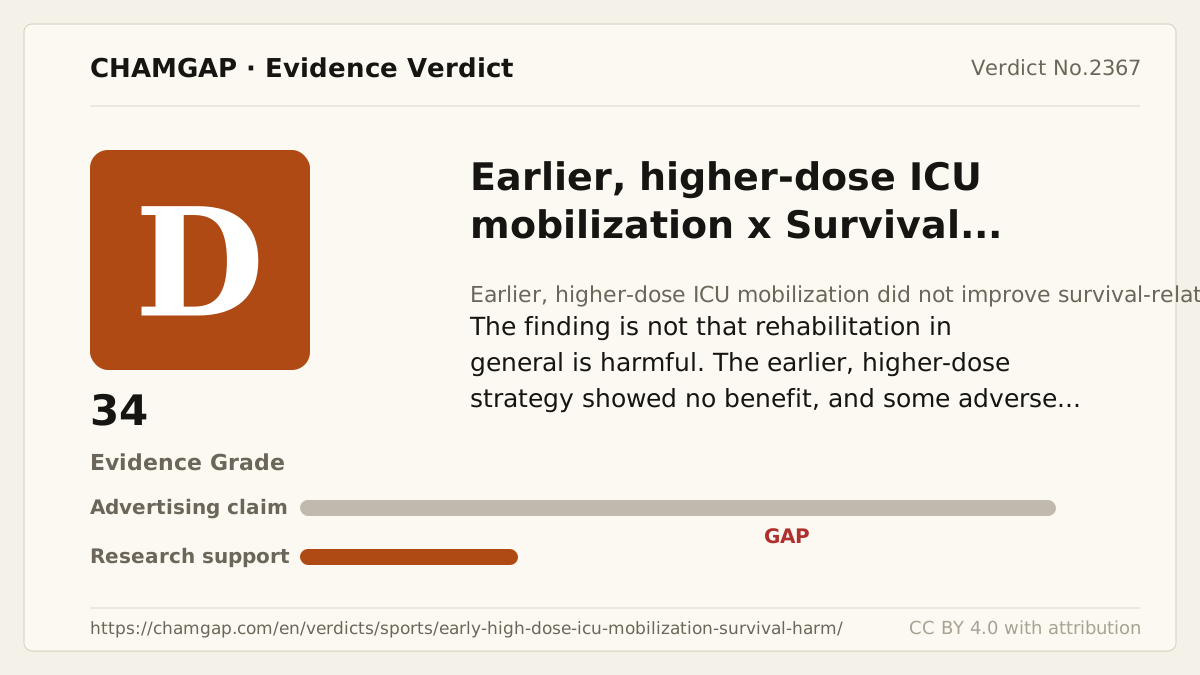
[Chamgap] Does earlier, higher-dose ICU mobilization improve recovery? — Evidence Grade D·34. 2 cited sources checked. Source: https://chamgap.com/en/verdicts/sports/early-high-dose-icu-mobilization-survival-harm/ · CC BY 4.0CC BY 4.0 — free to use with attribution; do not distort grades, numbers, or verdict meaning.
What this document does and does not do
Chamgap is an information source. It reports what research has and has not confirmed; it does not tell readers what to take or buy. That decision belongs to readers and, when needed, medical or legal professionals. This verdict reflects literature available up to the search date and may change as new research appears. Nothing here is medical advice.