
BPC-157 peptide,
does it really help with Healing of tendon, ligament, and muscle injuries and faster post-exercise recovery?
research showsNo controlled human efficacy trial was identified for BPC-157 in tendon, ligament, or muscle healing or post-exercise recovery, so the rating is ?. Of 36 studies included in a 2025 systematic review, 35 were preclinical. The sole human report was a small uncontrolled retrospective knee-pain series that did not measure tissue healing.
ads claimOnline and wellness marketing calls it the Wolverine peptide and claims tendon regeneration, accelerated ligament and muscle recovery, or return without surgery. This translates animal injury models into human treatment outcomes despite the absence of approved human use, a standard dose, or verified finished-product quality.
Useful facts when choosing a product
- No formally approved human medicine, approved sports-injury indication, or standardized dose for BPC-157 was identified in Korea.
- Gray-market online listings describe research peptides and injectable vials, but this does not constitute regulated pharmaceutical distribution or quality assurance.
- An effective human dose has not been established. Animal microgram-per-kilogram doses or doses from uncontrolled clinic injections should not be converted into self-injection regimens.
- The FDA has identified concerns involving immunogenicity, peptide impurities, active-ingredient characterization, and inadequate safety information for compounded BPC-157. The 2026 WADA Prohibited List places BPC-157 in S0 as an unapproved substance prohibited in and out of competition.
Chamgap Semantic Classification Code
Candidate index · review held
UNK.bpc-157-peptide.UNK.healing-of-tendon-ligament-and-muscle-injuries-and-faster-post-exercise-recovery.improve.UNKUnknown > BPC-157 peptide > Unknown > Healing of tendon, ligament, and muscle injuries and faster post-exercise recovery > Improvement claim > Unknown
An automated migration candidate, not an issued permanent code; exact claim scope remains under review. This machine-generated migration candidate helps retrieval but is not a permanent assignment. The original verdict ID and URL remain authoritative.
What the research actually shows
The 2019 review by Gwyer and colleagues shows that tendon, ligament, and muscle healing evidence comes mainly from rat transection and crush models and cell experiments. The 2025 systematic review by Vasireddi and colleagues screened 544 records and included 36 studies, of which 35 were preclinical and one was clinical. That clinical report, published by Lee and Padgett in 2021, retrospectively followed chronic knee-pain patients at one clinic. Seven of 12 people receiving BPC-157 alone reported pain relief lasting more than six months, but the report lacked a control group and did not assess tissue healing or exercise recovery. Controlled human efficacy literature for the claimed outcome is therefore absent.
Why this is classified as ?
Positive animal evidence is not forced into a D rating. Because controlled human efficacy literature is absent for tendon, ligament, and muscle healing and post-exercise recovery, the rating is ? with a null score. The uncontrolled knee-pain series is a pain signal, not a tissue-healing efficacy trial.
Counterpoint. Strong preclinical signals could justify future clinical development. At present, however, human long-term safety, purity, sterility, and immunogenicity are also unknown, leaving the evidence far from supporting use.
Rejudgment record. New verdict — No controlled human efficacy trial exists for musculoskeletal healing or exercise recovery; animal studies and an uncontrolled knee-pain series were not converted into a graded human efficacy claim
Sub-claim grades by effect
This ingredient is marketed for several effects. A single overall grade blends strong and weak claims together, so each effect is graded separately here. The overall grade reflects the strongest disconfirming or core claim.
| Effect (sub-claim) | Grade | Basis |
|---|---|---|
| Structural and functional healing of tendon, ligament, and muscle injuries | ? | Positive evidence is centered on animal and cellular models, and no controlled human efficacy trial was identified. |
| Faster muscle recovery and return after exercise | ? | No human efficacy trial was identified comparing recovery time, return to activity, or reinjury. |
Cross-check — AI research and Codex final gate
Evidence Table
| Study | Design | Sample | Funding | Endpoint | Result | Weight |
|---|---|---|---|---|---|---|
| Vasireddi N et al. 2025 | Systematic review in orthopaedic sports medicine | 1 | Unknown | Muscle, tendon, ligament, and bone injury outcomes and safety | Preclinical models were positive, but the only human report was an uncontrolled chronic knee-pain series, and no clinical safety data were found. | Key |
| Gwyer D et al. 2019 | Review of musculoskeletal soft-tissue healing | Unknown | Structural and functional recovery of tendon, ligament, and skeletal muscle | Repeated positive findings in rat injury models were summarized, but no human musculoskeletal healing trial result was provided. | Preclinical context | |
| Lee E, Padgett B. 2021 | Single-clinic retrospective uncontrolled case series | 4 | Unknown | Self-reported chronic knee pain | Seven of 12 BPC-157-only recipients reported pain relief lasting more than six months, but there was no control group, tissue-healing assessment, or standardized diagnosis. | Ungraded human context |
| U.S. FDA compounding risk review, current 2026 | Regulatory safety review | United States federal government | Immunogenicity, impurities, active-ingredient characterization, and safety information | The review identified concerns about peptide impurities and possible immunogenicity and found safety information inadequate. | Safety |
Receipt — 5 References
All 5 cited sources were verified for existence at the original page (as of 2026-07-18).
Final verification and publication gate: Codex · Evidence date: 2026-07-18 · Corrections: none
Cite this verdict
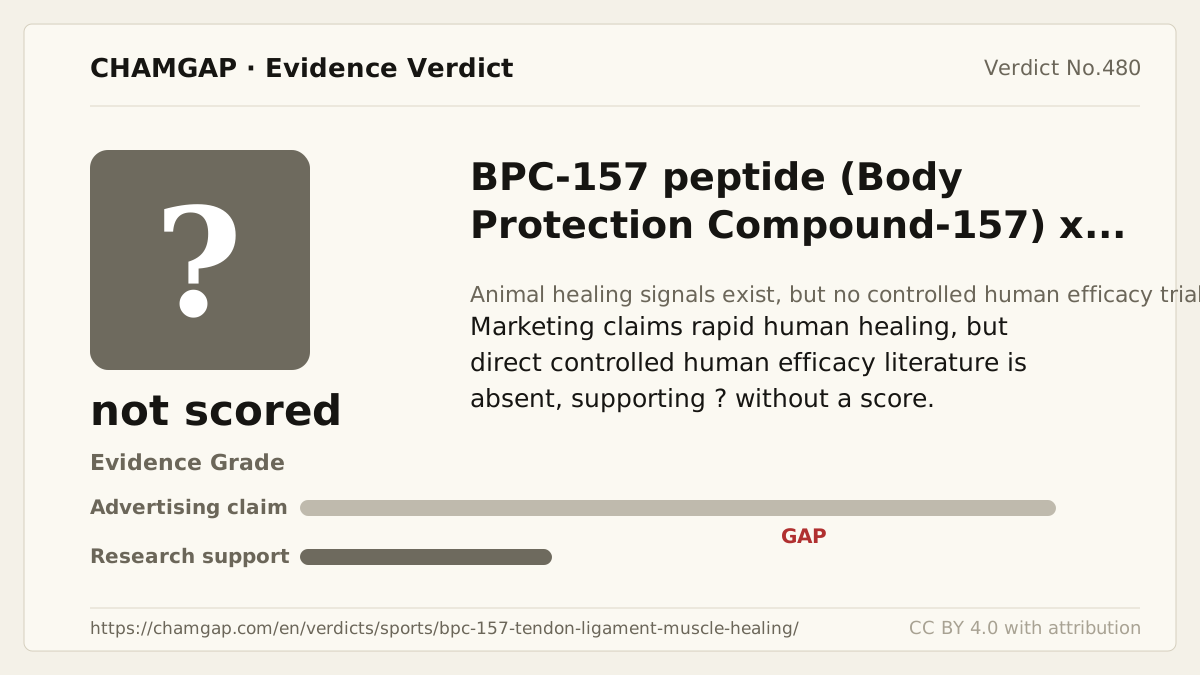
[Chamgap] BPC-157 peptide x tendon, ligament, and muscle healing and post-exercise recovery — Evidence Grade ?. 5 cited sources checked. Source: https://chamgap.com/en/verdicts/sports/bpc-157-tendon-ligament-muscle-healing/ · CC BY 4.0CC BY 4.0 — free to use with attribution; do not distort grades, numbers, or verdict meaning.
What this document does and does not do
Chamgap is an information source. It reports what research has and has not confirmed; it does not tell readers what to take or buy. That decision belongs to readers and, when needed, medical or legal professionals. This verdict reflects literature available up to the search date and may change as new research appears. Nothing here is medical advice.