
Bite-aligning performance mouthguard,
does it really help with Improved strength, power, and agility by optimizing jaw position and clenching?
research showsThe claim that a bite-aligning performance mouthguard generally improves strength, power, and agility is rated D. In a 2021 systematic review of 27 crossover studies, 16 reported a positive result in at least one measured variable, two reported negative effects, and the remainder were null; the reviewers judged the overall evidence inconclusive. A 2019 review of 15 trials and 312 athletes found that custom mouthguards generally neither improved nor impaired performance, and nine trials had high risk of bias. Signals in selected acute measures such as jumping or knee extension cannot establish broad athletic enhancement.
ads claimMarketing converts jaw alignment and concurrent-activation hypotheses into immediate whole-body gains in strength, power, and agility. A change in one laboratory jump or isometric-force test is not the same as better game statistics, wins, or repeat performance.
Useful facts when choosing a product
- A bite-aligning mouthguard is a custom-made or self-adapted sports product intended to protect teeth while holding a selected mandibular position and interocclusal distance.
- Custom devices use a dental impression or scan and often fit better, but better fit does not establish an ergogenic effect.
- Incorrect thickness, bite height, or jaw position can interfere with speech, breathing, swallowing, or concentration and may cause gagging or temporomandibular discomfort.
- Contact-sport users should follow governing-body rules and inspect the device regularly for damage, deformation, and hygiene.
Chamgap Semantic Classification Code
Candidate index · review held
UNK.bite-aligning-performance-mouthguard.UNK.strength-power-and-agility-by-optimizing-jaw-position-and-clenching.improve.UNKUnknown > Bite-aligning performance mouthguard > Unknown > strength, power, and agility by optimizing jaw position and clenching > Improvement claim > Unknown
An automated migration candidate, not an issued permanent code; exact claim scope remains under review. This machine-generated migration candidate helps retrieval but is not a permanent assignment. The original verdict ID and URL remain authoritative.
What the research actually shows
Miró and colleagues reviewed 27 within-subject crossover studies of acute bite-aligning mouthguard effects through 2021. Sixteen were positive for at least one variable, two included negative effects, and the rest were null; comparator conditions, devices, clenching, and exercise tasks differed, and no pooled effect established broad performance. Ferreira and colleagues reviewed 15 trials with 312 athletes and concluded that custom mouthguards generally did not improve or impair performance versus no mouthguard; nine trials had high risk of bias. A 2023 review of 41 studies and 852 athletes reported potential improvements in specific actions but required caution because outcome measures varied and important methodological details were missing.
Why this is classified as D (31)
Across 27 acute crossover studies, positive, null, and negative findings coexisted, with weak placebo blinding and poor standardization. A separate 15-trial, 312-athlete review also found no general improvement, giving D with 31 points.
Counterpoint. Using a well-fitted mouthguard for oral-injury prevention is reasonable. Its protective benefit should be separated from claims of enhanced performance.
Rejudgment record. New verdict — Applied boundary rule ③ after recognizing selected acute strength and jump signals but giving priority to small crossover samples, limited blinding, heterogeneity in devices and tasks, and the absence of established general sports-performance benefit
Sub-claim grades by effect
This ingredient is marketed for several effects. A single overall grade blends strong and weak claims together, so each effect is graded separately here. The overall grade reflects the strongest disconfirming or core claim.
| Effect (sub-claim) | Grade | Basis |
|---|---|---|
| Improved muscular strength | D | Isometric, isokinetic, and dynamic strength results conflict, with weak standardization and blinding. |
| Improved power | D | Some jump and knee-extension measures were positive, but many tasks were null and transfer to real sports performance is unestablished. |
| Improved agility and quickness | D | Few studies used heterogeneous tests, and no consistent significant effect was established. |
Cross-check — AI research and Codex final gate
Evidence Table
| Study | Design | Sample | Funding | Endpoint | Result | Weight |
|---|---|---|---|---|---|---|
| Miró A et al. 2021 | Systematic review | 27 within-subject crossover studies | No external funding reported; authors declared no conflict of interest | Acute changes in strength, power, jumping, agility, and quickness | Sixteen studies were positive for some variables, two reported negative effects, and the remainder were null; overall neuromuscular benefit was inconclusive. | Most direct synthesis for the claim |
| Ferreira GB et al. 2019 | Systematic review | 15 trials and 312 athletes | Academic research; no commercial funding reported in the abstract | Athletic performance including cardiopulmonary, strength, speed, and agility measures | Custom mouthguards generally neither improved nor impaired performance versus no mouthguard, and nine trials had high risk of bias. | General performance and bias assessment |
Receipt — 3 References
All 3 cited sources were verified for existence at the original page (as of 2026-07-23).
Final verification and publication gate: Codex · Evidence date: 2026-07-23 · Corrections: none
Cite this verdict
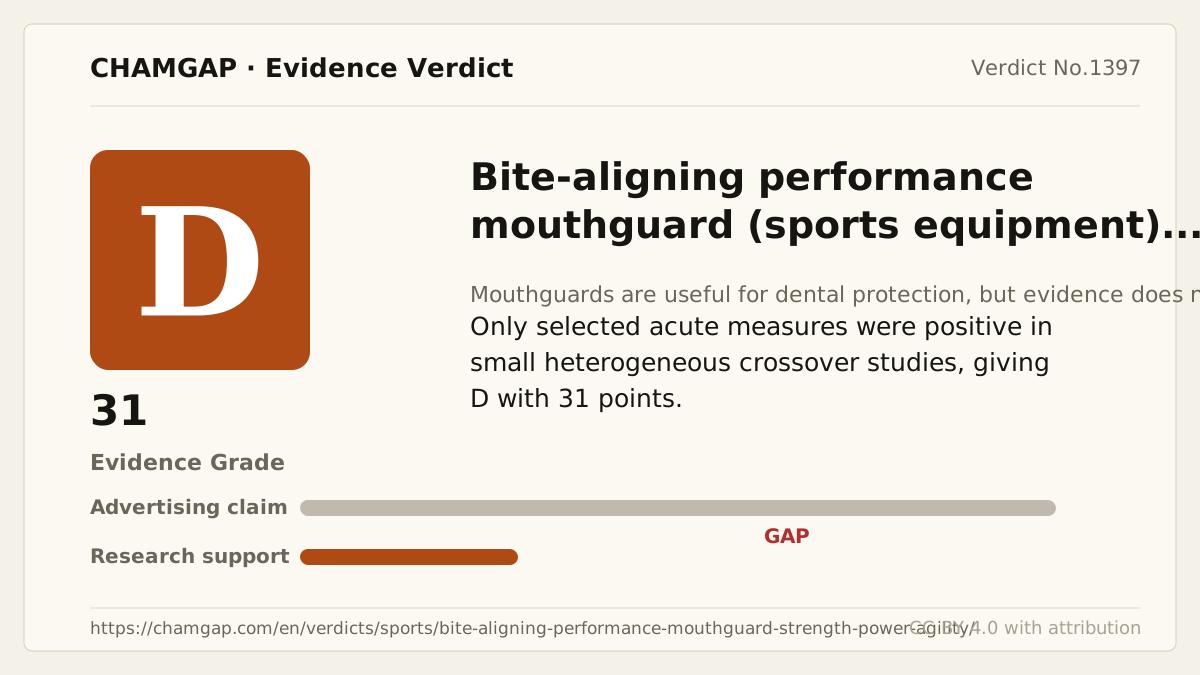
[Chamgap] Bite-aligning performance mouthguard x improved strength, power, and agility — Evidence Grade D·31. 3 cited sources checked. Source: https://chamgap.com/en/verdicts/sports/bite-aligning-performance-mouthguard-strength-power-agility/ · CC BY 4.0CC BY 4.0 — free to use with attribution; do not distort grades, numbers, or verdict meaning.
What this document does and does not do
Chamgap is an information source. It reports what research has and has not confirmed; it does not tell readers what to take or buy. That decision belongs to readers and, when needed, medical or legal professionals. This verdict reflects literature available up to the search date and may change as new research appears. Nothing here is medical advice.