
Ammonia inhalant,
does it really help with Improved maximal strength, power, and explosive performance when inhaled immediately before exercise?
research showsAmmonia inhalants are rated D for improving maximal strength, power, and explosive performance immediately before exercise. A 15-participant study found no effect on maximal mid-thigh-pull force, rate of force development, or electromyography. A randomized 14-participant study increased heart rate, alertness, and perceived performance but not handgrip or knee-extension force, jump power, or neuromuscular output. One 20-participant crossover trial found a signal for very early rate of force development, while maximal force and jump power remained null. The small and conflicting literature separates subjective arousal from actual performance and supports D with 29 points.
ads claimMarketing and gym practice equate the sharp nasal stimulus and feeling of being jolted awake with a larger one-repetition maximum or greater power. Research requires arousal and performance to be separated.
Useful facts when choosing a product
- Modern smelling salts release ammonia vapor that irritates nasal and airway mucosa, triggering an inhalation reflex and transient arousal.
- No standardized dose, distance, or exposure duration has been established for sports performance, and product concentrations and directions vary.
- Eye, nasal, and airway irritation, cough, headache, and dizziness can occur; close, repeated, or high-concentration exposure increases risk.
- They must not substitute for medical assessment after fainting, concussion, or head or neck injury because apparent arousal can mask symptoms and delay diagnosis.
Chamgap Semantic Classification Code
Candidate index · review held
UNK.ammonia-inhalant.inhaled.maximal-strength-power-and-explosive-performance-when-inhaled-immediately-before-exercise.improve.MULTIUnknown > Ammonia inhalant > Inhaled > maximal strength, power, and explosive performance when inhaled immediately before exercise > Improvement claim > Multiple: primary unresolved
An automated migration candidate, not an issued permanent code; exact claim scope remains under review. This machine-generated migration candidate helps retrieval but is not a permanent assignment. The original verdict ID and URL remain authoritative.
What the research actually shows
Perry and colleagues studied 15 healthy men performing maximal mid-thigh pulls immediately and 15, 30, and 60 seconds after ammonia inhalation and found no effect on maximal force, rate of force development, or electromyography. Campbell and colleagues tested 14 men under control, sham, and ammonia conditions; heart rate, alertness, and perceived performance increased, but handgrip and knee-extension maximal voluntary contraction, jump power, and neuromuscular drive did not. Bartolomei and colleagues studied 20 trained men and found an increase in the initial 20-ms rate of force development, but no significant effect on maximal force or countermovement-jump power. A 2024 clinical review likewise concluded that benefits for single-bout maximal performance are limited.
Why this is classified as D (29)
Across small randomized and crossover trials, alertness recurs but maximal force, jump power, and neuromuscular output are predominantly null. An isolated early rate-of-force-development signal does not establish consistent maximal performance enhancement, resulting in D with 29 points.
Counterpoint. A person may feel mentally prepared, but that feeling is not evidence of greater objective one-repetition maximum or power. Use after injury is particularly inappropriate.
Rejudgment record. New verdict — Applied D because randomized and crossover small trials increased heart rate, alertness, and perceived performance but repeatedly found no change in maximal force, jump power, or neuromuscular output, with only one conflicting early rate-of-force-development signal
Sub-claim grades by effect
This ingredient is marketed for several effects. A single overall grade blends strong and weak claims together, so each effect is graded separately here. The overall grade reflects the strongest disconfirming or core claim.
| Effect (sub-claim) | Grade | Basis |
|---|---|---|
| Improved maximal strength | D | Mid-thigh-pull and maximal-voluntary-contraction studies repeatedly found no significant benefit. |
| Improved power and explosive performance | D | Jump power was null, with only one conflicting signal for very early rate of force development. |
| Improved perceived exercise performance | D | Alertness and perceived performance increased without corresponding objective strength or power gains. |
Cross-check — AI research and Codex final gate
Evidence Table
| Study | Design | Sample | Funding | Endpoint | Result | Weight |
|---|---|---|---|---|---|---|
| Perry BG et al. 2016 | Acute crossover physiological and performance study with randomized test order | 15 healthy men | Academic study; no commercial funding reported in the abstract | Maximal mid-thigh-pull force, rate of force development, and electromyography | Cerebral blood-flow velocity and heart rate rose transiently, but all performance measures were unchanged. | Direct null objective performance evidence |
| Campbell AK et al. 2021 | Crossover study with control, sham, and randomized ammonia conditions | 14 non-resistance-trained men | Academic research; no commercial sponsor reported in the public manuscript | Alertness, perceived performance, maximal voluntary contraction, jump power, and neuromuscular drive | Alertness and perceived performance increased, but functional performance measures were unchanged. | Separates subjective arousal from objective performance |
| Bartolomei S et al. 2018 | Repeated-measures crossover study of ammonia, placebo, and no inhalant | 20 resistance-trained men | Academic-institution study; no manufacturer funding reported in the abstract | Jump power, maximal force, and 20-ms rate of force development | Early rate of force development increased, but jump power and maximal force were nonsignificant. | Small conflicting signal |
Receipt — 3 References
All 3 cited sources were verified for existence at the original page (as of 2026-07-23).
Final verification and publication gate: Codex · Evidence date: 2026-07-23 · Corrections: none
Cite this verdict
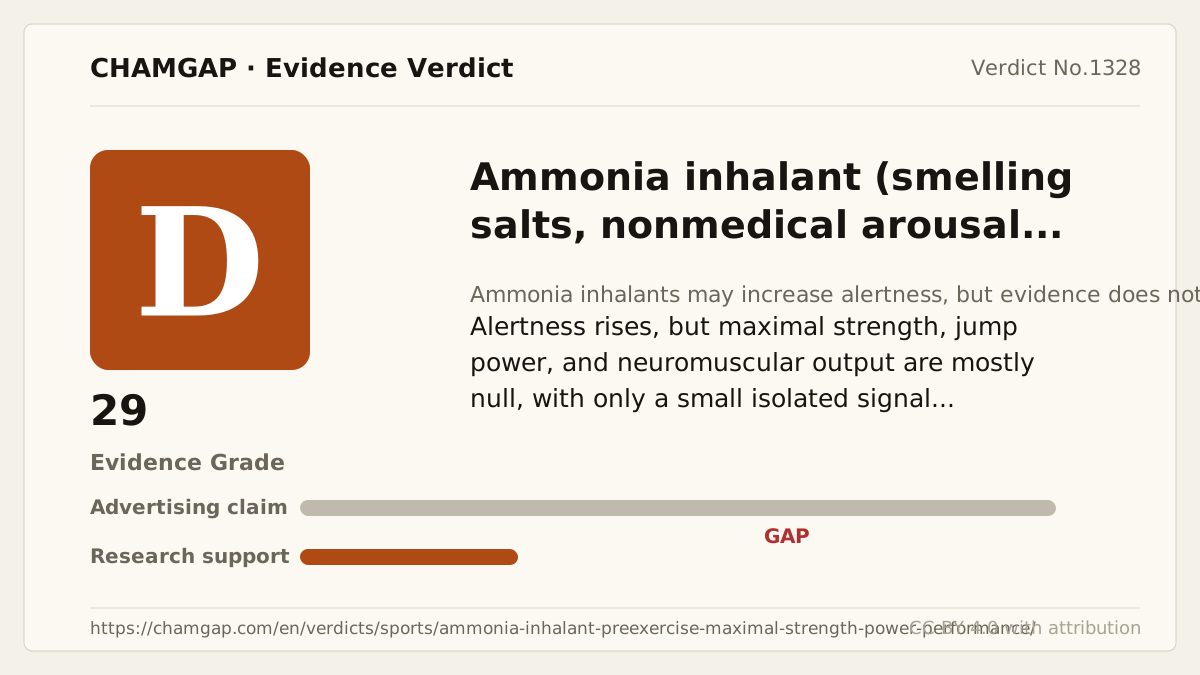
[Chamgap] Ammonia inhalant x improved maximal strength, power, and explosive performance before exercise — Evidence Grade D·29. 3 cited sources checked. Source: https://chamgap.com/en/verdicts/sports/ammonia-inhalant-preexercise-maximal-strength-power-performance/ · CC BY 4.0CC BY 4.0 — free to use with attribution; do not distort grades, numbers, or verdict meaning.
What this document does and does not do
Chamgap is an information source. It reports what research has and has not confirmed; it does not tell readers what to take or buy. That decision belongs to readers and, when needed, medical or legal professionals. This verdict reflects literature available up to the search date and may change as new research appears. Nothing here is medical advice.