
L-methylfolate,
does it really help with Improvement in depression and adjunctive antidepressant therapy?
research showsIn major depressive disorder with inadequate SSRI response, the second Papakostas trial of adjunctive L-methylfolate 15 mg/day found response rates of 32.3% versus 14.6%, for an approximate number needed to treat of six, while the meta-analytic response relative risk was 1.25. This supports B with 66 points for 15 mg SSRI augmentation. However, the sensitivity analysis restricted to 15 mg studies produced a nonsignificant relative risk of 1.38, and key evidence was concentrated in a Pamlab-sponsored program, preventing A. Mood enhancement in healthy people, high-dose use based on MTHFR status, and correction of folate deficiency are separate claims.
ads claimMarketing uses terms such as 'active folate,' 'brain methylation,' and 'MTHFR personalized' to connect a common MTHFR variant with a need for 15 mg or to claim better mood and energy in healthy people. Established positive evidence is concentrated in adjunctive treatment for major depressive disorder with inadequate antidepressant response.
Useful facts when choosing a product
- In South Korea, 5-MTHF products containing roughly 0.4-1 mg are sold alongside imported high-dose 15 mg products, distinct from ordinary folic-acid supplements.
- The positive depression RCT dose was L-methylfolate 15 mg/day, while the first trial centered on 7.5 mg did not show superiority.
- Fifteen milligrams is dozens of times higher than the hundreds of micrograms used in general nutritional supplements, and deficiency correction is a different evidence question from antidepressant augmentation.
- Overall tolerability in trials was similar to placebo, while high-dose folate compounds raise separate safety questions involving delayed recognition of vitamin B12 deficiency, drug interactions, and rare activation or mania reports.
Chamgap Semantic Classification Code
Candidate index · review held
UNK.l-methylfolate.UNK.depression-and-adjunctive-antidepressant-therapy.improve.placeboUnknown > L-methylfolate > Unknown > depression and adjunctive antidepressant therapy > Improvement claim > Placebo
An automated migration candidate, not an issued permanent code; exact claim scope remains under review. This machine-generated migration candidate helps retrieval but is not a permanent assignment. The original verdict ID and URL remain authoritative.
What the research actually shows
Papakostas and colleagues enrolled outpatients with major depressive disorder and inadequate SSRI response in two 60-day sequential-parallel trials. The first 148-person strategy centered on 7.5 mg was null. In the second 75-person trial, response rates with 15 mg/day were 32.3% versus 14.6%, giving an approximate number needed to treat of six. The Al Maruf meta-analysis found a response relative risk of 1.25 across three studies with 483 participants, but the sensitivity analysis restricted to 15 mg studies yielded a nonsignificant relative risk of 1.38. The continuous symptom effect across four studies with 507 participants was modest at a standardized mean difference of -0.38. Key development evidence was concentrated in Pamlab-supported work. A 2014 biomarker and genotype paper was a post hoc analysis of the same trial and did not establish variant-specific response or justify high-dose use based on MTHFR status alone.
Why this is classified as B (66)
The second Papakostas trial found response rates of 32.3% versus 14.6%, for an approximate number needed to treat of six, and meta-analysis found a response relative risk of 1.25, supporting B for 15 mg augmentation in inadequate SSRI responders. The 15 mg-only sensitivity analysis was nonsignificant at a relative risk of 1.38, effects were modest, and Pamlab sponsorship was concentrated, preventing A and limiting the score to 66. Healthy-person mood enhancement and high-dose use justified by MTHFR status remain unknown, while folate-deficiency correction is separate.
Counterpoint. The response-rate and symptom signal for adding 15 mg in adults with partial or no antidepressant response persists in meta-analysis. It does not establish antidepressant replacement or mood enhancement in healthy people.
Rejudgment record. Reassessment (cross-check reflected) — A 15 mg augmentation RCT and meta-analysis are positive in major depressive disorder with inadequate SSRI response, but the 7.5 mg trial was null and Pamlab funding concentration, modest effects, and limited independent replication cap the grade at B
Sub-claim grades by effect
This ingredient is marketed for several effects. A single overall grade blends strong and weak claims together, so each effect is graded separately here. The overall grade reflects the strongest disconfirming or core claim.
| Effect (sub-claim) | Grade | Basis |
|---|---|---|
| Adjunctive therapy with an antidepressant (SSRI) | B | A small adjunctive effect at 15 mg with concentrated sponsorship |
| Mood enhancement in the general population or people without depression | ? | No direct evidence |
| Justification of high-dose use based on an MTHFR variant | ? | Response by variant was not significant |
Cross-check — AI research and Codex final gate
Evidence Table
| Study | Design | Sample | Funding | Endpoint | Result | Weight |
|---|---|---|---|---|---|---|
| Papakostas GI et al. 2012 | Two multicenter randomized double-blind sequential-parallel placebo-controlled trials | 75 | Pamlab-supported development program | Depression response rate and change in HDRS symptoms | The first trial centered on 7.5 mg was null; the second 15 mg trial was positive on both primary outcomes and selected secondary outcomes. | Key, industry-linked |
| Al Maruf A et al. 2022 | Systematic review and meta-analysis | 507 | Academic institutions; one author disclosed employment by a genetic-testing company | Antidepressant response rate and change in depressive symptoms | A modest adjunctive effect was reported, with response RR 1.25 and continuous-symptom SMD -0.38. | Key synthesis |
| Papakostas GI et al. 2014 | Post hoc biomarker and genotype analysis of the 15 mg RCT | Supported by Pamlab | HDRS response stratified by inflammatory, metabolic, and genetic markers | Selected marker combinations showed a larger response signal, but the analysis was exploratory and post hoc. | Subclaim, exploratory |
Receipt — 4 References
All 4 cited sources were verified for existence at the original page (as of 2026-07-17).
Final verification and publication gate: Codex · Evidence date: 2026-07-17 · Corrections: none
Cite this verdict
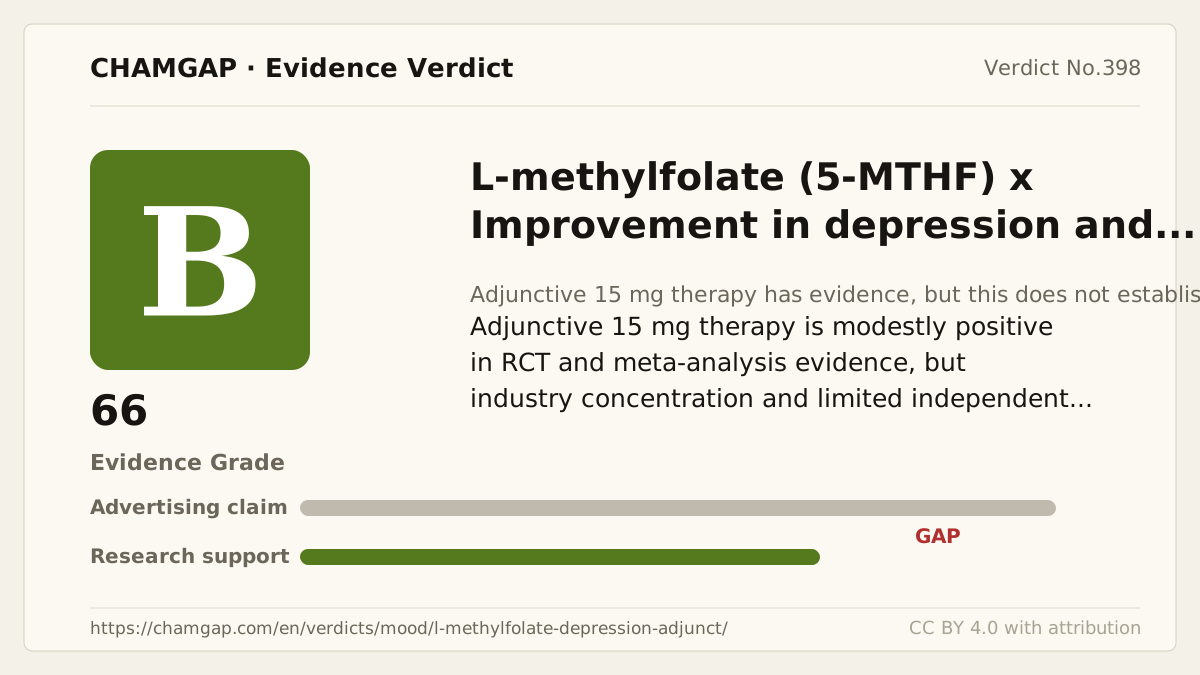
[Chamgap] L-methylfolate (5-MTHF) x improvement in depression and adjunctive antidepressant therapy — Evidence Grade B·66. 4 cited sources checked. Source: https://chamgap.com/en/verdicts/mood/l-methylfolate-depression-adjunct/ · CC BY 4.0CC BY 4.0 — free to use with attribution; do not distort grades, numbers, or verdict meaning.
What this document does and does not do
Chamgap is an information source. It reports what research has and has not confirmed; it does not tell readers what to take or buy. That decision belongs to readers and, when needed, medical or legal professionals. This verdict reflects literature available up to the search date and may change as new research appears. Nothing here is medical advice.